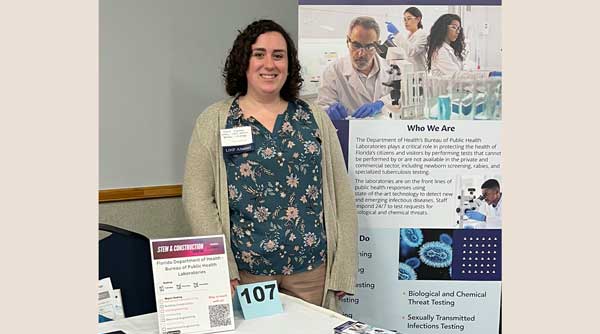
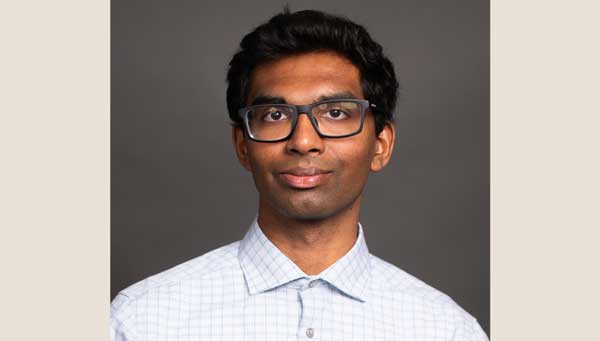
Kate Namey and Krithik Duraisamy are both active Public Health Laboratory Ambassadors who had the pleasure of participating in the program while completing their fellowships. Here, they share their stories of how their experiences in both programs have impacted them.
Kate Namey, CHES®, biological threats defense trainer, Florida Bureau of Public Health Laboratories- Jacksonville
Public health gives us the ability to help many people before a problem or disease occurs. Programs like infectious disease surveillance are incredible because they are minimally invasive but provide an insight into what is happening in our community so that we can help keep people safe and healthy.
Krithik Duraisamy, fellow, Arizona State Public Health Laboratory
I have a lot of family members who I look up to who were and are currently working in the civil services. I also gravitated towards public health in college right after the pandemic, since I had an interest in the life sciences, informatics and data science. I saw the potential to apply my interests and make a meaningful impact within public health. Additionally, I believe this field can mitigate a substantial amount of pain and suffering through surveillance and prevention efforts.
Namey: I decided to become an Ambassador because I was already involved in outreach as part of my fellowship project and this program has allowed me access to other professionals that are doing similar work who can provide valuable insight as to how I could be doing this better.
Duraisamy: I was asked to become an Ambassador after my second time tabling at a career fair. I liked the idea of becoming an Ambassador because a career specialist reached out to me on Handshake and suggested I apply to the fellowship program after I had finished college. This felt like a great opportunity to pay it forward and guide current students to the Public Health Laboratory Fellowship Program.
Namey: I have the ability to travel, speak and present with the support of both APHL and my host laboratory. Especially when speaking to students, it is really helpful to be able to represent both aspects of public health: as a person that is still learning and developing my own skills and from the perspective of knowing how many vastly different career opportunities there are within the laboratory system.
Duraisamy: I talk about my experience with my mentor and the informatics projects I’m working on to the people I meet at events. Talking about the projects I’m working on can be informative for students who may not be aware of how their interests can be applied to the field of public health.
Namey: I really enjoy learning from others during our Ambassadors Connect calls. There are always so many creative and unique suggestions and it is so helpful to learn from those that have already done things so that I can learn from their mistakes (and successes).
Duraisamy: My favorite part of being an Ambassador is when the people I’m talking to genuinely appreciate the information I provide. Even if they decide not to apply to the fellowship program, the resources I provide can still be useful for them down the road if they ever want to work in public health or in the civil services.
For more information on the Public Health Laboratory Ambassadors program, visit our website. You can also contact [email protected] for more information on how current fellows can participate in the program. |
