Tuberculosis

Commonly considered a disease of the past, tuberculosis (TB) is resurging in new and virtually-untreatable forms that have the potential to cause debilitating disease. Public health laboratories play an instrumental role in fighting TB by identifying and isolating Mycobacterium tuberculosis, the causative agent of TB.

Questions?

Contact the Infectious Diseases team: [email protected]

APHL'S ROLE

Supporting Best Practices in Tuberculosis Testing

APHL develops and promotes resources related to TB testing best practices nationwide in close collaboration with the US Centers for Disease Control and Prevention (CDC) Division of Tuberculosis Elimination (DTBE). We also offer several training opportunities designed to support laboratory professionals in strengthening TB diagnostic and surveillance capacity. 

APHL has supported public health laboratories performing testing for MTBC for decades. If you are interested in historic documents visit the ID Resources Page.

APHL supports member laboratories in applying to the Laboratory Component of the CDC TB Elimination Cooperative Agreement. The goal of this cooperative agreement is to facilitate improvements in TB laboratory testing and performance. Cooperative Agreement laboratory funding is distributed to selected public health laboratories after application review using a predetermined (by CDC) funding formula. The TB Cooperative​ Agreement Toolkit consists of the TB Elimination Cooperative Agreement Checklist and How to Calculate Turnaround Times document designed to aid public health laboratories in the application process.

Toolkit
2026

The TB Cooperative Agreement Toolkit consists of the TB Elimination Cooperative Agreement Checklist and How to Calculate Turnaround Times document designed to aid public health laboratories in the application process.

Infectious Diseases, Tuberculosis

APHL in collaboration with DTBE supports member laboratories in the evaluation and implementation of new approaches or testing methods for tuberculosis testing through funding opportunities and pilot projects. Most recently APHL awarded more than ten laboratories funding to enhance their capacity for drug susceptibility testing (DST) of Mycobacterium tuberculosis (MTB), specifically with respect to fluoroquinolones (FQ) and rifampin (RIF).  Other past projects included:


    • Mycobacterium tuberculosis: Assessing Your Laboratory
      A tool designed to assist laboratories with self-assessment of the quality of their laboratory’s TB diagnostic practices aligned with national guidelines and recommendations and includes questions to address safety considerations and inactivation for downstream applications.


    LABORATORY TESTING RESOURCES

    Identification and Detection of Drug Resistance

    Utilization of Advanced Detection Techniques

    APHL has supported building and maintaining next generation sequencing (NGS) capacity and capability—including whole genome sequencing (WGS)—at public health laboratories across the US since 2013 and created resources for MALDI-TOF for Mycobacterium tuberculosis complex (MTBC). WGS of MTBC provides detailed genomic information that increases the accuracy of outbreak investigations and can be used to identify drug-resistant TB strains. In combination with epidemiologic data, WGS can help differentiate TB cases that may be part of an outbreak from unrelated sporadic TB cases.

    Drug Susceptibility Testing

    National DST Reference Center for MTBC

    Established in 2015, the National Public Health Laboratory Drug Susceptibility Testing (DST) Reference Center for MTBC provides quality-assured drug susceptibility testing at no cost for eligible public health laboratories. The Reference Center serves as an extension of CDC’s Division of TB Elimination Laboratory Branch providing services that are harmonized with and complementary to those available at CDC. California Department of Public Health’s Microbial Diseases Laboratory serves as the Reference Center. 

    ELIGIBILITY

    The Reference Center is restricted to public health laboratories performing TB DST on fewer than 50 isolates per year. Participation in the reference center is voluntary. CDC’s testing services remain available to all US TB Programs. Jurisdictions that are not eligible to enroll may still submit specimens and/or isolates to CDC for the Molecular Detection of Drug Resistance (MDDR) or second-line DST. 

    ENROLLMENT

    For questions about enrollment contact [email protected]

    TESTING SERVICES AVAILABLE

    • First-Line DST using MGIT with a panel of rifampin, isoniazid and ethambutol
    • DST for 4-month rifapentine-moxifloxacin regimen using MGIT with a panel of rifampin, isoniazid and moxifloxacin
    • Pyrazinamide DST using MGIT when a mutation with uncertain significance is detected via molecular methods and PZA resistance cannot be ruled out
    • Second-Line DST using MGIT with a panel of ethionamide, capreomycin, amikacin, moxifloxacin, kanamycin and rifabutin
    • Molecular detection of drug resistance performed by whole genome sequencing on submitted isolates and by targeted next generation sequencing on specimen sediments, mixed and non-viable cultures
    • Whole genome sequencing data will be shared with the CDC for the purpose of national molecular surveillance 

    RESOURCES


    Since 2024, BD has been investigating intermittent false resistance when testing for pyrazinamide resistance using the BD BACTECTM MGITTM 960 PZA kit. In November of 2025, BD announced that they had resumed production of a modified version of the kit which includes modified inoculation methods and reduced shelf-life. APHL has worked with DTBE and member labs to support pncA sequencing for prediction of PZA resistance and will continue to monitor the situation and provide updates as needed.


    TRANSPORT RESOURCES

    Shipping Support for MTBC Specimens

    Public health laboratories may use the FedEx Shipping Account to submit specimens to the National TB Genotyping Service and CDC’s Molecular Detection of Drug Resistance Service. ​ 

    Learn and Grow

    TB News, Events, Training and Webinars

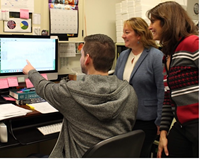
    Kim Musser and colleagues at Wadsworth looking at computer screen
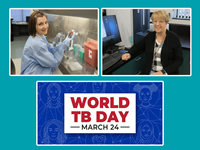
    In recognition of World Tuberculosis Day, we sat down with Kimberlee Musser, PhD, chief of bacterial disease, Wadsworth Center, New York State Department of Health (NYDOH), and asked her six questions about tackling this ancient disease in a modern world.
    Infectious Diseases, Tuberculosis
    Every year we commemorate World TB Day on March 24, the anniversary of the day Dr. Robert Koch first announced that he discovered Mycobacterium tuberculosis, the bacillus that causes TB. This World TB Day, we are sharing an insightful conversation...
    Infectious Diseases, Tuberculosis
    The National Conference on Laboratory Aspects of Tuberculosis (TB) is an annual event that focuses on the TB laboratory system. Topics include diagnostic technology and service delivery, optimizing drug susceptibility testing, the latest data on the use of molecular test methods, troubleshooting common problems, and global implications and practice.

    Trainings

    Archived Webinars

    Search All Infectious Diseases Trainings and Events 

    Visit the APHL Training Hub to search our training materials, access courses through the APHL Learning Center, and find upcoming webinars via the Event Calendar.

    Visit the Training Hub

    NEED MORE?

    Search all Infectious Diseases Resources