.png?sfvrsn=a4dc1c5f_6)
Malaria is Rare in the US—but Recent Cases Have Public Health Officials Taking Notice
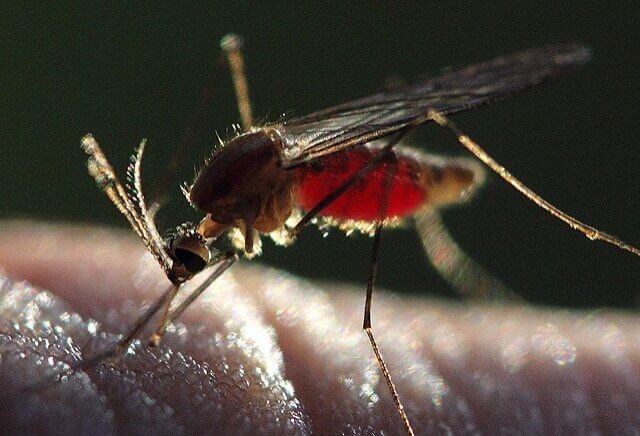
Within a matter of weeks this summer, two individuals on opposite coasts tested positive for malaria.
While the disease—typically transmitted by the bite of an infected Anopheles mosquito—is endemic in certain parts of the world, particularly in sub-Saharan Africa, Central and South America and Southeast Asia, it’s rare in the US, affecting about 2,000 Americans per year, says the US Centers for Disease Control and Prevention (CDC). Virtually all the US cases are travel-associated, meaning a person becomes infected where malaria is widespread and then travels here where it is detected.
But in August, two unrelated individuals—one in Washington State and another in New Jersey—tested positive for the potentially deadly disease. Neither individual reported international travel, meaning the cases may have been acquired by mosquitoes circulating in the community. If so, this would be Washington’s first known locally acquired case and New Jersey’s first in over 25 years. In 2023, 10 cases of locally acquired malaria in a handful of states were reported to CDC.
“Before the locally acquired case in Maryland in 2023, Maryland hadn’t seen a locally acquired Malaria case in 40 years, so we were surprised,” said Victoria Campodónico, MD, PhD, D(ABMM), principal developmental scientist at the Maryland Department of Health
Laboratories Administration. “However, the Anopheles mosquito species that can transmit malaria exists in Maryland, and with approximately 200 imported cases occurring each year in the state, there is a potential for locally acquired infections.”

Mosquitoes and Malaria
Malaria is a mosquito-borne illness caused by parasites of the genus Plasmodium. Five main species of Plasmodium cause malaria in humans.
Malaria is most commonly transmitted to humans by the bite of an infected female Anopheles mosquito (although, rarely, it can be spread through other means, such as a blood transfusion or an organ transplant). The mosquito becomes infected when it takes a blood meal from a person with a malaria infection. After about a week, the parasite matures within the mosquito and migrates to its salivary glands. As it bites its next victim, the disease is spread.
Malaria can be serious and requires prompt diagnosis, which is especially important to stop the spread of transmission.
“The standard of care for malaria diagnosis remains microscopic examination of thick and thin blood smears,” Campodónico explained. “The thick smear is a concentration procedure, making it more sensitive than the thin smear. To prepare a thick smear, a large drop of blood is spread thickly on a glass slide and then lysed (red cells are broken open). Because the red cells are lysed, more blood volume is examined, making it easier to find parasites even if the parasitemia [the volume of parasites] is very low. However, parasite morphology is less well preserved, so species identification is difficult. It is useful in finding parasites in sparse or chronic infections. The thin smear,” Campodónico added, “is prepared by creating a single layer of intact red blood cells, allowing visualization of parasite morphology. It is less sensitive compared to thick smear, but it is better for identifying the different Plasmodium species.”
Several other infectious diseases can mimic the symptoms of malaria, which include fever, chills, muscle aches, malaise and gastrointestinal upset. A lab may also test for Ebola or arboviral infections, such as Dengue or Chikungunya, in addition to malaria, especially if the patient has traveled to an area where these infections are prevalent.
How much of a concern are locally acquired infections?
Public health officials say the risk of acquiring malaria in the US is low.
“We do not fully understand why more locally acquired malaria infections are not observed in the United States, despite the presence of Anopheles mosquitoes,” Campodónico said. “Contributing factors may include widespread use of window screens, mosquito-control interventions such as spraying and the use of insect repellents.”
It’s also possible that infected mosquitoes circulating in this country aren’t carrying the parasite at substantial levels. What’s more, many infected people who travel to the US are likely to be treated more promptly than in some other countries, thereby helping reduce the spread of the disease.
Campodónico noted that malaria can be asymptomatic, particularly when parasite levels in the blood are low or when individuals living in malaria-endemic areas are repeatedly exposed. “Over time, such individuals may develop partial immunity that allows them to carry the parasite without showing classic symptoms, such as fever or chills,” she said. “Importantly, asymptomatic carriers can still serve as reservoirs for transmission if local mosquitoes bite them and subsequently spread the parasite to others.”
CDC does not recommend testing mosquitoes for malaria under normal circumstances, but many communities do conduct surveillance of mosquitoes for a variety of viruses.
“Monitoring mosquitoes in the community is one aspect of public health surveillance, but even if mosquito-borne transmission occurred, the infected mosquito may be very difficult or impossible to find,” said Hanna Oltean, PhD, senior vector-borne disease epidemiologist at the Washington State Department of Health. “We don’t have evidence to suggest that infected mosquitoes are circulating in the community. If this recent malaria case is due to mosquito-borne transmission, it’s possible that even a single mosquito could have been involved.”
The best way to protect yourself from malaria is to protect yourself from mosquito bites and take anti-malaria medication if you’re traveling to an area where the disease is endemic. CDC recommends using insect repellent with DEET, wearing loose-fitting clothing that includes long pants, long sleeves and socks, and keeping windows and doors closed or covered with screens. Lastly, if you experience any flu-like symptoms, see your healthcare provider for evaluation and share with them any locations you’ve recently traveled to.