
“I spent several years working at a local animal shelter, and unvaccinated animals were the norm, outnumbering the vaccinated animals.”
.png?sfvrsn=a4dc1c5f_6)
Jul 22, 2025
One of Mankind’s Oldest Diseases Is Still a Threat: What Public Health Labs Are Doing to Detect and Respond to Rabies
Every year, says the US Centers for Disease Control and Prevention (CDC), some 100,000 Americans receive medical care following potential exposure to rabies, a virus transmitted to humans, their pets and other animals primarily through the bite or scratch of an infected animal.
In humans, the disease, which attacks the central nervous system, is nearly 100% preventable—and nearly 100% fatal if medical treatment isn’t begun before symptoms start. While each year fewer than 10 Americans die from rabies, that isn’t the case in other parts of the world, such as Africa, Asia and portions of South and Central America, where rabies is rampant. Many of these countries don’t have the resources to undertake the aggressive and large-scale rabies surveillance and detection programs seen in the US.
Why rabies is still relevant
Rabies has been around since antiquity, and it’s still a problem today.
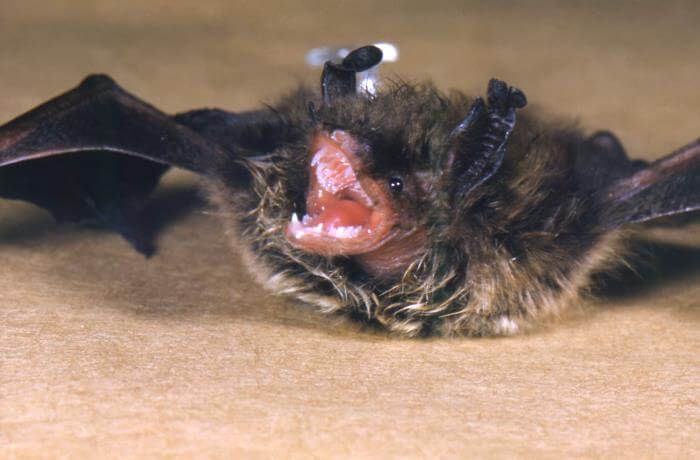
Roughly three out of four Americans live in areas where rabies circulates in wild animals. In this country, animals most likely to serve as host species are bats, skunks, raccoons and foxes. While globally, domestic dogs are responsible for 95% of the ~70,000 rabies deaths each year, rabid dogs and cats are less common in this country thanks to routine vaccination.
But still, plenty of pets fall through the cracks.
“I spent several years working at a local animal shelter, and unvaccinated animals were the norm, outnumbering the vaccinated animals,” said April Davis, DVM, PhD, director of the Rabies Laboratory at the Wadsworth Center, New York State Department of Health. “Although I’ve been working in the rabies field for more than 20 years, working in an animal shelter provided an excellent education on the public side of veterinary medicine and its intersection with public health. We observed varying levels of animal care and differing opinions on the importance of animal vaccination by the public. Given what I know now, it is not a surprise that in New York State, cats are the fourth or fifth most commonly diagnosed rabid animal in the state.”
“Vaccine laws for our pets vary from state to state,” added Rich Griesser, a microbiologist and team lead of the Virology and Rabies Laboratory at the Wisconsin State Laboratory of Hygiene. “And vaccine hesitancy for pets is continuing to rise.”
How is rabies diagnosed?
When a person is bitten or scratched by an animal that could have rabies, healthcare practitioners and public health officials spring into action.
If the animal has shown obvious signs of rabies (aggression, seizures, paralysis, excessive drooling), it is captured (if possible) and humanely euthanized. Samples of the animal’s brain, where much of the virus resides, are then sent to one of the 100 US laboratories—mostly public health or veterinary diagnostic laboratories—that perform rabies testing.
When the biting animal’s rabies status is unknown, it may be euthanized or quarantined and observed (especially if it’s a pet) to see if rabies symptoms develop. Decisions on quarantining an animal vary from jurisdiction to jurisdiction and may be dependent on the animal’s vaccination status.
“Rabies testing resides primarily in public health laboratories because public health officials take the lead in response to the detection of rabies in an animal or human.”
“Rabies testing resides primarily in public health laboratories because public health officials take the lead in response to the detection of rabies in an animal or human,” said Sharon Messenger, PhD, Zoonotic and Vector borne Diseases Section, Viral and Rickettsial Disease Laboratory, California Department of Public Health. “They coordinate all activities to investigate potential exposures and work with healthcare providers as needed to make post-exposure prophylaxis decisions.”
With specimens available, a laboratory scientist will conduct a direct fluorescent antibody test (DFA), which involves taking smears of the brain tissue samples, treating them with fluorescently labeled antibodies that adhere to rabies virus antigens if present in the tissue, and then examining the tissue using a special fluorescence microscope.
“This is a rapid, sensitive and specific technique that can be completed in two to three hours,” said Griesser. “It’s the gold-standard method for diagnosis of rabies infections in humans and animals and is widely used by domestic and international laboratories.”
Other tests that can supplement DFA testing, said Griesser, include nucleic acid amplification tests (NAATs), which can detect the rabies virus’s genetic material in a sample, and next-generation sequencing (NGS) for genomic surveillance.
“NAAT can detect small amounts of genetic material from the rabies virus by making millions of copies of the RNA. Attaching a fluorescent dye allows this material to be seen with detection instruments,” Griesser explained. “NAAT methods are extremely sensitive and specific, typically take about 3-to-4 hours to complete and can provide a valuable piece of information to supplement DFA results in rabies diagnosis.” Sequencing methods, he added, allow scientists to uncover the genetic code of the rabies virus. “This can be useful to investigate outbreaks, trace the sources of cases and identify different variants or strains of the rabies virus from a sample,” Griesser said. “Sequencing can also be utilized to ensure NAATs retain the ability to detect known rabies virus variants and to identify mutations or new variants.”
Testing challenges
When it comes to rabies testing, things aren’t as simple as taking a sample, analyzing it and getting a positive or negative result.
For starters, the animal suspected of having rabies needs to be located and captured. That’s not always easy with wild animals. And DFA testing needs to be conducted on parts of the animal’s brain, which may not be available if the animal has been crushed, shot or is decomposed.
“The biggest challenge for the diagnostic laboratory is the accurate and rapid diagnosis of a suspect rabid animal when, as is often the case, the samples submitted for testing are non-optimal, making diagnosis difficult,” Messenger said.
Human testing has its own set of challenges.
Getting a definitive diagnosis of rabies requires testing brain tissue, and that’s not recommended on a living person. Instead, a person may be required to submit several samples—of saliva for PCR testing, blood serum and cerebral spinal fluid for neutralizing antibody testing and a skin biopsy from the nape of the neck for DFA and PCR testing (with its proximity to the brain, nerves in the hair follicles at the nape of the neck can be one of the first regions the rabies virus will travel to). Several samples are required because the rabies virus is shed in the body intermittently, so one sample may be positive and another negative. Multiple samples help improve the likelihood of rabies detection.
“Since a definitive diagnosis requires samples from the brain and we are receiving proxy, less sensitive samples, we can’t say with certainty that the individual is negative. We can only state that the samples were negative.”
“We usually have a diagnosis within 3-to-4 hours,” Davis said. “However, since a definitive diagnosis requires samples from the brain and we are receiving proxy, less sensitive samples, we can’t say with certainty that the individual is negative. We can only state that the samples were negative. If the samples are positive, we work closely with the healthcare providers to facilitate additional sample collection to monitor the amount of virus and antibodies over time.”
Will rabies ever be a thing of the past?
It’s unlikely, say experts. That’s because wild animals will always be with us. While there has been some success with vaccinating wild animals, these programs, Messenger noted, are focused on a single species while rabies virus variants are often co-circulating in multiple species in any given location.
But progress can be made.
“Despite the difficulty of wholesale elimination of rabies, elimination of rabies in domestic dogs will not only significantly reduce the number of human (and pet/peridomestic animal) rabies exposures and deaths,” Messenger said, “but it will also save millions of dollars to over $1 billion annually in healthcare costs.”
Avoiding rabies
The surest way to avoid rabies is to avoid wildlife and keep your pets vaccinated against rabies. Here, more pointers from CDC:
- Never approach wild animals. Do your best to make sure your pets keep their distance, too.
- Don’t approach an injured wild animal. Instead, call your local animal control services.
- Limit the ability of wild animals to access your home. Use window screens and chimney caps. Make sure doors close tightly. Caulk or seal any small openings.
- Wash the wound thoroughly (with soap and water for 15 minutes) and get immediate medical help if you’ve had contact with a rabid animal (or if there’s a possibility the animal could be rabid). Rabies is a deadly disease, but treatment—which includes a dose of immune globulin that contains antibodies to the rabies virus as well as a four-dose series of the rabies vaccine—is nearly 100% effective if begun promptly.