
Member Profile: Louisiana Department of Health Bureau of Laboratory Services

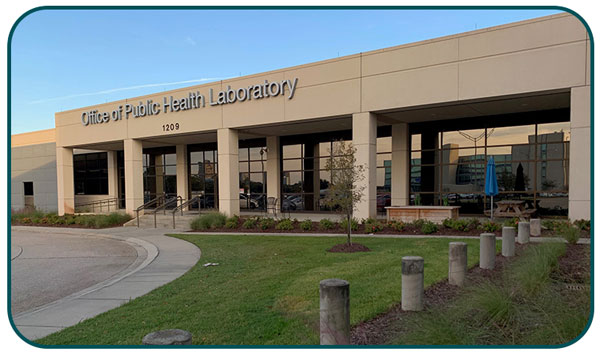
Louisiana Department of Health Bureau of Laboratory Services has been in Baton Rouge since 2015. Photo: LDH Bureau of Laboratory Services.
Year established: The Louisiana Department of Health (LDH) Bureau of Laboratory Services was first established when a chemical laboratory to analyze food, dairy products and beverages was established in 1891. In 1894, Louisiana opened the first bacteriology laboratory in the United States to test for diphtheria, malaria, tuberculosis and typhoid fever.
Location: Our main location in Baton Rouge hosts newborn screening, infectious disease and emerging pathogens, virology and sexually transmitted infections, microbiology and tuberculosis, environmental chemistry and microbiology. A satellite laboratory in Amite hosts safe drinking water microbiology and milk and dairy testing, and satellite laboratories in Alexandria, Lake Charles and Shreveport host safe drinking water microbiology testing.
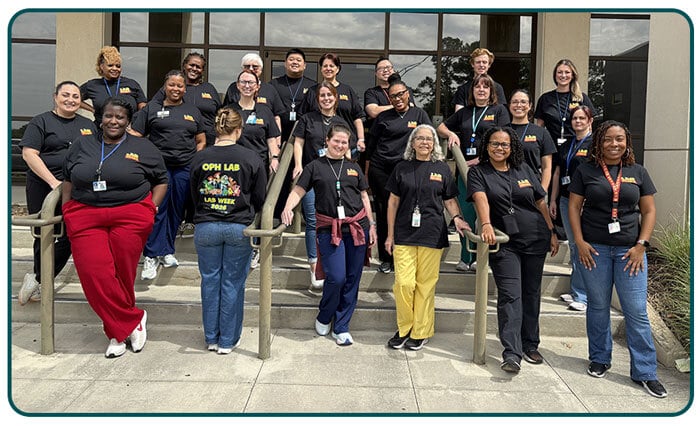
Lab Week 2026 at the LDH Bureau of Laboratory Services. Photo: LDH Bureau of Laboratory Services.
Number of staff: Currently, there are 105 staff members.
Distinguishing characteristics: We are a happy and productive laboratory.
Highest volume testing: During COVID-19, nearly 2,000 samples per day.
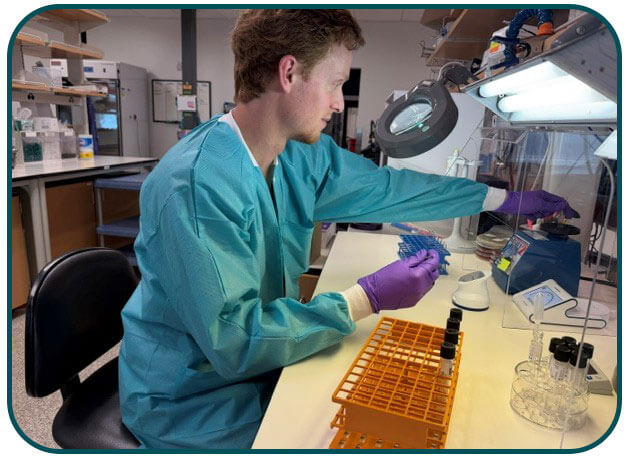
Davis Covington prepares a McFarland suspension for the modified carbapenem inactivation method (mCIM). Photo: LDH Bureau of Laboratory Services.
Notable success story: The laboratory was in New Orleans until 2005, when it was totally destroyed by Hurricane Katrina. After using temporary quarters for several years, the laboratory moved into a new facility in Baton Rouge in 2015. We continue to be accredited by CLIA, EPA, FDA and ISO 17025. We discovered a case of Welder’s anthrax for which the patient was saved through those efforts, and we have been designated as a state sponsored “Wellspot,” which means that we are one of the organizations in Louisiana that participates in a voluntarily implementation of healthy changes in our lifestyles and environment to help our employees live well and healthy.
Biggest challenge: Finding alternative funding when grants expire.