
Member Profile: Maryland Department of Health Laboratories Administration

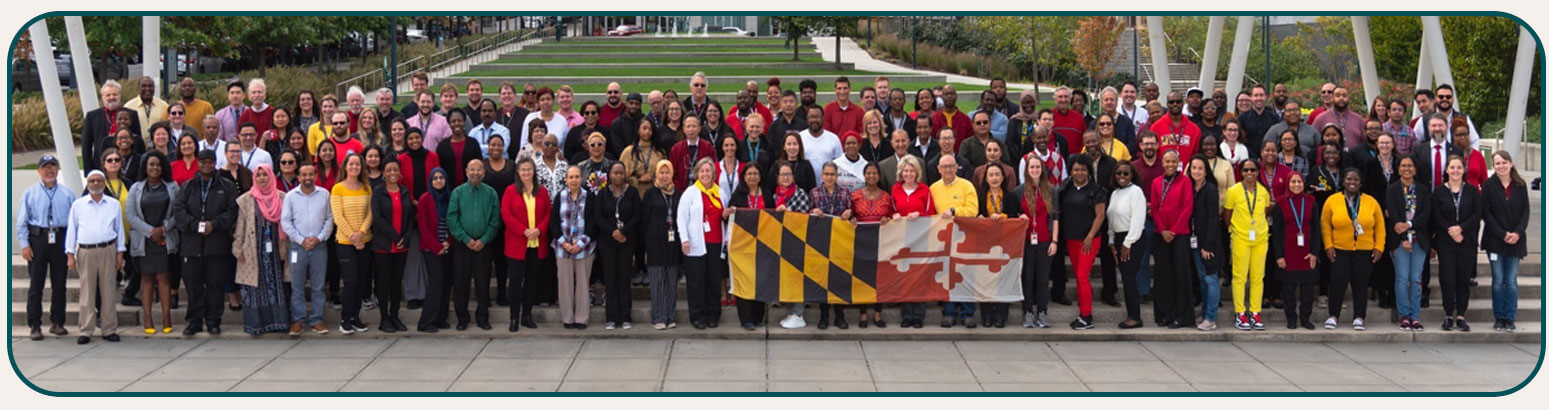
Laboratory staff photo taken in fall of 2023 commemorating Maryland's 125th anniversary. Photo: MDH Laboratories Administration.
Year established: Our roots can be traced to our founding in 1898 when, at the recommendation of the Maryland Board of Health, the legislature appropriated $2,500 to hire a State Biologist (Bacteriologist), Dr. William R. Stokes. His mandate was to provide free testing to physicians to establish a more rigorous scientific basis for the diagnosis of communicable diseases, and to examine drinking water and food for bacterial contamination to guide public health officials in implementing more effective sanitation measures. To this day, we continue to be a science-based organization providing sound, actionable, objective and unaffiliated information to medical professionals, public health partners and others to implement appropriate prevention and control measures by providing accurate and timely laboratory test results. We are considered to be the oldest continuous operating unit in the Maryland Department of Health (MDH).
Location: Our central laboratory is physically located in east Baltimore, adjacent to the Johns Hopkins University Medical campus. We also operate two smaller regional environmental testing laboratories, one in western Maryland in Cumberland and the other in Salisbury on Maryland’s eastern shore.
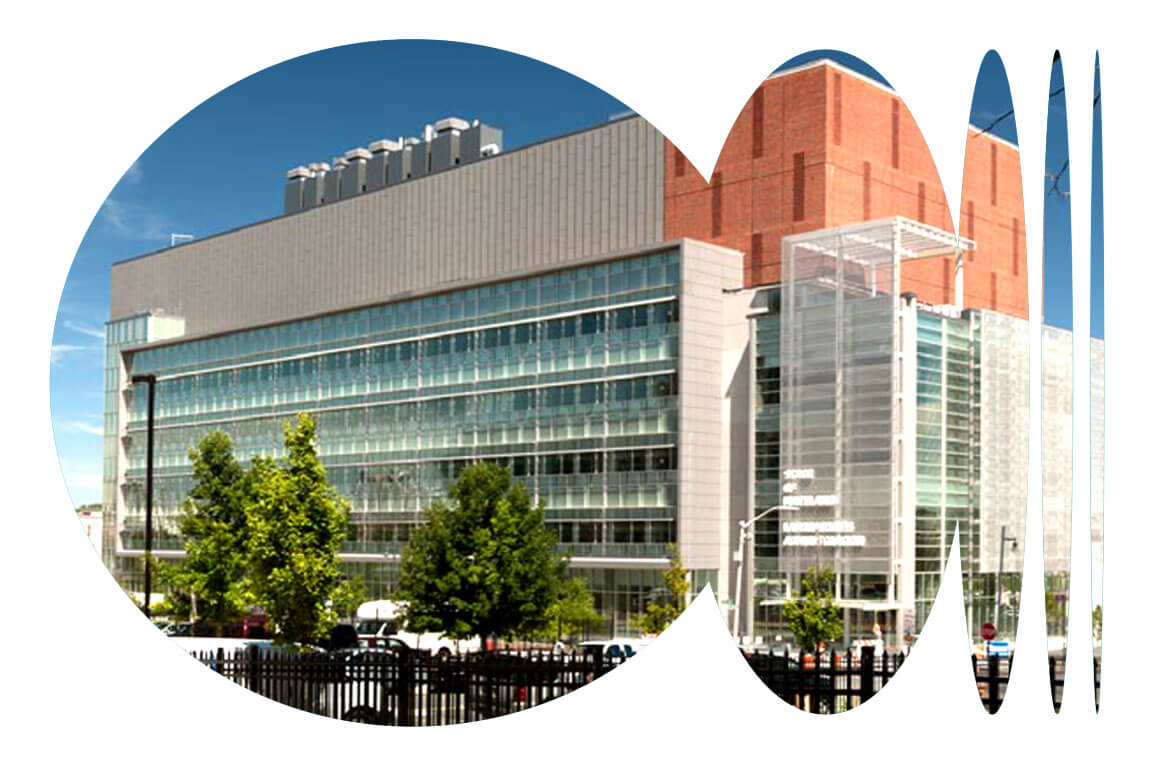
Facility: Construction of our central laboratory was completed in spring 2015. The approximately 237,000-square-foot energy efficient building is LEED Silver certified and includes energy saving features such as HVAC heat recovering enthalpy wheels, case work made from renewable materials, such as bamboo, and a green roof. Our laboratories are housed on six floors of the building, which features an open-plan design with mobile case work that allows for more flexible use and efficient use of space, allowing us to expand our testing capabilities and adapt to emerging threats, enhancing our overall preparedness efforts to better respond to outbreaks and environmental hazards. Our facility also contains over 17,000-square-feet of BSL-3 laboratories so our staff can safely work with high-consequence pathogens that are regularly encountered in public health laboratory practice. Additionally, the complex mechanical systems needed to operate our building are housed in a two-story penthouse with two rooftop 2.0-megawatt diesel generators that can completely power the facility for up to 72 hours when disconnected from the power grid.
The building infrastructure is organized around five scientific divisions—Environmental Sciences, Newborn Screening, Molecular Biology, Virology/Immunology and Public Health Microbiology—based on the diversity of scientific disciplines that are practiced in the facility to address a variety of public health problems. Our scientists are continuously improving our test systems by adapting and applying advanced technologies for better solutions to detect and characterize newly emerging and reemerging infectious diseases; respond to the growing threat of antimicrobial drug resistance; identify existing and novel chemical, radiological and microbiological contamination of our food and water supplies; and develop effective newborn screening tests for treatable heritable disorders. Approximately 9.8 million tests were performed by the Laboratories Administration in fiscal year 2025 (July 1, 2024 to June 30, 2025). We contribute not only to the mission of the Health Department, but to many other state federal and local government partners and to communities across the state.
Number of staff: We are staffed by approximately 220 full-time and contractual employees, most of which are based in our Baltimore laboratory. Our diverse workforce is highly educated, with approximately 75% of employees having a scientific or technical background. We also have a hard-working, dedicated cohort of support staff that are vitally important to sustain the success of our laboratory operations.
Distinguishing characteristics: We celebrated our laboratory’s 125th anniversary in the fall of 2023.
Highest volume testing: Our highest testing volume is performed by our newborn screening (NBS) laboratory. MDH NBS Laboratory is tasked by state statute to perform NBS testing and screen every baby born in Maryland (approximately 65,000 births/year) for the conditions defined by the Recommended Uniform Screening Panel (RUSP). Maryland is one of 12 states that continues to perform a second screen. Prompt medical interventions based on the results of these fast and accurate screening tests prevent infant long-term morbidity and mortality. In fiscal year 2025. the MDH NBS Laboratories performed over 8.8 million tests. Under Maryland law, when conditions are added to the RUSP tests, they must be added to the Maryland NBS panel in a timely manner. Since December 2023, the MDH NBS Laboratory has validated and implemented four new tests to screen for additional heritable conditions* for virtually every baby born in Maryland, adding hundreds of thousands of additional NBS tests performed annually.
*New conditions screened for since December 2023:(1) X-ALD (X-linked adrenoleukodystrophy, (2) MPS-II) Mucopolysaccharidosis type II, also known as Hunter syndrome, -(GAMT) Guanidinoacetate methyltransferase (Creatine deficiency) and Krabbe Disease (globoid cell leukodystrophy).
Notable success story: In Summer 2024, test results generated by several MDH testing laboratories were instrumental in support of an investigation by the MDH epidemiologists and food protection regulators into a cluster of Listeria monocytogenes infections in Maryland that were ultimately linked to the consumption of contaminated processed sliced deli meats, which led to a national recall of contaminated products. Listeria infections are reportable conditions in Maryland and by statute, L. monocytogenes bacterial isolates recovered from these infections must also be submitted to the MDH Laboratory for confirmation of the identification of the isolate and further genetic characterization using national standardized whole genome sequencing (WGS) subtyping procedures. The results of these genetic subtyping procedures are uploaded to national databases managed by CDC and/or FDA. These data sets are constantly analyzed to find clusters of genetically related Listeria bacteria that might be linked to a common exposure to a contaminated food product. Through case interviews, MDH epidemiologists linked the consumption of a common food product—precooked Boar’s Head deli meats—purchased at a local market to a local cluster of Listeria infections. Through PulseNet, Maryland made the initial link between a cluster of genetically related Listeria infections with the consumption of contaminated deli meat products collected from a local food store by isolating genetically indistinguishable genotypes of L. monocytogenes from unopened packages of deli meats. As of October 1, 2024, testing at the MDH Laboratory identified eight of the 59 infections reported in 13 states that were associated with this outbreak.
Biggest challenge: Historically, our biggest challenge has been the recruitment and retention of scientific talent. MDH laboratory scientists who possess specialized skills and advanced training, such as proficiency in performing mass spectrometry or WGS, are in high demand by biotechnology firms, commercial and federal government laboratories in the highly competitive Baltimore-Washington corridor job market. State salaries are substantially lower in comparison to comparable positions in the biotech industry, federal government laboratories or federal contractor positions, and Laboratories Administration frequently loses highly skilled fully trained laboratory scientists to attrition often because they cannot be adequately compensated by our organization. However, in light of recent events and the uncertainty of continued federal support for public health, our biggest challenge will be to find innovative alternatives to sustain some of these mission-critical programs if federal funding that now supports them is discontinued or drastically reduced.