The rapid, coordinated response of North Dakota’s Public Health Laboratory underscores the need for all states to maintain a continuous laboratory readiness posture for radiological and chemical emergencies.”
— Amy Watson Hardnett, PhD, LRN-C program lead, Division of Laboratory Sciences, National Center for Environmental Health, CDC
The Laboratory Response Network for Chemical Threats (LRN-C) provides analytical testing and surge capacity for emergency response, assisting in exposure monitoring and sample triage for chemical emergencies. This network connects partners at the local, state and federal level, enhancing flexible and resilient inter-agency collaboration. As a member of the LRN-C, the North Dakota Public Health Laboratory has a strong operational foundation for emergency response. All 54 LRN-C laboratories have the capacity to monitor chemical exposures at their onset and pack and ship specimens to the US Centers for Disease Control and Prevention (CDC). North Dakota, like all LRN-C laboratories, conducts outreach activities to public health partners year-round, and these relationships were invaluable during a recent radiation exposure incident.

A Situation Arises
On a Thursday evening in June 2025, an oil field employee was exposed to radiation from environmental samples in northern North Dakota. The employee was exposed to Technologically Enhanced Naturally Occurring Radioactive Material (TENORM) when a series of safety mechanisms failed. The employee's safety system alarmed after they got a face full of dust from the product with which they were working. The employee went home, showered, then traveled more than an hour to the Emergency Department in a large city. The Emergency Department notified Poison Control in neighboring Minnesota, according to North Dakota’s contract, and Poison Control notified the Radiation Emergency Assistance Center/Training Site (REAC/TS) at the US Department of Energy. REAC/TS advised on treatment options, proposed collecting a 24-hour urine specimen, and recommended contacting the health department. REAC/TS advocated for a nasal swab to check for inhalation, a standard precaution during suspected exposures. Providers also anticipated that commercial radiobioassay testing might face delays, so REAC/TS notified CDC to identify a timely, no-cost option suitable for ruling out a harmful intake.
The state laboratory, state epidemiologist and state Emergency Preparedness and Response (EPR) section coordinated a call to begin response activities. The state laboratory relied on longstanding relationships and capacity-enhancing exercises to successfully respond to the incident. The laboratory contacted CDC scientists, who provided expertise on types of radiation, how they worked and what to expect from handheld radiation detection readings. CDC also provided guidance on receiving the specimen safely, specimen storage, specimen handling and additional safety considerations to support response efforts. In this incident, CDC testing involved radiobioassay of a urine specimen to rule out internal contamination with radium-226 (Ra-226). CDC's involvement was integral to the success of the response, providing technical expertise in an incident that exceeded routine operational experience. The sample was safely transported to and secured by the laboratory on Monday, shipped to CDC on Tuesday and delivered on Wednesday.
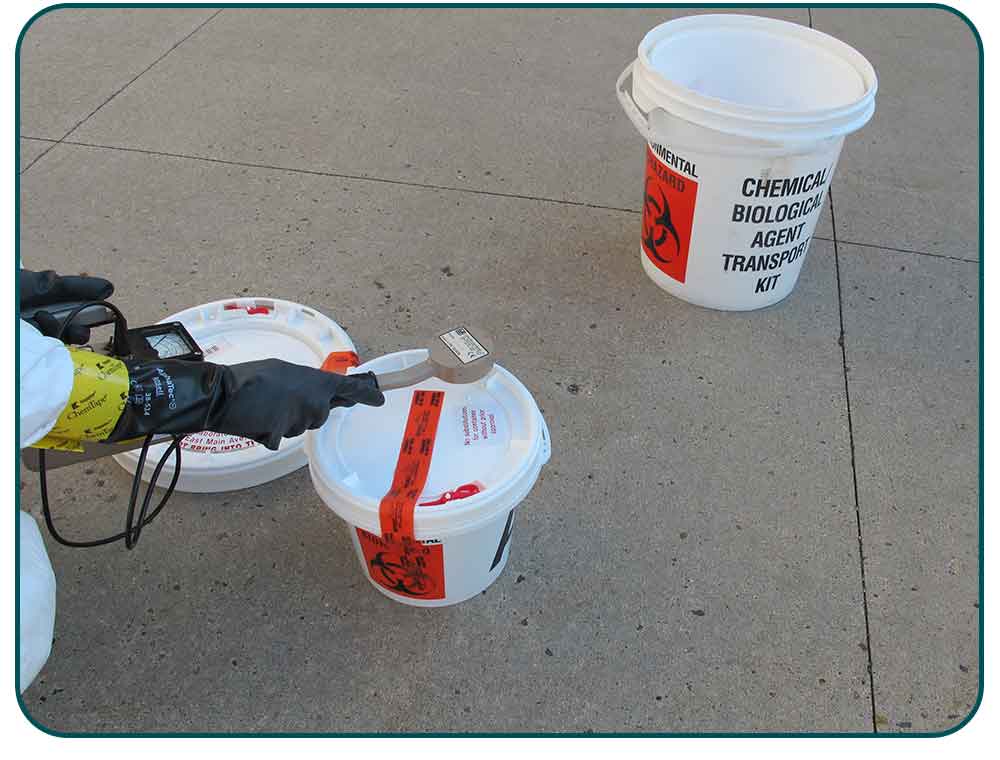
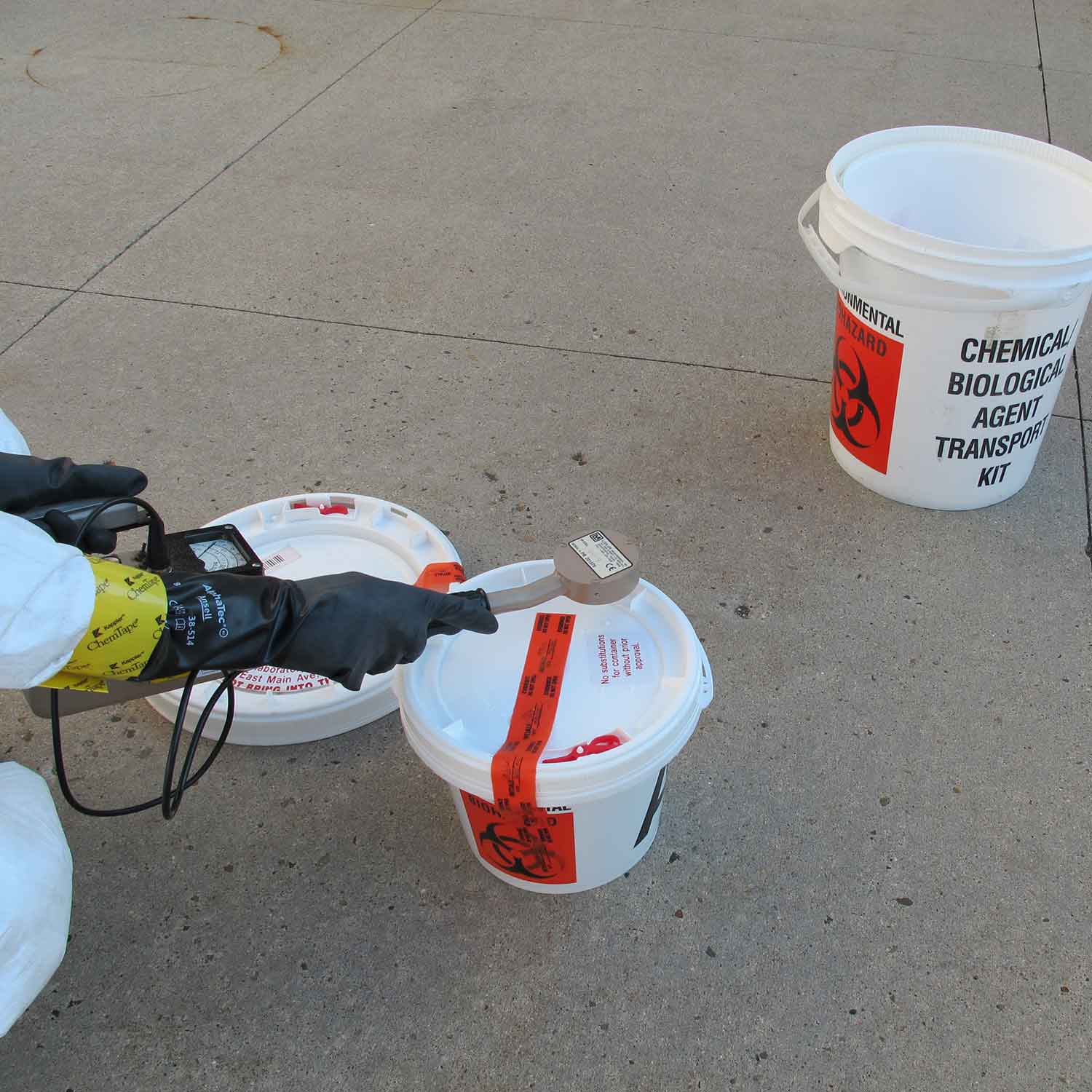
North Dakota Public Health Laboratory staff use a handheld radiation detector to scan over-pack packaging for radiation during a drill to be ready for incidents that may include radioactive material. Photo: ND PHL.
North Dakota’s readiness was a product of ongoing drills and exercises to enhance its emergency capacity. The laboratory holds annual Specimen Packaging and Shipping exercises (SPaSE) and broader capabilities drills within the laboratory and with EPR and the Civil Support Team (CST) to ensure all partners understand emergency protocols and so they can continuously improve procedures and methods. These exercises created familiarity, built trust and strengthened relationships, securing a prompt, nimble and effective response.
Lessons Learned
An after-action call identified multiple opportunities for growth. Coordinating contact with the patient to obtain the specimen, determining proper radiological screening procedures, identifying relevant tests and deidentifying the specimen were challenges during the emergency. In this incident, REAC/TS advised a 24-hour urine specimen collection (~2 L) before public health laboratory involvement. This is a common occupational approach to radiation evaluation. However, CDC has a rapid radiobioassay for emergency response requiring only a single spot urine sample (>= 30 mL) to screen for internal contamination with Ra-226. This mismatch created an unnecessary burden for the patient and introduced unnecessary complexity to sample storage and handling for the public health laboratory. However, when a 24-hour collection is already obtained, laboratories can reduce handling complexity by aliquoting into an appropriate container before shipment.
Identifying procedural gaps, like the specimen collection and handling methods, provided meaningful opportunities for system improvement. Moving forward, regular exercises and drills will create operational muscle memory to reduce hesitation and confusion in response events. The exercises will reinforce the notification pathways to reduce communications confusion. Early coordination between clinicians, laboratories and federal partners on sampling requirements before specimen collection can be highlighted during drills to minimize procedural issues. By strengthening clarity about roles, refining specimen-handling protocols and formalizing communication pathways, North Dakota expands an already strong foundation.
The 2025 radiation incident demonstrates that preparedness is not a static achievement but an ongoing process. It benefits from practice, partnership and continual reassessment. The event serves as a powerful reminder that preparedness and drills are not merely exercises—they are essential components of real-world readiness.