.png?sfvrsn=a4dc1c5f_6)
Fentanyl is Being Laced With a New Deadly Substance. How One State Laboratory is Responding
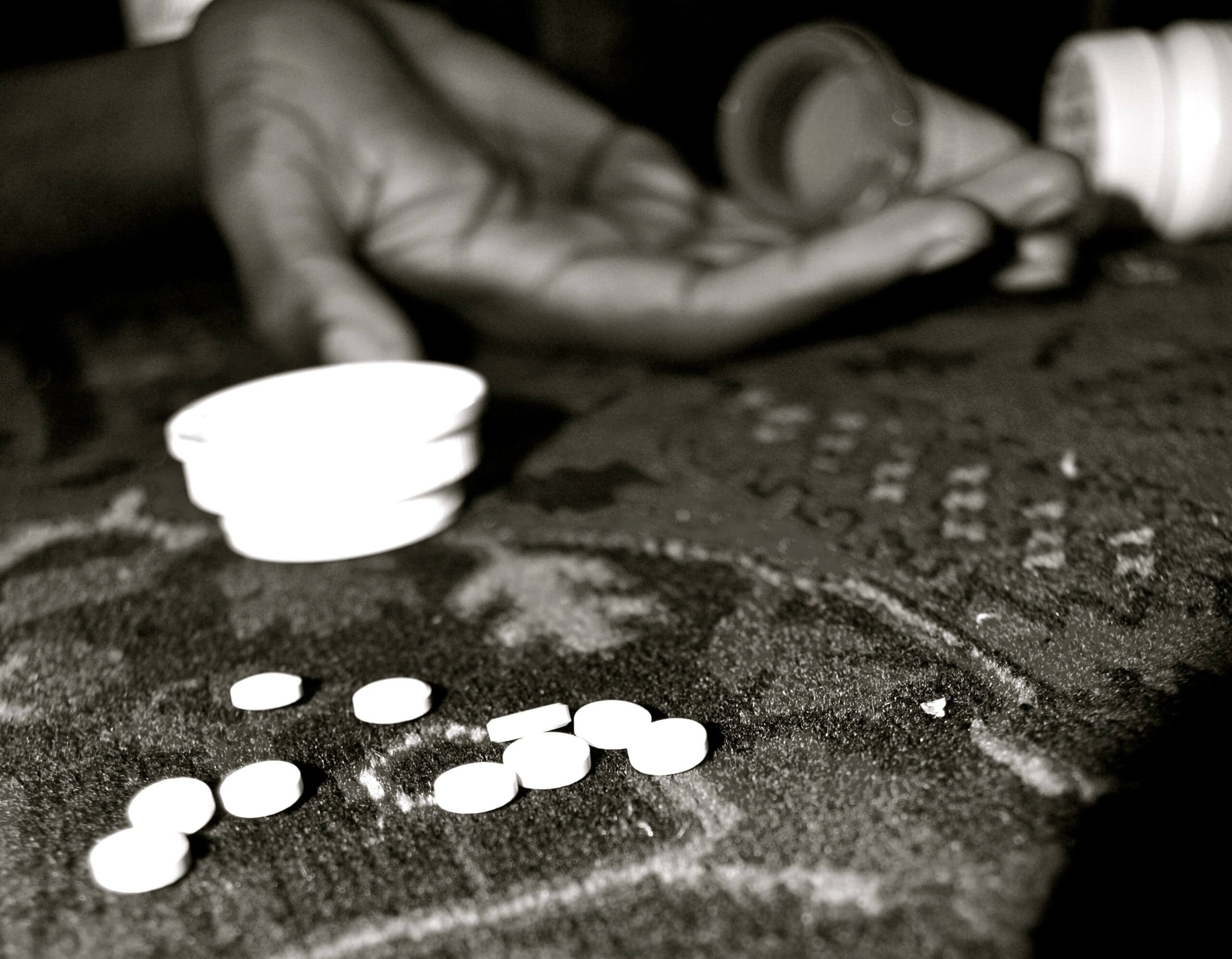
Last July, the Minnesota Department of Health issued a health advisory to the public after noting an increase in overdoses associated with nonopioids like xylazine and, increasingly, medetomidine.
Both xylazine and medetomidine are powerful sedatives approved only for veterinary use. Drug traffickers—often unbeknownst to their clients—sometimes lace their drug supplies with these substances to stretch the quantity, reduce costs and amplify the drugs’ effects. According to the health alert, xylazine and medetomidine are being found mixed in the drug supply, nearly always in the presence of fentanyl.

Nationwide trend
Minnesota isn’t unique.
Medetomidine was first discovered in the illicit drug supply in Maryland in 2022—and since then has spread to all corners of the country. In May 2024, there were 12 confirmed (and 140 suspected) overdoses involving medetomidine and fentanyl identified at three hospitals on Chicago’s West Side. This was the first time authorities there had noted its appearance in the drug supply. In Philadelphia, the drug is now detected in 70% of the city’s illicit fentanyl supply, far surpassing xylazine. And San Francisco reported its first medetomidine-related overdose death earlier this year.
The rise is alarming for several reasons. Medetomidine’s potency is up 300-fold greater than xylazine and can cause more intense and potentially deadly side effects, such as a slowed heart rate. What’s more, the effects of medetomidine can’t be reversed with naloxone.
“Medetomidine is not an opioid and does not respond to naloxone, but can similarly depress the respiratory system,” noted Jason Peterson, supervisor of Chemical Threats and Biomonitoring at the Public Health Laboratory, Minnesota Department of Health. “The implication of this is that while naloxone will help reverse the sedative effects of the opioid, the individual experiencing an overdose could still be experiencing the sedative effects of the medetomidine. When an incomplete revival is observed following naloxone administration, it becomes very important to maintain supportive care for respiratory functions.”
Minnesota takes action
Minnesota began detecting medetomidine in December 2024, when the compound was officially added to the state laboratory’s testing capabilities.
“In January 2025, we started to see a downward trend in xylazine detections in our samples corresponding with a rise in medetomidine detections,” Peterson said. “While both substances are still detected in fentanyl positive samples, the trends are an indication that the composition of the illicit drug supply is changing.”
At the Minnesota Department of Health Public Health Laboratory (MDH-PHL), testing for medetomidine involves using leftover blood and/or urine samples from patients treated for drug overdoses at partner hospitals. The laboratory utilizes advanced and comprehensive analytical instrumentation—unavailable in most typical clinical labs—to precisely determine the exact composition of drugs in a sample. The data is used by the Minnesota Drug Overdose and Substance Use Surveillance Activity (MNDOSA) project to track cases of substance misuse in the state and identify what substances are circulating in the drug supply.
“Once a sample arrives at our lab, it goes through an extraction process to target the substances of concern and pull them out of the complex blood and urine matrices,” explained Peterson, “Following extraction, the samples are analyzed with liquid chromatography high-resolution mass spectrometry technology. Our current methodology is capable of detecting over 1300 different substances of interest and routinely identifies multiple substances of concern in every sample. Through MNDOSA, we have been able to provide information on the continued increases in polysubstance-related overdoses and new substances involved in those overdoses.”
The importance of surveillance
To effectively guide prevention efforts, clinicians, public health professionals and community officials need to know what drugs are circulating, who’s using them and when and where they’re being used. Peterson noted that biosurveillance—the kind performed by MNDOSA—informs the public about substances they might encounter should they consume illicit drugs and gives clinicians more specific information so they can better treat their patients. Currently, 20 states are performing overdose biosurveillance under Overdose Data Action in States, a cooperative agreement between state health departments, and are working to build a national non-fatal overdose biosurveillance system.
“Public health laboratories across the country are performing work similar to what MDH-PHL does with MNDOSA,” he said. “This work is vital to the improved education, prevention and treatment of the overdose epidemic that America has been experiencing. With better data, we can help provide partners with the tools they need to lower the impact of illicit substances on the health and well-being of our communities.”