.png?sfvrsn=4ef4ed7f_2)
.png?sfvrsn=5f132a06_2)
.png?sfvrsn=a4dc1c5f_6)
Sharon Massingale’s road to laboratory science was anything but straight—or smooth. There were bumps, twists and what she likes to refer to as “detours.” But one thing never wavered, and that was her persistence.
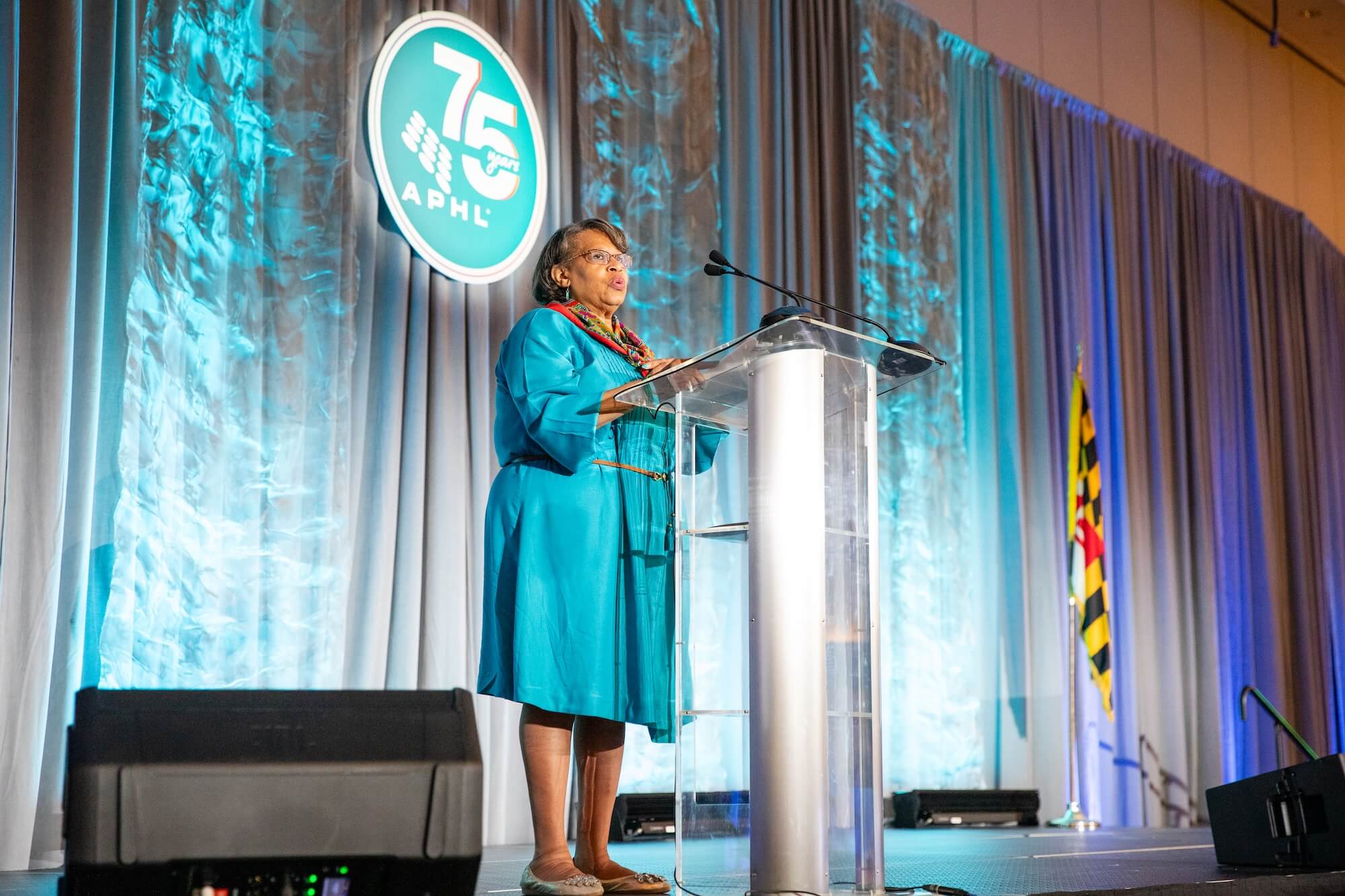
How did APHL’s president go from teaching freshman biology courses to becoming an entry-level microbiologist and, finally, laboratory director of the Alabama Department of Public Health Bureau of Clinical Laboratories? Massingale sat down with us to share her inspiring journey—the highs, the lows and everything in between.
Massingale said her first “detour” came when she entered Alabama A&M University with the intention of studying nursing—one of only four careers she thought were a possibility. “All I knew was that you could be a lawyer, doctor, teacher or nurse,” she said. “Florence Nightingale was a real inspiration for me.”
But a college advisor—noting Massingale’s excellent grades and a glut of nurses in the workforce—suggested medicine. She was put on a pre-professional track, preparing students for medical, veterinary or graduate school.
When Massingale’s boyfriend at the time (who later became her husband) was less-than-enthusiastic about the med/vet school path, she set her sights on the third option: graduate school. But first, Massingale, who had been the valedictorian of her high school class, had to get through college, which was harder than she anticipated.
“There were 50 graduating students in my high school class,” Massingale said. “They didn’t even offer biology or chemistry. And I had half a year of algebra. When I got to college, it was eye-opening. But I worked hard, and it turned out I loved the sciences.”
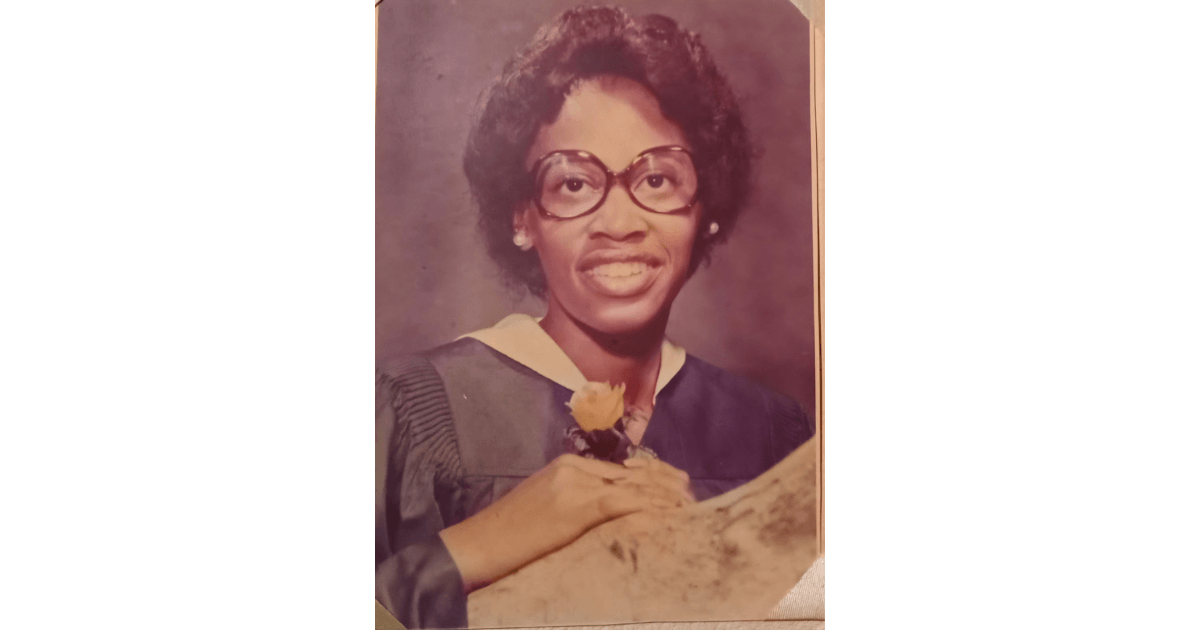
Massingale graduated with a bachelor’s degree in zoology and chemistry, got married and entered graduate school at Tuskegee University to study biology. The woman who had never taken a biology class in high school became a research assistant at Tuskegee, working in one of the microbiology labs.
“The microbiology professor I was working with was a molecular scientist,” Massingale noted, “so I learned about gene cloning and extracting DNA and RNA and how to operate different types of sophisticated laboratory equipment.”
After she got her master’s degree, Massingale stayed at Tuskegee as an associate researcher who also taught freshman biology classes. “God knows I loved teaching,” she said. “I’ll never forget, I had two students who came to me at the end of the semester to thank me for teaching them. These students had gotten Cs in my class, but they told me it was their third time taking the course and the previous times they had gotten Fs. They said it was the first time they took the class and learned anything. Those Cs were like As to them.”
Massingale continued teaching at Tuskegee while pursuing a doctorate in microbiology at Auburn University, cashing in her retirement fund to pay for tuition. She was also raising two young children while her husband worked in real estate and served as a pastor.
But while she was out on maternity leave with her second child, Massingale’s main professor, the one she was working with on her PhD, suddenly left the university without any explanation or communication. She was left floundering.
“I had finished my coursework and was finishing up my research, getting ready to graduate,” Massingale said. “And I was filled with so much anxiety. I drove up to Auburn, met with the new department head without an appointment, and said, ‘We need to talk about where I go from here.’ Ultimately, Massingale was able to continue her research with a new professor, but things once again turned stressful when that person also left the university.
The chair of the department stepped in again.
“He said, ‘Sharon, a lot of graduate students come in here and they not only want a ticket on the plane, but they also want to be the pilot. But I don’t see you wanting to be the pilot. I see you wanting a ticket, and I have one if you want to get on the plane,' " she remembered as she choked back tears.
With that, the chair laid out a proposal where Massingale could merge her research with a project he was working on. She also received a research grant so she could give up her teaching job at Tuskegee and focus on writing her dissertation and finishing her degree.
When she graduated with her doctorate, Massingale was 40 years old.
With her PhD in hand, Massingale headed back to Tuskegee to teach biology classes. But when she got there, the plan had changed. In addition to teaching two lecture courses, the university had her overseeing 11 labs with no one to help her prep for experiments. And the subject wasn’t biology, her real love--it was the physical sciences.
Massingale was becoming disheartened, especially with the long hours the lab work required, keeping her away from her family.
“It was another punch in the face,” she said.
And then Massingale remembered a sticky note she had placed on a stack of papers as she was leaving Auburn.
One of her professors had given her the note with the phone number of someone at the Alabama Department of Public Health’s Bureau of Clinical Laboratories. They were looking for an entry-level microbiologist. Knowing a state job with predictable hours would give her a better work/life balance, Massingale called, interviewed and got the job.
“The only other person in the building with a PhD besides me was the laboratory director,” said Massingale, who worked running molecular tests for bioterrorism. “My boss kept introducing me as Dr. Massingale, but I put a stop to that. I just wanted to be known as Sharon.”
Massingale rose through the ranks, becoming a senior microbiologist, a supervisor, manager, assistant laboratory director, and, finally, laboratory director. Today, she oversees about 145 staff in two state public health laboratory facilities.
To what does she owe her success? Massingale points to several things—her deep faith, hard work, good listening skills and knowing when to pivot.
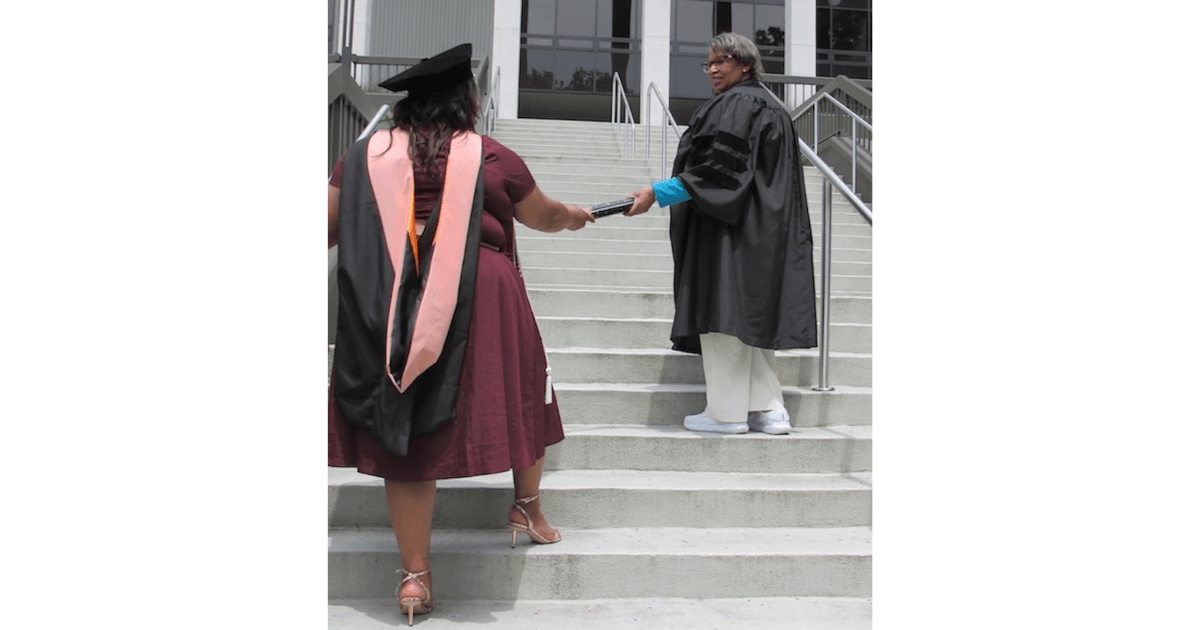
“Public health professionals are resilient,” she said. “Laboratory professionals are resilient. And most certainly that's what my life has been about—resiliency. One of my disappointments is that my husband, my high school sweetheart whom I began dating at 17, is not here to share my joy as I take the reins as president of APHL. But I am blessed that the day after I received the gavel from outgoing president Dr. Scott Shone, I passed the baton to my daughter as she received her DrPH in social epidemiology at Mercer University. I feel as though all those detours created a full circle moment.”
