.png?sfvrsn=a4dc1c5f_6)
From Surveillance to Syringe: The Making of a Flu Vaccine
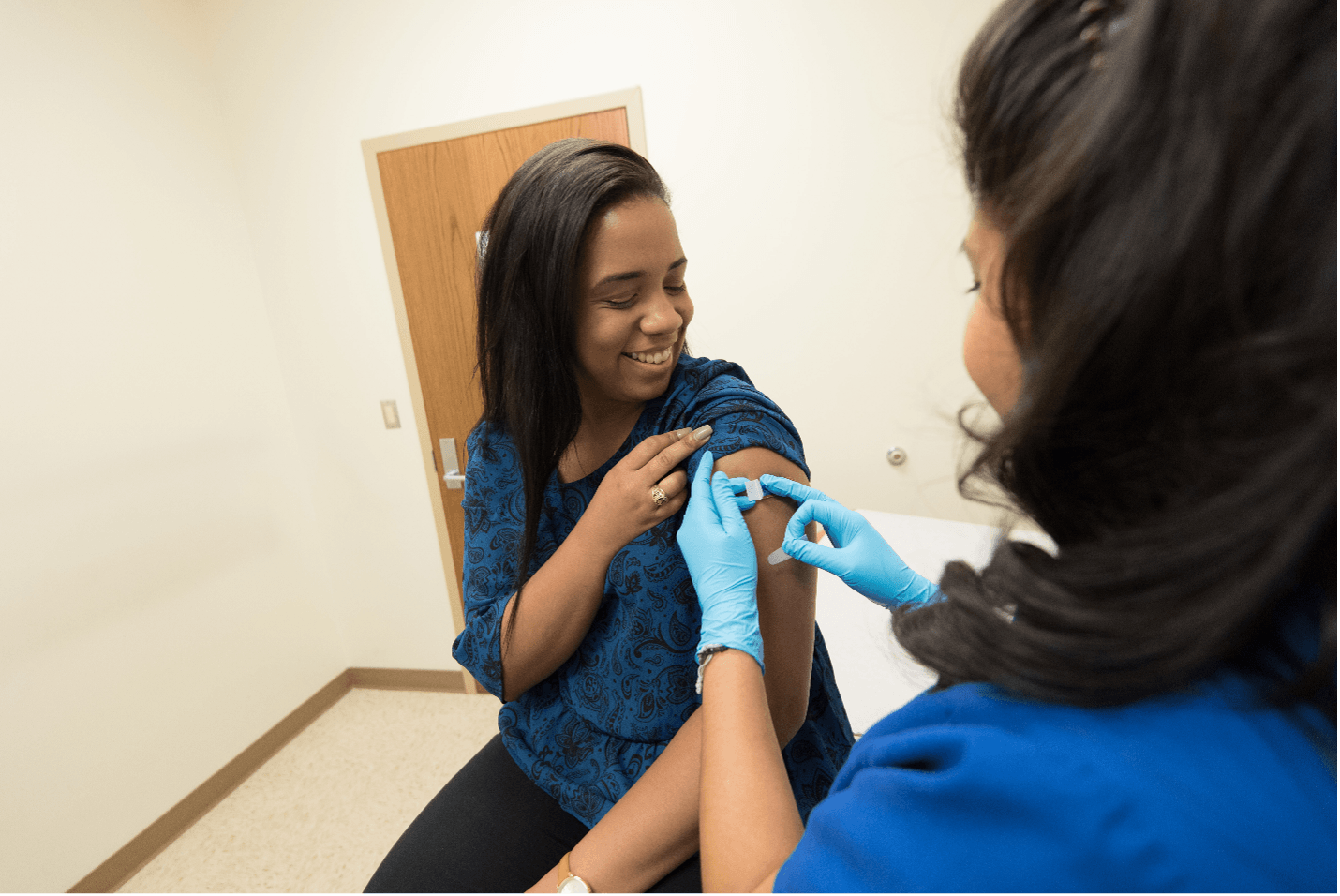
Flu season—which typically starts in October and runs as late as May—is upon us.
According to the World Health Organization (WHO), about a billion people around the globe become infected with an influenza virus (aka flu) each year. Several million of them will develop serious illness and up to 650,000 will die.
To help protect themselves, millions of Americans will be rolling up their sleeves to get this year’s flu shot, a trivalent vaccine that will help protect against the three influenza strains thought to predominate this fall and winter.
This is a change from previous years’ quadrivalent vaccine that protected against four strains of flu (two A and two B strains).
But why the change? And who exactly is deciding what goes into your flu vaccine?
Determining the makeup of each year’s flu vaccine isn’t a guess. It’s a well-thought-out selection based on data and science that’s collected year-round. Read on to learn how officials decide what goes in—and what comes out.

Moving the needle
Twice a year—in February to advise on the vaccine for the Northern Hemisphere and September for the Southern Hemisphere—scientists join with representatives from national laboratories and academies to review surveillance data as well as laboratory and clinical studies and make recommendations on which flu strains have been actively circulating and which ones to include in the vaccine.
They also take note of which viruses are no longer making much of an impact and if any novel strains are emerging. The Food and Drug Administration (FDA) then meets with US manufacturers of the vaccine to look at the recommendations and decide what to include in the vaccine distributed in this country.
“It’s a little bit like looking into a crystal ball, as viruses can change from when the recommendations are made and the vaccine is given,” admitted Melissa Warren, a senior specialist in influenza at APHL. “But scientists make the recommendations using the best data they have. And the use of sequencing data [which can more precisely identify strains] is providing better and better data. The public health community has really been focusing on building up robust surveillance programs so we can get the most timely and accurate information possible.”
The role of public health laboratories
Over the year, 144 national influenza centers in 114 countries collect data on circulating influenza viruses. These centers send representative flu samples to one of several WHO Collaborating Centers for Influenza.
In the US, Centers for Disease Control and Prevention (CDC) serves as a WHO Collaborating Center. Unlike other collaborating centers, CDC receives its samples from state, local and territorial public health laboratories (rather than National Influenza Centers at the country level). Public health laboratories play a critical role in monitoring viruses, including influenza viruses, to see what’s circulating in the area and to determine if the viruses are changing in ways that can affect a vaccine’s efficacy.
APHL, along with CDC, launched the Influenza Virologic Surveillance Right Size Roadmap to help determine how many samples each state should contribute to the national surveillance system. In turn, the public health laboratories rely on the submission of specimens for flu testing from clinical laboratories, hospitals and clinics, which are essential to meet the national and international surveillance targets.
This kind of surveillance informs national and international organizations on upcoming vaccine development as well as monitoring for seasonal, avian, and novel variants that might emerge—and it’s one reason why last year’s quadrivalent vaccine was changed to a trivalent one. Worldwide surveillance determined that one of the influenza B viruses included in the quadrivalent vaccine is no longer actively circulating, so its inclusion in the current vaccine wasn’t warranted.
Additionally, two of three components in this year’s vaccine are based on viruses detected by the US surveillance system, including our member laboratories—a testament to how the system functions as intended and detects novel or emerging viruses. This same system was also used to monitor and detect Highly Pathogenic Avian Influenza A in human patient samples exposed to infected dairy cows. It also points to the quality and number of samples the US system contributes when it comes to developing candidate vaccine viruses.
The strength of this surveillance system and the ability to develop accurate vaccines is dependent on strong partnerships between clinical laboratories, hospitals and clinics with public health laboratories as well as strong collaboration and support between the public health community and CDC and other WHO Collaborating Centers.
How effective are flu vaccines?
CDC estimates that in 2019-2020, the vaccine helped prevent 7.1 million illnesses, 3.45 million medical visits, 100,000 hospitalizations and 7,200 deaths due to flu. Should you get sick, a flu vaccine can also reduce the severity of the illness. And when you prevent serious illness from the flu, you also help prevent some of its potentially serious complications, such as ear and sinus infections, bacterial pneumonia and more.
CDC recommends a yearly flu vaccine for people aged 6 months and up. Annual vaccination is important, say experts, as flu viruses—and hence the vaccine–change from year to year. What’s more, protection wanes over time. The best time to get vaccinated, they say, is in September or October. It takes about two weeks for the flu vaccine to become effective, so getting vaccinated before flu season really gets underway is a smart strategy.