.png?sfvrsn=a4dc1c5f_6)
75 Years of Environmental Testing: What It’s Accomplished, Where It’s Going
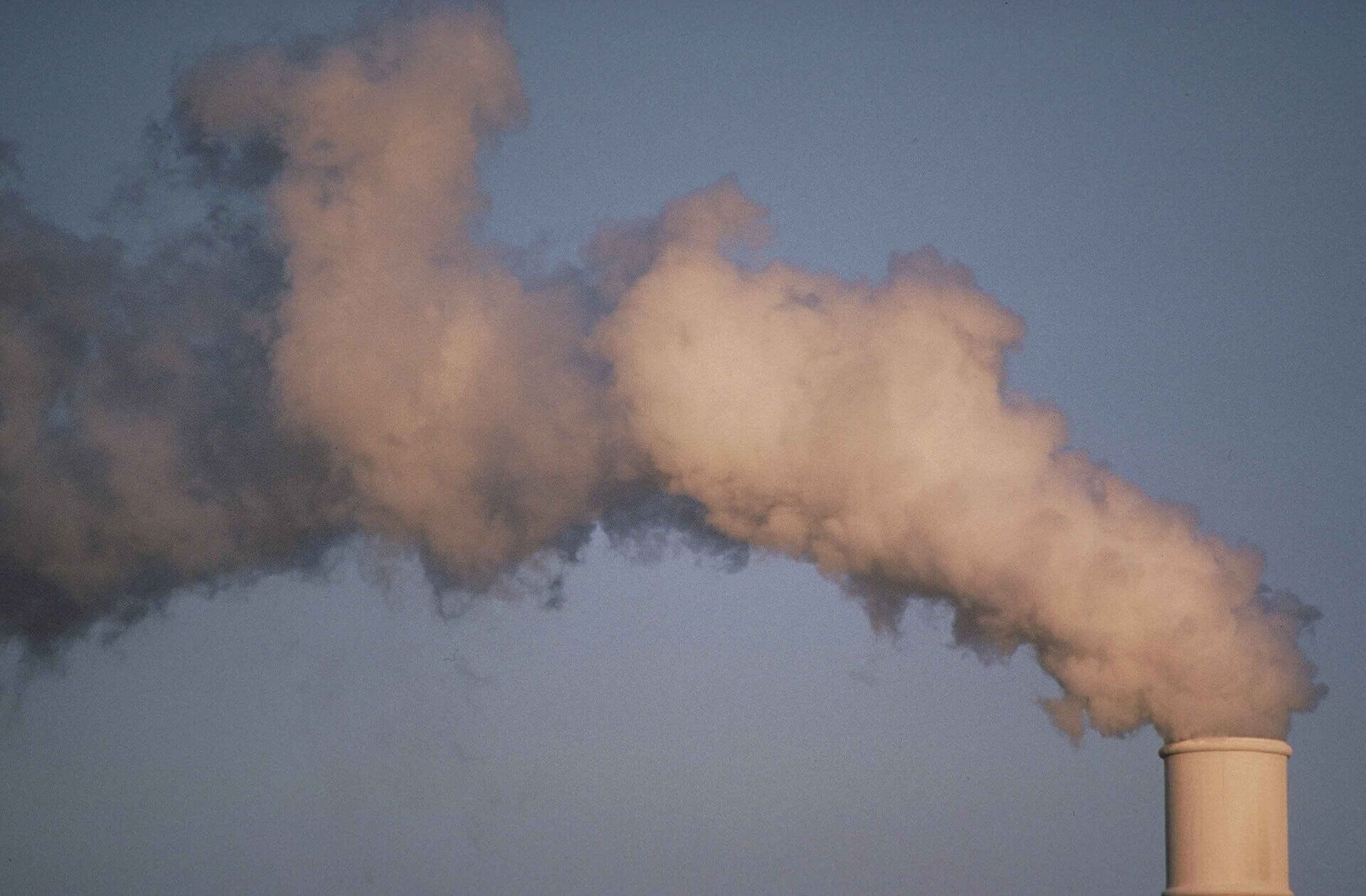
Seventy-five years ago, post-war industrialization left cities shrouded in smog. Synthetic chemicals were making their way into household cleaning products. Manufacturing waste and human sewage often ended up in rivers.
The need for government regulation and environmental testing was fast becoming apparent. How did the country respond and what role did environmental testing play?
Those were questions discussed during the session, “Celebrating 75 Years of the Emergence and Importance of Environmental Laboratory Testing,” at the 2026 APHL Annual Conference held in Baltimore, May 4-7. Attendees heard from three environmental scientists who outlined the advent of environmental testing, its impact on the quality of our water and air, and the importance it has played in preventing toxic exposures and stopping the spread of disease.

Environmental disasters spark change
Pamela Higgins, PhD, director of the Bureau of Laboratories at the Pennsylvania Department of Environmental Protection, gave an overview of the history of environmental testing.
She began by highlighting several environmental catastrophes from the 1940s to 1970s—the 1948 Donora (Pennsylvania) Death Smog that killed 19 people in a matter of days and the Three Mile Island nuclear reactor meltdown in 1979, to name just a few. These events resulted in a rise of environmental awareness and spawned sweeping governmental regulations. The US Environmental Protection Agency (EPA) was established in 1970. The Clean Water Act came along in 1972. The phase out of lead in gasoline began in 1973.
“The government began enacting a plethora of legislative acts for clean air, safe drinking water and conservation,” Higgins said. “And at this point, the environmental laboratories were beginning to standardize their analytical methods and had early testing certification standards enacted. Mass spectrometry was being introduced and there was increased hazardous waste site testing due to some of these environmental incidents that had occurred.” Higgins noted that laboratories were beginning to embrace computer technology and develop air pollution and nuclear testing capabilities to keep up with the times.
And the measures are working. The nitrous oxide released from autos was reduced over fivefold in 25 years, Higgins reported. There was a reduction in water pollution in the nation’s lakes and rivers. The Charles River in Boston, for example, showed a 50% reduction in sewage and stormwater waste from 1988 to 1992. The 2000s saw even more progress, said Higgins. Over 90 contaminants in our drinking water—from bacteria to PFAS—are now regulated, and just 2% of America’s children have elevated blood lead levels, a significant drop from what was reported in the 1970s.
But while things have improved, there’s still more work to be done, Higgins cautioned. Roughly half of the US population lives in areas with unhealthy air quality. There are more wildfires, flooding events and algal blooms, requiring evacuation notices and drinking and swimming alerts. Fracking is causing the release of radio isotopes. Nature—and our impact on it—will always deliver emergencies and disasters, which will continue to make environmental testing relevant, Higgins concluded.
Raise a glass
Anita Keese, environmental chemistry section director at the Texas Department of State Health Services, focused her presentation on water quality.
Seventy-five years ago, she said, America thought the scourge of waterborne diseases was a thing of the past, thanks to the chlorination of municipal water supplies. But many Americans relied on untreated well water for their daily needs or received their water from small plants that were not treating water completely and/or effectively.
“The US Public Health Service had established some advisory limits, but they were only for bacteria and some chemical contaminants. By 1962, we had 28 [substances regulated] and were able to test down to the parts per million level,” Keese said, who illustrated her point with a graphic of a sugar cube dropped into a hot tub. “We were doing a lot of wet chemistry at that point, testing for things like alkalinity and chlorine and doing some colorometric and gravimetric methods for some minerals and metals as well.”
As the decade wore on, Keese said, America began learning that there might not be better living through chemistry. “Chemicals and radioactivity were clearly hurting our health,” she said. “They weren’t the panacea we thought they were.”
The 1970s brought about federal regulations that formalized standards and required routine monitoring and compliance testing. Testing methods had advanced to the point where scientists could measure down to parts per billion, which Keese illustrated with an image of a sugar cube in an Olympic-sized swimming pool.
“We began to realize that although chlorine caused health improvements, it also caused problems,” Keese said. “It was reacting with organic materials in the water plant and resulting in the production of trihalomethanes. We realized things weren’t so perfect, and we had some outbreaks, such as the Milwaukee Cryptosporidium outbreak that killed over 100 people and sickened more than 400,000. That changed how we treat drinking water plants. We created a lot of new treatment techniques to prevent Cryptosporidium from moving through the water treatment process. Flint, Michigan, [where inadequate treatment and testing of drinking water caused a host of health issues for the community, including elevated blood lead levels in children], taught us more than any other outbreak that good governance matters.”
Today, Keese pointed out that we are testing volatile organic compounds, metals, byproducts and PFAS. “And what’s exciting about this is we can now test down to parts per trillion level, which I’ve conveyed with that same sugar cube dropped into a lake big enough to hold New York City,” Keese said. “But while 90% of Americans get their water from public water systems, there are still a lot of private wells, and 1.1 million people get sick annually from untreated drinking water.”
Even when the water is treated, problems can arise due to aging infrastructure, flooding events and high temperatures. “We don’t get to choose what the future holds,” Keese said. “But I do know that we’re better trained and better equipped than ever, and with all this new technology, we can make transformations in the future.”
Clearing the air
Air quality measurements were in their infancy in the 1950s. California established three laboratories to measure air quality and its health effects in 1955, said Kazukiyo Kumagai, PhD, chief of indoor air quality at the California Department of Health. And what started in California quickly spread to other states. With the birth of the EPA and the Clean Air Act in 1970, air pollutants were beginning to be defined and regulated.
To help measure these pollutants, scientists used a konimeter, which measures the concentration of airborne dust, and a telephometer, which measures the light intensity of a distant object. “If you have dirty air, you’ll have less light intensity. And if you have clean air, the monitor will observe a stronger light density,” Kumagai explained. “The readings are brought back to the lab and the particles are counted.”
Things progressed from there. What used to be done manually with a microscope was beginning to be automated. For example, said Kumagai, scanning electrode microscopy can take high-resolution images of the particulate matter in a sample so it can be analyzed.
Better monitoring of air pollution via testing has brought improved health to Americans while also informing public health policy. Consumer alerts about the health effects of fiberglass found in children’s mattresses, which can become an inhalation hazard, are a good example.
Moving forward, Kumagai urged collaboration. “We need better communication between the environmental labs, community leaders and academic partners,” Kumagai said. “We need to create a better network of partners so we that we can attack more of the problem.”