.png?sfvrsn=a4dc1c5f_6)
How Three Public Health Laboratories Partnered to Detect One Rare Virus
On Sunday, October 27, 2024, healthcare practitioners at the University of Iowa Health Care Medical Center in Iowa City suspected Lassa fever in a patient under their care.
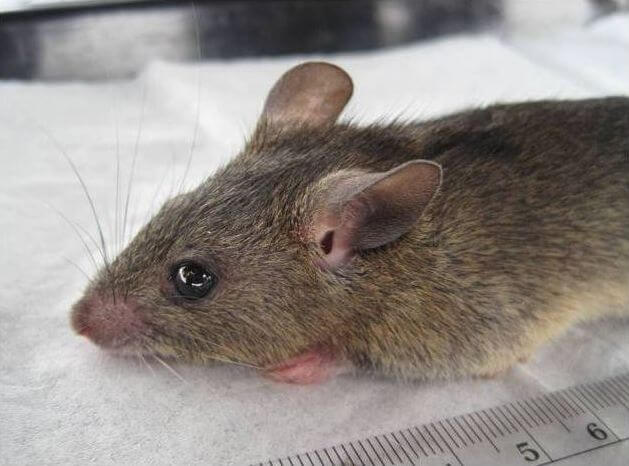
Lassa fever is caused by a virus endemic in West Africa—where the patient had recently traveled —but is rare in the United States. It is primarily transmitted to humans from the urine and droppings of infected rodents but, in rare instances, can be transmitted person to person through contaminated blood, bodily fluids, mucus membranes and sexual contact. It has the potential to cause significant illness, including hemorrhagic disease.
Under normal circumstances, patient specimens for hemorrhagic fevers would be sent to the nearest Laboratory Response Network for Biological Threats (LRN-B) laboratory, which in this case would be the State Hygienic Laboratory at the University of Iowa.
But there was a problem. Iowa didn’t have the capability to test for Lassa fever.
“There have now been nine cases of Lassa fever in this country since it was first identified in 1969,” said Michael Pentella, PhD, director of the Iowa laboratory. “It was not something on my radar. We try to be prepared for as much as possible, but when you have a limit to your resources, you can’t be prepared for everything.”

Enter neighboring Nebraska
Iowa state epidemiologist Matt Donahue, PhD, had recently served as state epidemiologist in Nebraska and knew the laboratory there had recently verified the BioFire Special Pathogen Panel (GPSS). The panel, which had not long before been cleared by the Food and Drug Administration (FDA), can test for various hemorrhagic fever viruses, including Lassa fever.
In a matter of hours, seven blood specimens from the patient were driven by a government courier the 235 miles to the Nebraska Public Health Laboratory (NPHL) in Omaha.
“Since the NPHL supports laboratory testing for not only the Regional Emerging Special Pathogen Treatment Center (Region VII, RESPTC) at our academic hospital but also the National Quarantine Unit, both located on the University of Nebraska Medical Center campus where NPHL is also located, I felt it would be important to have this test available to provide primary diagnostic testing for a wide range of high-consequence pathogens,” said NPHL director Peter Iwen, PhD. “Since this testing was not offered through the LRN-B program, Iowa and most other public health laboratories were not set up to provide this testing.”
Illinois gets involved
While Nebraska laboratory scientists worked on testing the samples (which came back with a presumptive positive for Lassa fever just hours after they had arrived at the laboratory; the patient died from the virus the next day), Iowa got to work verifying and onboarding the GFSPP in the event the patient’s contacts showed symptoms and needed to be tested.
Iowa needed kits and verification materials before any training could be done, but ordering and obtaining them would take time. APHL was able to get supplies faster, but even that route would take a few days, further delaying verification.
That’s where Illinois stepped in.
Illinois had also recently verified the GFSPP, and when the call came in that Iowa needed materials for training and verification, Illinois sent 60 GFSPP tests, three control kits and control material already diluted with commercial blood.
Transporting the supplies took an all-hands-on-deck approach.
Coincidently, Jessica Wickline, one of the Laboratory Leadership Service (LLS) fellows working on the case, had family in the Springfield, Illinois, area, where the Illinois Department of Public Health is located. “They were able to pick up the materials and transport them to the Iowa State Lab the same day,” said Joshua Geltz, PhD, chief, Division of Laboratories, Illinois Department of Public Health. “All in all, communication with Iowa started around 6:30 am Saturday, November 2, and by 4 pm that same day the GFSPP materials were received at the Iowa state lab.”
The power of partnerships
Thanks to the strong partnership and communication between public health laboratories, the Iowa Lassa fever case was detected not in weeks or days, but hours. The US Centers for Disease Control and Prevention (CDC) later confirmed the findings.
While Illinois provided critical materials for training and verification, APHL also stepped up to support Iowa with materials. One week after training began, Iowa had verified the test and was able to process samples from four symptomatic contacts of the original patient. None had Lassa fever. Tyler Wolford, MS, senior program manager, Public Health Preparedness and Response program at APHL, noted that “this experience with Lassa fever has highlighted the need to implement a wider array of tests, such as those included on the GFSPP in LRN-B member laboratories.”
It also highlighted the value and importance of collaboration between states.
“We are so appreciative of the support from Nebraska and Illinois,” Pentella said. “Because of our involvement in the Midwest Consortium and our regular meetings, we know what each other is doing. We can reach out to brainstorm and know we will have a quick response. It’s a synergistic experience.”
“The Midwest Consortium helps to foster relationships between states, develop partnerships and provide contacts with key leaders to support public health,” Geltz added. “The sharing of resources, expertise and knowledge is what we should all be doing. We may come from 50 different states, but we all have the same mission—protecting the public’s health.”