.png?sfvrsn=a4dc1c5f_6)
The Impact of a Pilot Wastewater-Based Surveillance Project in Africa—and Thoughts About Its Future
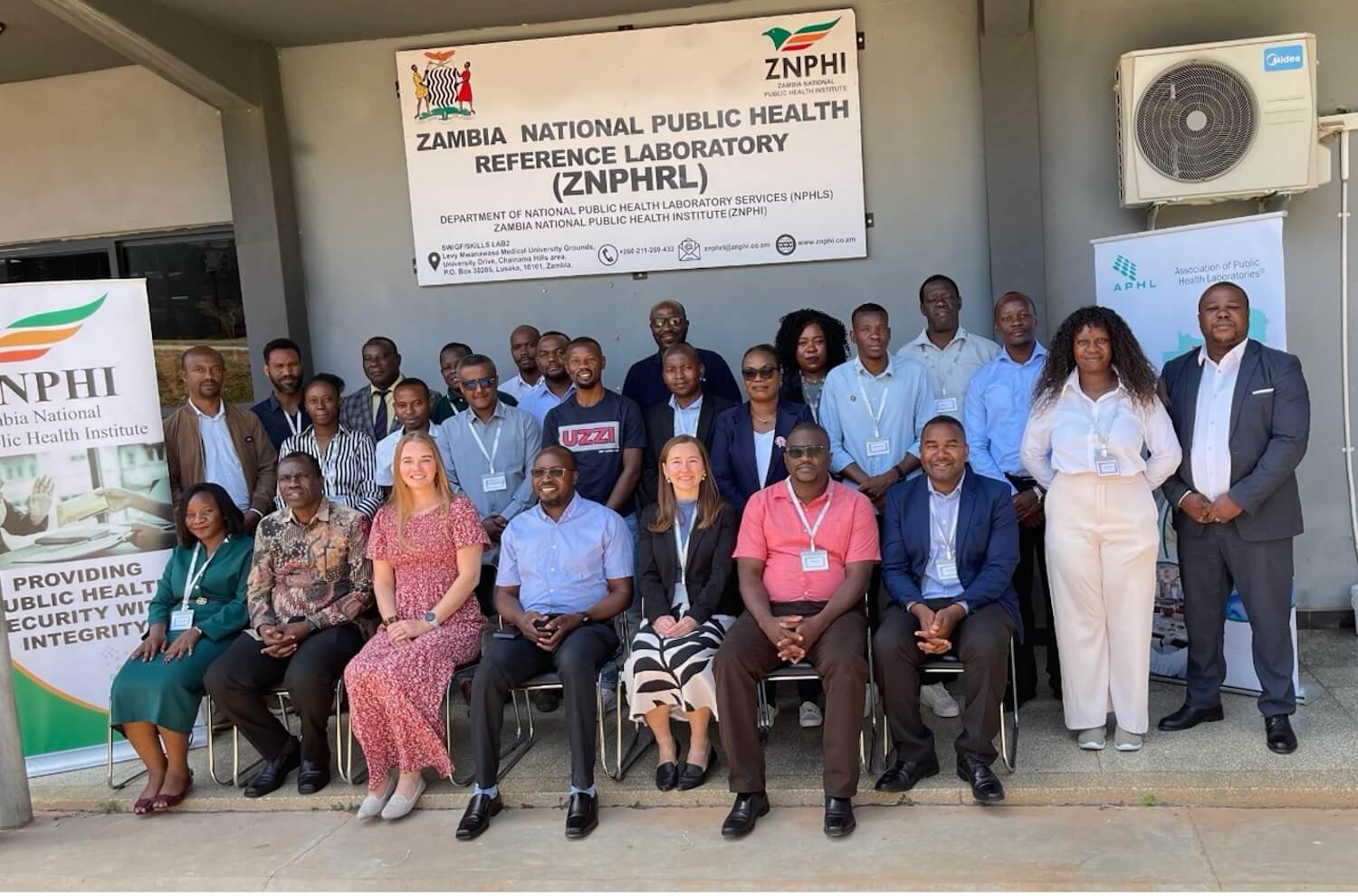
With funding from the Global Fund and support from APHL and in-country Ministries of Health, six African countries— Uganda, Kenya, Zambia, Mozambique, Ethiopia and Tanzania—recently completed a years-long pilot wastewater-based surveillance (WWBS) project.
The project aimed to assess how well WWBS can monitor disease outbreaks and guide public health decision-making. While the project focused on surveillance of SARS-CoV-2 and its variants, the countries found that WWBS was an effective and low-cost way to monitor any number of emerging pathogens.

Moving beyond COVID-19
While WWBS has existed for decades—most notably for polio surveillance and most recently for COVID-19—it’s proving to have broader applications. According to APHL’s Noah Hull, PhD, senior manager, Global Health, there is significant momentum around exploring how WWBS can complement existing surveillance systems and provide near real-time, actionable data to inform public health responses.
For example, Uganda has used WWBS during mudslides and garbage slide-related flooding events to assess infectious risks in contaminated standing water impacting surrounding communities, reported Hull. The country has also operationalized WWBS for mass gatherings, including Martyrs’ Day and international football tournaments, demonstrating its utility in high-risk, high-density settings.
“If sustained, WWBS offers the ability to detect threats earlier than traditional clinical surveillance—creating an opportunity to contain outbreaks before they escalate,” Hull explained. “The true value of systems like this is difficult to quantify; when they work as intended, they prevent crises from occurring in the first place, making their impact both substantial and largely invisible.”
Creating sustainability
To support continued WWBS work, APHL in-country staff held regional trainings for laboratory staff and public health professionals. The first training, held in Zambia in November, focused on epidemiology and surveillance for WWBS, with participants representing both laboratory and epidemiology disciplines across the One Health (human, animal and environmental health) spectrum. The second training, held in Uganda in December, concentrated on data utilization and data literacy for WWBS, emphasizing how to translate complex environmental and genomic data into actionable public health insights.
According to Hull, all six participating countries received at least one targeted technical assistance visit from APHL headquarters staff. These engagements included advanced bioinformatics training, particularly around genomic analysis of microorganisms detected in wastewater, as well as support for implementing quality management systems.
“A key focus was ensuring that quality is embedded into WWBS workflows so that resulting data are reliable, reproducible and suitable for informing public health decision-making,” Hull said. “Across all participating countries, the program achieved both technical feasibility and strong institutional buy-in.”
Moving forward
Hull noted that WWBS will increasingly be used not only for disease detection but also for monitoring how microorganisms evolve—for example, tracking changes in pathogenicity and resistance to medical countermeasures, including antimicrobial resistance. The range of pathogens of interest is also expected to expand and will likely include respiratory pathogens (viral and bacterial), viral hemorrhagic fever pathogens, enteric pathogens, such as cholera, and broader One Health threats that impact human, animal and environmental health.
But one of the key challenges moving forward will be sustained funding, Hull said.
“At its core, WWBS aligns directly with broader public health and national security priorities—preventing pandemics before they start and reducing the risk of cross-border health threats,” he noted. “But in an era of declining global health funding, surveillance systems are often among the first to be deprioritized, despite their critical role in prevention. Continued donor investment will be essential to maintain and expand these systems. In a connected world, risks do not remain isolated—we cannot keep our side of the boat afloat if the other side is taking on water. Global health is public health.”
This blog post is the last in a series highlighting our WWBS work in partnership with the Global Fund. More stories from our global health wastewater surveillance series include:
- How Kenya Built a Wastewater-Based Surveillance System: 6 Questions Answered
- Waste Not: Building a Wastewater Surveillance System in Zambia
- Eyes Below the Surface: Wastewater Surveillance Pilot Program in Uganda Shows Potential for Future Pandemic Monitoring
- Testing the Waters: Ethiopia Pilots a Wastewater Surveillance Program
- Wastewater-Based Surveillance Serves as Early Warning System in Mozambique
- The Exciting Promise of Wastewater-Based Surveillance: An Ongoing Pilot Program in Tanzania Is Showing Potential