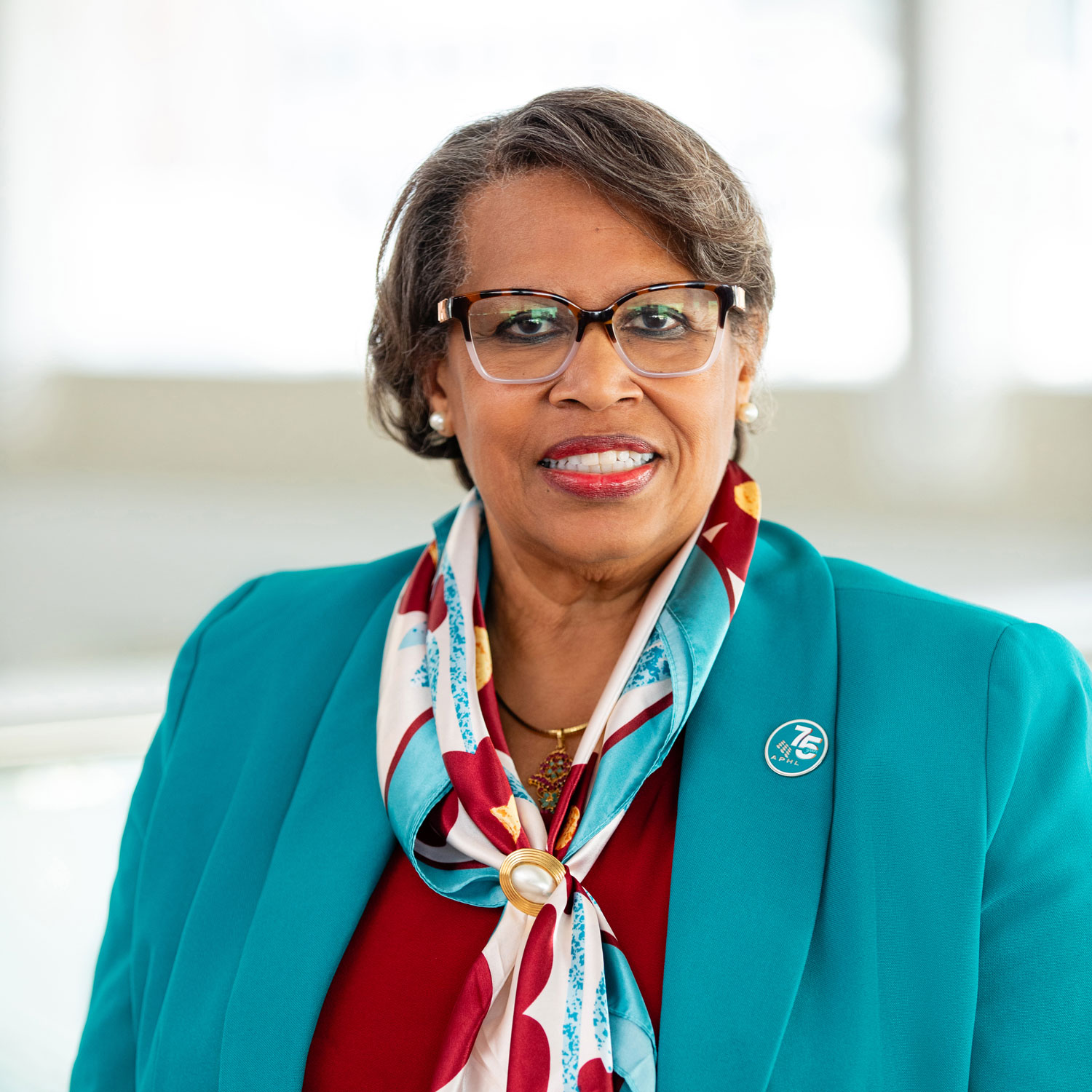
It is an exciting time for me to begin my term as president of APHL. ... I am very excited to give back to the organization that has given me so much during my public health laboratory career.”

Fall 2026
Issue 3
Leaning Into the Power of Regionalization
Very early in my career as a public health laboratorian, I was introduced to the concept of laboratory systems and standards by APHL. In fact, one of my first encounters with the association was as a member of the Laboratory Systems and Standards committee. When APHL rolled out the Laboratory Systems Improvement Program (L-SIP) in 2007, it was a great opportunity for our members to assess and reassess their systems on an ongoing basis. In fact, it was the first program of its kind specifically tailored to public health laboratories.
Fast forward to 2026 and the time has come for L-SIP to evolve. Even before I became president-elect, I was thinking about how our members could use systems like L-SIP to further strengthen their activities. L-SIP itself was created specifically for state laboratories, and now APHL has a more diverse laboratory membership which now includes environmental, agricultural, chemical and veterinary laboratories. In addition, we have robust representation from local jurisdictions and from public health partners.
The concept of developing regional consortia within the public health laboratory community started with the New England states in the 1970s and then in 2006 with the Northern Plains states. From 2015 to 2019, growing discussions about the need for a unified approach to workforce development and continuity of operations, along with recognition of region-specific challenges, increased interest in creating additional consortia, resulting in the creation of the Southeast ColLABorators, Mid-Atlantic Consortium, Midwest Consortium, Pacific Rim Consortium, and the Four Corners and Central Plains Consortium. Currently, the Regional Consortia comprises seven regions representing 49 states and the District of Columbia, some US territories and other municipalities, 68 unique public health laboratories and over 300 laboratory professionals.
My priority for the year is to revitalize L-SIP to be more inclusive and to be more adaptable to the many regions where our public health laboratorians live and work. The new Regional Consortia System Improvement Program will reinforce linkages that already exist between public and private partners in each consortium, as well as create new linkages and resources for those who had not typically been the benefactor of those partnerships. For example, within my home regional consortium of the Southeast ColLABorators, we are examining ways to set productive limits on projects that might prove challenging or might stress the political environment within our jurisdictions. Our aim is to not only streamline functions, such as procurement, courier services, information sharing and other laboratory services, but to also remain cognizant of each member’s challenges—whether geographical or political. By partnering within our consortia, we can not only educate our fellow consortia members, but also work with other well-established external consortia to adapt their best practices and lessons learned to our unique circumstances.
It is an exciting time for me to begin my term as president of APHL. While there will be challenges and unexpected events for us to respond to, I am very excited to give back to the organization that has given me so much during my public health laboratory career. I look forward to our year together, and I encourage you to reach out to your colleagues and make those connections that are so vital to public health laboratory science.
Get More from Lab Matters: