I was grateful to have members of TN COE present as they helped explain portions of the worksheets.”
— Workshop participant

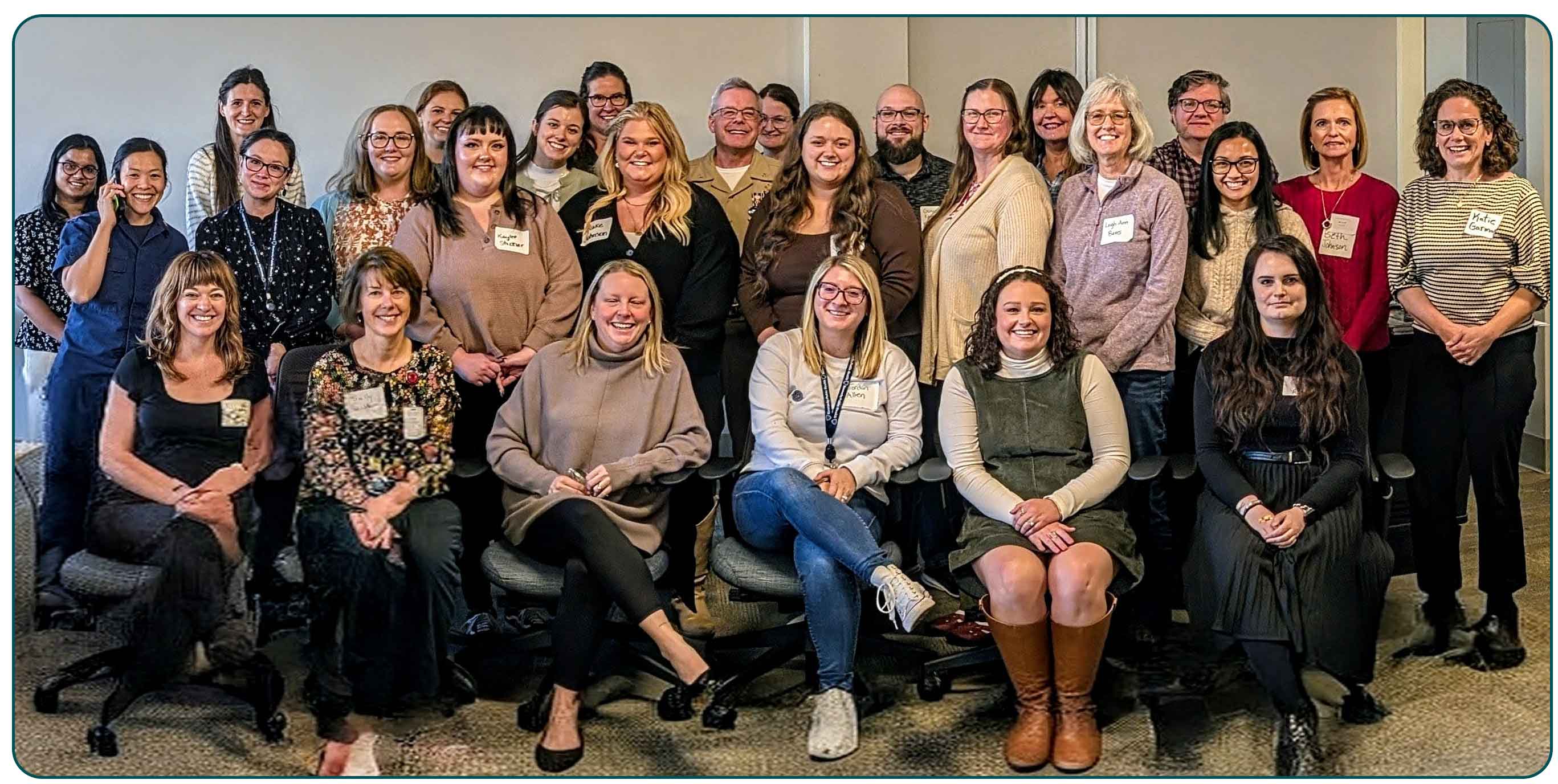
Kentucky Workshop participants, TN CoE staff and APHL staff in Frankfort, KY during the CIFOR workshop.
APHL recently partnered with the Kentucky Department for Public Health (KDPH) and the Tennessee Integrated Food Safety Center of Excellence (TN CoE) to host a CIFOR Toolkit workshop designed to refine foodborne outbreak response across multiple KDPH program areas. The event brought together epidemiology, environmental health and laboratory staff to examine existing workflows and align practices with CIFOR recommendations.
The Council to Improve Foodborne Outbreak Response (CIFOR) is a multidisciplinary collaboration of national associations and local, state and federal agencies representing epidemiology programs, environmental health programs, public health laboratories and regulatory agencies. CIFOR identifies barriers to rapid detection and response to foodborne disease outbreaks and develops products that address these barriers. CIFOR has many resources to assist public health laboratories and other agencies involved in foodborne outbreak response to enhance collaboration among interested parties, identify model practices for foodborne disease investigations and promote the value of molecular surveillance of foodborne illnesses.
Before the workshop, APHL and TN CoE worked with KDPH to complete some preliminary tools that help clarify decision-making roles and priority areas for improvement. KDPH chose to focus on Communication and Relationships with Relevant Agencies. During the session, KDPH organized participants into groups to help foster discussion between the different disciplines present. Using the CIFOR Toolkit, participants compared actual workflows with recommended practices, looked for inconsistencies and pinch points and rated the implementation of needed changes.
The workshop produced a clear action plan that outlined tasks, identified responsible staff and developed timelines for implementation. For Communication, the team committed to establishing formal communication processes, updating contact lists for partners and tracking communication indicators during outbreaks. For Relationships, key tasks included revising outbreak response protocols and conducting stakeholder tabletop exercises.
This workshop demonstrated how the importance of partnerships between organizations and the TN CoE played a critical role in assisting with workshop preparation and facilitation. APHL is happy to help support public health laboratories who hope to host their own CIFOR workshops and can assist with all aspects of workshop preparation and delivery. Kentucky’s progress demonstrates how a targeted, collaborative in-person workshop can translate national guidance into tangible improvements that other states can replicate.