.png?sfvrsn=a4dc1c5f_6)
6 Public Health Laboratories in 6 States Share Stories of ELC Funding Impact
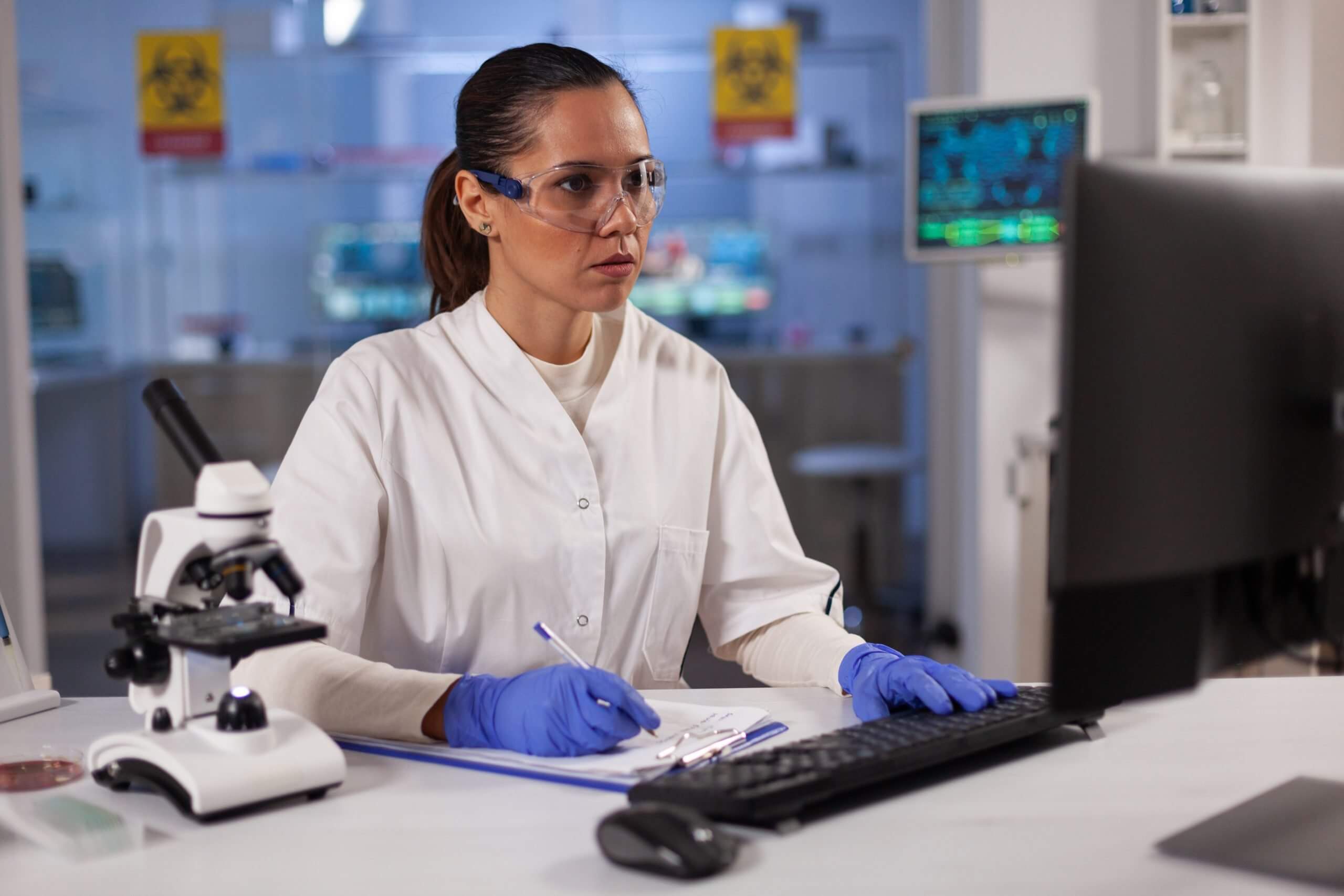
The Epidemiology and Laboratory Capacity (ELC) Program provides cross-cutting, disease-specific funding support for the nation’s public health laboratories through the US Centers for Disease Control and Prevention (CDC).
ELC funding allows scientists working in various areas of the laboratory to purchase equipment essential for the quick and accurate detection of disease. It gives laboratories the means to shore up their staff when testing needs (think COVID-19, influenza, tuberculosis, mpox and hundreds of other diseases) grip a community. It enables laboratories to invest in crucial equipment maintenance, develop more modern reporting and testing systems such as whole genome sequencing, and perform critical surveillance on emerging diseases while also orchestrating effective outbreak responses.
In short, it protects the lives of Americans.
ELC’s 65 recipients, which consist of state, large local and US territory and affiliate health departments and laboratories, serve as the foundation for our national public health infrastructure and are essential to the nation’s ability to tackle infectious disease threats. Six of those 65 recipients shared with us the specific impact ELC funding has had on their public health laboratories and the communities they serve. Their stories demonstrate the important impact ELC funding has on America’s health.

6 state laboratories, 6 success stories
Wisconsin
An urgent call was received at 10:45 p.m. on a Saturday night. It came into the Wisconsin State Laboratory of Hygiene’s (WSLH) 24/7 communication system, alerting staff to a potential measles case. Measles is a highly contagious and potentially serious disease that was eliminated in this country in 2000, but in recent years has been making a comeback.
On Sunday morning, WSLH had two laboratory professionals on site to identify and confirm the case.
The swift testing, followed by the rapid expansion of testing capacity in the event more cases were suspected, was the direct result of cross-cutting ELC funds. Without this funding, the WSLH response would have been much slower, taking days instead of hours—a delay that could have put more people at risk. Because it was adequately funded, WSLH was able to respond quickly while also bolstering its testing capacity, giving public health officials their best chance at containing the outbreak.
Michigan
ELC cross-cutting funds support a senior scientist at the Michigan Department of Health and Human Services Bureau of Laboratories (MDHHS-BOL). This laboratory professional’s role is to rapidly respond to emerging public health threats such as the highly pathogenic avian influenza A(HPAI H5N1) virus that, in 2024, infected two farm workers in the state. Specifically, the senior scientist was able to produce and validate a conjunctival specimen panel for the virus that was then provided to 10 additional public health laboratories, enabling them to complete their own validations for this specimen type.
Operating without the flexibility of this single staff position would have significantly hampered Michigan’s response to this emerging threat and limited its ability to help other states test for and detect this virus.
Virginia
Using ELC cross-cutting funds, Virginia’s Division of Consolidated Laboratory Services (DCLS) is able to provide emergency courier services for time-critical specimen transport. This service has been vital in allowing DCLS to rapidly intake specimens for emergency testing and testing that has a high public health consequence.
In an 8-month period between August 2024 and March 2025, DCLS deployed over 1,450 collection kits across the state for specimen collection. The emergency courier was dispatched nine times to pick up and deliver samples for time-sensitive testing on more than 70 suspected respiratory and gastrointestinal outbreak investigations. Some of these investigations included suspected cases of Highly Pathogenic Avian Influenza A and Mycoplasma pneumonia, a bacterial infection that frequently strikes children and damages the lining of the throat, windpipe and lungs.
Without the emergency courier service, submitters would be required to obtain their own specimen collection materials and mail or ship specimens, causing critical delays in testing and patient care.
Arizona
The Arizona Department of Health Services Laboratory engaged in peer-to-peer training supported by ELC cross-cutting funds. The purpose of the training was to build mycology capacity for detecting fungal pathogens, including Candida auris (C. auris) and Aspergillus.
C. auris is an emerging fungal infection that can cause severe illness and is easily spread among sick patients in healthcare facilities. Aspergillus is a common type of mold found in the environment that can also cause severe illness in people with weakened immune systems. There are growing concerns that these fungal pathogens may be on the rise and, even more alarming, are increasing the rates of resistance to important antifungal treatments.
All this makes the need for timely detection even more crucial.
ELC cross-cutting funds have empowered Arizona to strengthen its ability to rapidly identify and respond to serious fungal infections and reduce its reliance on out-of-state resources. Obtaining this training has helped the state quickly address this gap in laboratory skills and improve public health preparedness—a double win for its residents.
Tennessee
The Tennessee Department of Health’s Division of Laboratory Services implemented a digital document control system that replaced a fully paper-based process, thanks to ELC funds.
The system supports both the Nashville Central and Knoxville Regional Laboratories, improving consistency and accessibility across locations. It streamlines tracking of nonconformances and their corrective actions, ensuring that procedures and processes meet required standards. It also funds continuing education for laboratory professionals, enabling them to attain continuing education units for professional development and regulatory compliance purposes. This modernization has strengthened quality oversight, improved operational efficiency and enhanced regulatory compliance across both of these vital facilities.
Minnesota
The Minnesota Department of Health Public Health Laboratory has utilized ELC cross-cutting funds to ensure that all crucial infectious disease testing instruments, including nucleic acid extraction systems, thermocyclers and Sanger sequencing platforms, are properly serviced and maintained through service agreements. Without this funding, delays in equipment repair or maintenance could compromise the laboratory’s ability to provide timely test results, which in turn can delay treatment for patients and allow outbreaks to grow.
Reliable instrumentation is critical to the laboratory infrastructure, and maintaining it is necessary for ensuring regulatory compliance and testing accuracy. This investment helps the laboratory remain flexible and adaptive in performing routine testing and addressing emerging threats, two things that are essential in coordinating a rapid public health call-to-action. If this support were reduced or eliminated, Minnesota would likely have to decrease the number of instruments that could be maintained, resulting in lower testing capacity and increased turnaround times for test results. If anything is clear in public health, responding to threats with speed and accuracy is vitally important.
More than ever, funding matters
As these six stories illustrate, ELC funding isn’t just a “nice to have.” It’s integral to the nation’s public health system. Operating without these funds would severely impact the lifesaving work of public health laboratories, all at a time when antimicrobial resistance is growing, new diseases are emerging and old ones, such as measles—a virus once declared “eliminated” in this country—are making a worrisome resurgence.