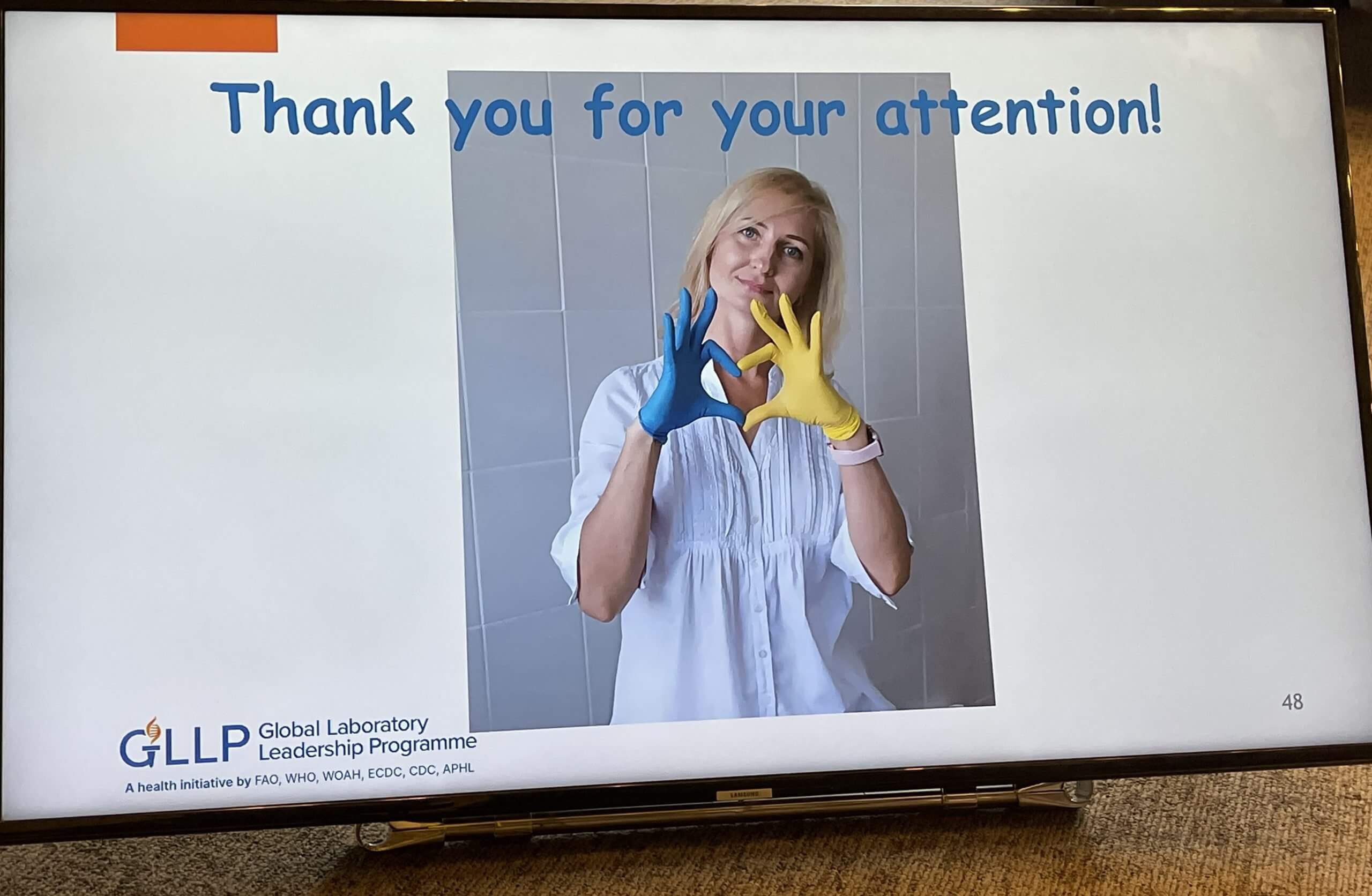

“I understood the situation was dangerous. I can’t tell you I wasn’t scared—I was really scared. But some things had to be done.”
.png?sfvrsn=a4dc1c5f_6)
Dec 10, 2024
Developing Laboratory Leadership Despite War: GLLP Graduates First Ukrainian Cohort
War disrupts everything—including laboratory work. But it didn’t prevent 12 Ukrainian laboratory scientists from pursuing new skills in professional development and graduating from the Global Laboratory Leadership Programme (GLLP).
GLLP is a comprehensive laboratory leadership program focused on building laboratory systems and empowering laboratory professionals using a One Health approach. The global program is a collaboration between the Association of Public Health Laboratories (APHL) and US Centers for Disease Control and Prevention (CDC), European Centre for Disease Prevention and Control (ECDC), Food and Agricultural Organization of the United Nations (FAO), World Health Organization (WHO) and the World Organization for Animal Health (WOAH).
Work during wartime
All the Ukrainian GLLP participants and mentors spoke of how the conflict in their country has impacted their lives and work. There have been frequent bombings, a decimation of the workforce and outages of electricity and internet services so disruptive, they often led to a stoppage of work and research.
On the day the war broke out, while others were sheltering in place, Iryna Seroshtan, director of the Chernihiv Regional State Laboratory, went to her laboratory to preserve files, secure laboratory animals infected with dangerous diseases like rabies and tuberculosis and protect microorganisms and test cultures while also locking down the premises. The laboratory had no electricity, running water, internet or gas, prompting Seroshtan to gather testing materials and reagents to take home with her and store in her own refrigerator that had a backup generator.
“We were under siege,” she said. “I was in shock. I had my work at the laboratory, and I also have a family. I had to respond to all these challenges simultaneously. I knew I needed to act and solve these challenges in the moment. I understood the situation was dangerous. I can’t tell you I wasn’t scared—I was really scared. But some things had to be done.”
This video is also available on Vimeo.
In a few short weeks, things in Chernihiv went from bad to worse.
On March 13, Russian troops invaded, shooting at the laboratory. Although no staff were present at the time, the laboratory sustained damage.
Seroshatan said she took help where she could find it. Her husband worked to fix broken windows while staff coming to feed the laboratory animals and security guards on the premises helped her perform other functions.
Fearing that gunfire and shelling could cause widespread contamination throughout the laboratory, Seroshtan knew she needed to act to destroy specimens, but with ongoing fighting, she didn’t have time to implement disinfection processes. She made the difficult decision to move specimens and other materials from the laboratory to a nearby adjacent property, pour alcohol on the items and set them on fire.
It was her way of taking control of an uncontrollable situation.
“Many people left the city,” added Natalia Nenych, another program participant and a colleague of Seroshtan’s who is the head of virology at the Chernihiv Regional State Laboratory. “The laboratory did not work for two months and then worked in a limited mode for several more months. Our building was not damaged, only the windows were broken, but it took a long time to restore work. We have been forced to rethink our work processes and priorities, especially with employee safety in mind.”
GLLP and Ukraine
GLLP Ukraine was scheduled to begin in the summer of 2022, but when war broke out in the country earlier in the year the program pivoted. Workshops began in June 2023 and were held in Poland and Hungary. Given that men were not allowed to exit the country, an all-female cohort was selected. The group of 12 women was matched with a mentor and the participants and mentors attended four workshops over 10 months.
The workshop content focused on the nine laboratory leadership competencies: laboratory systems; leadership; management; communication; quality management systems; biosafety and biosecurity; disease surveillance and outbreak investigation; emergency preparedness, response and recovery; and research. The participants developed and implemented three small projects and one capstone project, with each supporting learning and the laboratory or laboratory system. The program culminated with the presentation of capstone projects and graduation in September 2024.
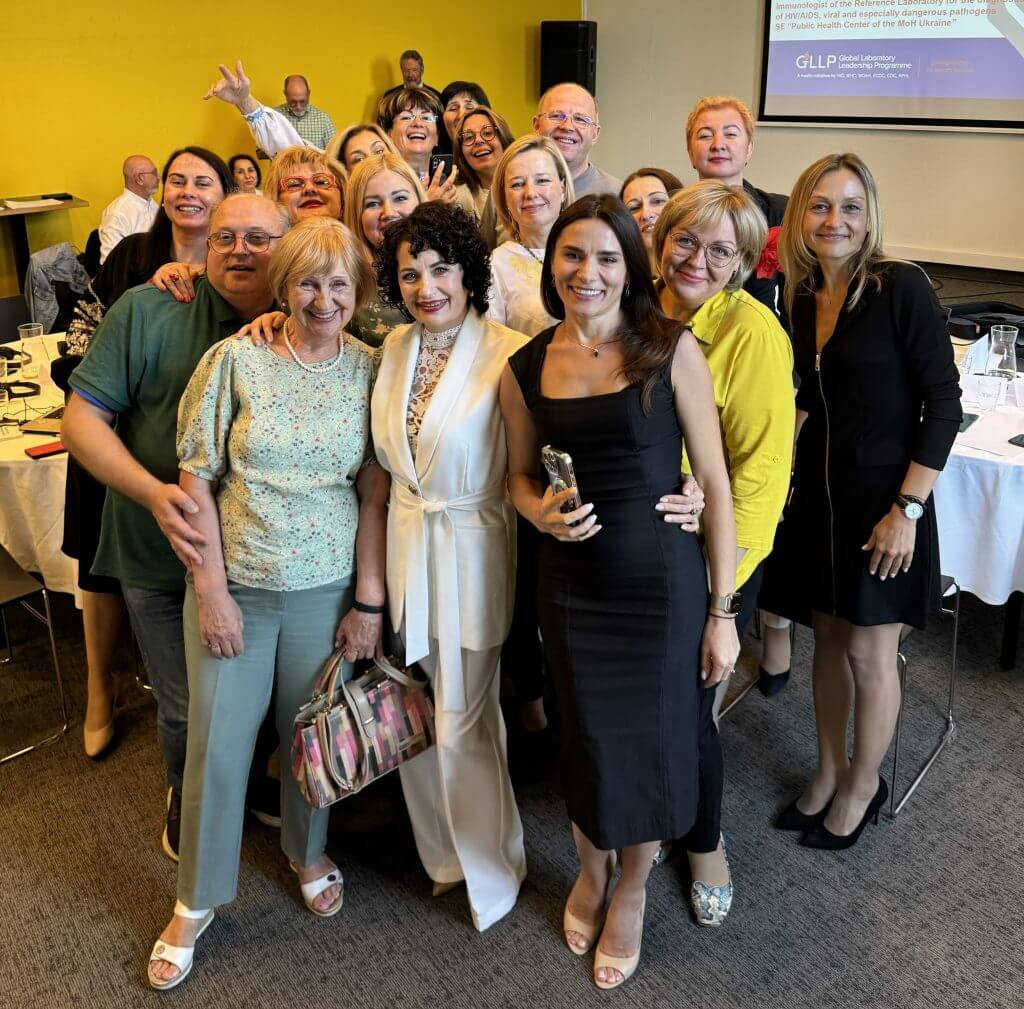
Like a lot of the participants, Svitlana Shuliak, head of the Chemical and Toxicological Research Department at the Public Health Centre of the Ministry of Health of Ukraine, said her motivation for joining the cohort was to better her laboratory and her professional development.
“I sought to gain the knowledge and tools … to ensure the laboratory performs critical functions as efficiently as possible and to improve the management and quality of the laboratory processes,” she said.
Shuliak, who helped create a center for continued professional development and became so interested in public health that she’s now seeking a degree in it, said she’s already seeing improvements in her laboratory, thanks to her GLLP training.
“This program points out the possibilities of collaboration within the country and internationally.”
“I discovered new skills in the fields of leadership, communication and advocacy,” Shuliak added. “We developed tools for feedback and determining customer satisfaction. We’ve implemented biosecurity and biosafety guidelines, and we are conducting a series of seminars and internships. This program points out the possibilities of collaboration within the country and internationally.”
“I met real friends here”
All the participants spoke of the critical skills they acquired—from formulating quality management systems to strengthening their expertise in workforce management to ensuring biosafety at their laboratories.
Yet they said they received more than technical skills. They also gained a much-needed sense of camaraderie and community that the war had taken from them.
“We became a real family, and the feeling of mutual support and respect helped a lot to overcome the crisis situations we all face in Ukraine. Our sessions helped us relieve the effects of stress and disorientation.”
“I met such highly qualified specialists in various areas of laboratory work,” said Nataliia Babii, a microbiologist with the Centre of Public Health of the Ministry of Health of Ukraine. “We became a real family, and the feeling of mutual support and respect helped a lot to overcome the crisis situations we all face in Ukraine. Our sessions helped us relieve the effects of stress and disorientation. I met real friends here.”
“I had the opportunity to gain new knowledge, new experiences and new friends in a SAFE place.”
“After the Russian Invasion, we had to work in war conditions,” explained Oksana Boialska, head of the virological laboratory of the Zhytomyr Regional Center for Disease Control and Prevention of the Ministry of Health of Ukraine and one of the recent graduates. “There were constant air raids that forced us to go down into bomb shelters. We had to concern ourselves with saving the lives of our personnel, switching off electricity and properly storing our reagents. We had to learn how to conduct research quickly, efficiently and safely, thereby helping medical institutions provide the necessary care or adjust the treatment of patients. But here I had the opportunity to gain new knowledge, new experiences and new friends in a SAFE place.”
Mentors, seven of whom were Ukrainian and trained as instructors for subsequent GLLP cohorts, echoed those same thoughts.
“Participating in the program has been a source of inspiration and support for me,” said Ihor Dvylyuk, a vice president for science and educational work at the Stepan Gzhytskyi National University of Veterinary Medicine and Biotechnologies of Lviv and one of just two male Ukrainian mentors permitted to leave the country and participate in the program. “The war in my country has presented serious challenges. There are technical difficulties, security risks, logistical constraints and psychological stress. The program gave me the opportunity to immerse myself in new knowledge, become a member of a great team and exchange experiences with colleagues, and that has helped me maintain the motivation and desire for development despite difficult circumstances.”
Today, tomorrow and beyond
Many of the participants spoke of how the training they’ve received is not only improving the work their laboratories are doing today—but how it will benefit them tomorrow.
Dvylyuk said his participation in the program has helped his laboratory form a strategic vision, which includes long-term planning of research projects, procurement, staff training and equipment upgrades.
“The program provided new knowledge on staff training and more effective methods of monitoring performance and the achievement of results,” he said. “It has been the impetus for the development of new standards and protocols that will help ensure a consistent and clear order of all operations in the laboratory.”
And what about the future?
““Thank you for making our team such a friendly, international family.”
The participants said the GLLP program has been a lifeline, and they’re eager for their colleagues to experience the growth and collaboration the program offered them.
“At times, when things became very difficult—almost unbearable—the thought that the next GLLP session would be coming soon helped me to survive and move on,” said Babii. “Thank you for making our team such a friendly, international family.”