.png?sfvrsn=a4dc1c5f_6)
Aug 28, 2026
Fighting Sepsis Through Digital Innovation
Cutting turnaround time from a month to a minute. This is how the Nakhon Phanom Provincial Hospital in Northeast Thailand described the impact of a new digital platform that is changing how it identifies and responds to sepsis. Supported by APHL and the US Centers for Disease Control and Prevention (CDC), the project is helping clinicians identify sepsis patients earlier while giving laboratories and public health officials faster access to critical information.
Sepsis is a condition in which the body has an extreme immune response to an infection, which can lead to organ failure, tissue damage and death. As a leading cause of hospital mortality, sepsis has been a national priority for the Thai Ministry of Public Health since 2018, as early recognition and treatment are essential to reducing deaths.
Although hospitals have invested in digital systems, many parts of sepsis care still depend on paper forms, manual documentation and varied ways of recording and reporting. That makes it harder for care teams to recognize patients quickly and for health officials to understand what is happening across the health system.
“If [the alert] stays on paper, it cannot be an alert,” said Krissada Sumalai, key developer of the digital platform, noting that the added urgency and flexibility of a digital system helps physicians and nurses be on the lookout for sepsis, drug allergies, multi-drug-resistant infections and more.
Implementing a digital transformation strategy proved to be no easy task. In many ways, it was a first for APHL, requiring coordination with multiple tiers within a hospital system, including emergency room nurses and physicians, hospital information technology (IT) staff and the local provincial health office. Key to addressing this challenge was the local team from the Nakhon Phanom Provincial Health Office and their past experience working on surveillance programs with the hospital. The team recommended that APHL use an all-hands-on-deck approach and work with all tiers of the hospital in parallel.
Together, the team developed several tools that now work together:
- Sepsis Sync, a platform that allows community hospitals to automatically send patient information ahead of transfers
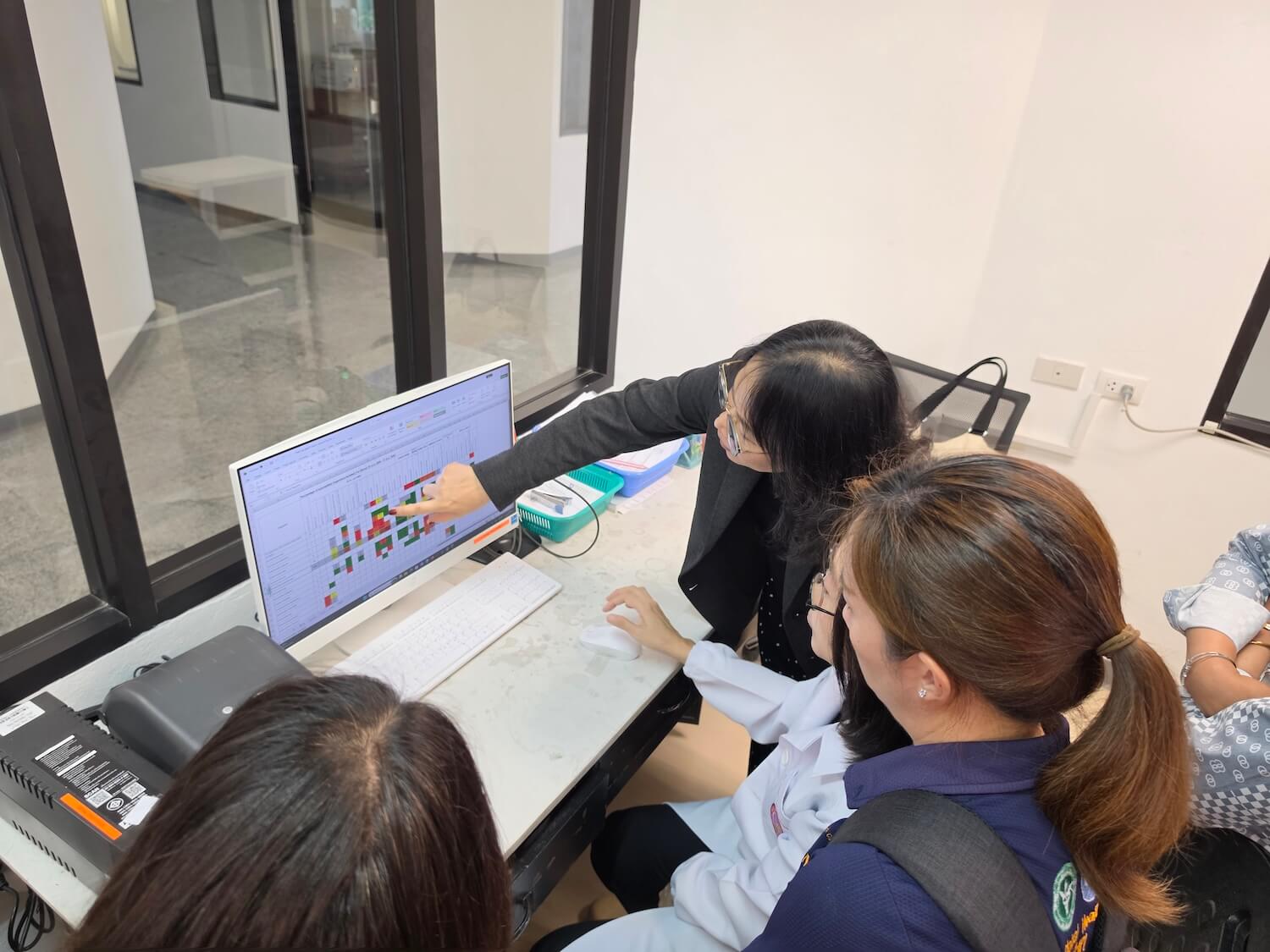
- A digital nurse assessment form that replaces paper with tablets so nurses can record information once and immediately share it digitally
- A sepsis alert platform that flags possible/high-risk patients for emergency physicians
- A Pneumonia Standing Order that assists physicians in categorizing pneumonia and consequently reduces the risk of sepsis. The categorization helps determine the severity of pneumonia (mild, moderate, severe or melioidosis). Patients with severe pneumonia or melioidosis can develop septicemia or septic shock if they do not receive timely or proper treatment. The Pneumonia Standing Order helps to identify the severity of pneumonia and subsequently reduces the risk of sepsis.
The IT staff learned how critical each data element was to effective patient care and how important it is to pay attention to the requirements of users. “If you develop an application or platform but don’t understand the needs of the users, they won’t use it,” said Sumalai. “If you just build it according to policy, then yes, you will have a platform, but no one will use it.”
From the start, the goal was not to introduce a new stand-alone application. Instead, APHL worked with the in-house IT staff who had expert knowledge of the hospital information system and built new tools directly into it. With no new system to learn, costs were kept down and employees were able to transition seamlessly to the new tools. IT staff prioritized minimal use of paper, thus helping the hospital move toward a paperless workflow, one of the key initiatives of the Thai government and a priority of hospital leadership. According to APHL’s Reshma Kakkar, senior manager, Global Health, “These factors have been key in the success of this initiative, especially in an environment where every minute counts.”
Looking back, Dr. Supphachoke Khemla, lead infectious disease physician at Nakhon Phanom General Hospital, said the project began with one simple goal: moving from a paper-based process to a digital one. Today, he believes it has become much more than that. The platform supports the Ministry of Public Health's digital health strategy and represents the first innovation of its kind at Nakhon Phanom Hospital. It has strengthened local capacity and helped build a workforce that’s capable of developing and using the technology as well as improving it long after the project ends.
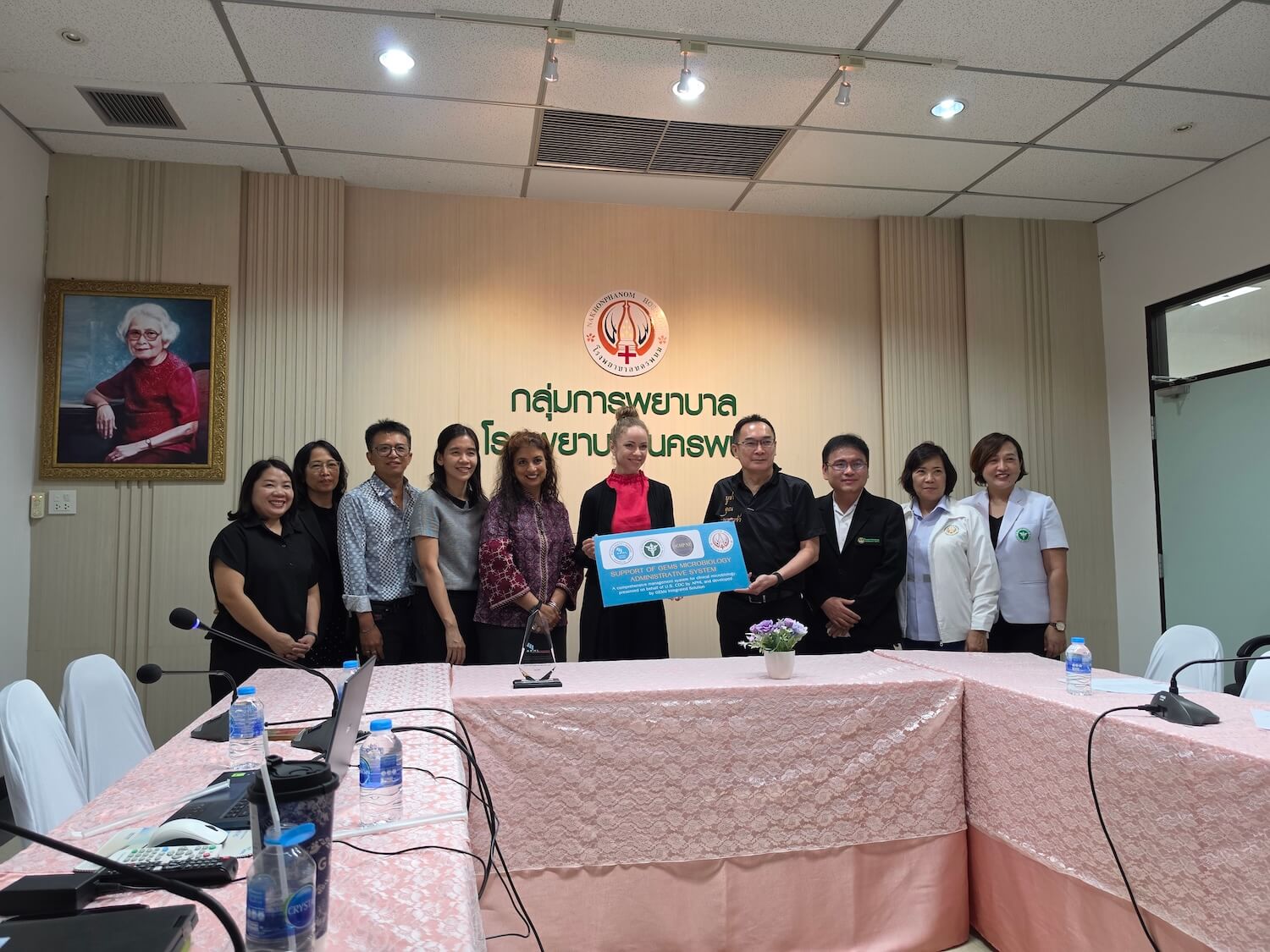
APHL’s partnership with the Division of Global Health Protection, Nakhon Phanom Province and Nakhon Phanom Provincial Health Office was key. The perseverance of their staff in responding to the needs of ER nurses and physicians while serving as a liaison between IT and care providers was instrumental in the adoption of the sepsis platform. According to the director of the Nakhon Phanom Provincial Health Office, Dr. Preeda Worahan, “This is a good model to implement as it can be expanded to other diseases besides sepsis.”
As Nakhon Phanom Hospital looks to expand the platform beyond sepsis and into other areas of patient management, the project demonstrates how digital tools can improve treatment and care when they are designed around those who use them. By combining local leadership, existing technology and strong partnerships, the hospital has created a model that can be adapted by other health systems across Thailand.
APHL’s work was conducted through the Global Public Health Data Innovation (GPHDI) initiative, the aim of which is to strengthen digital health systems that improve laboratory and clinical data availability for public health decision-making. GPHDI advances global data modernization by automating data exchange, strengthening interoperability, building digital health capacity and improving governance for timely detection and response. This initiative is funded by CDC and receives generous support and logistical and technical assistance from its staff.