.png?sfvrsn=a4dc1c5f_6)
Laboratory Careers Often Begin with Fellowships and Internships
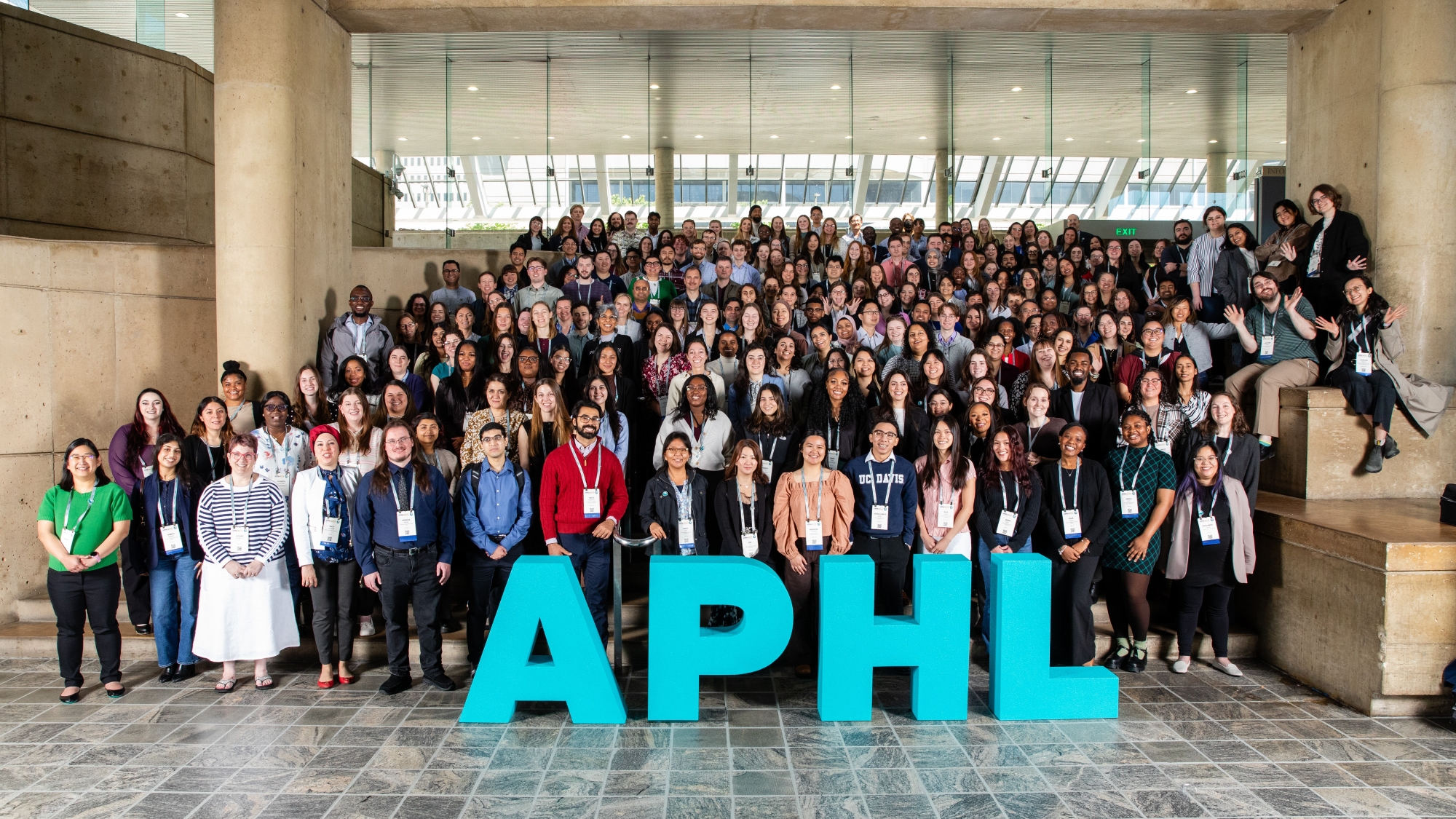
The Association of Public Health Laboratories (APHL) has long been recognized for its fellowship program. Funded by the US Centers for Disease Control and Prevention (CDC), the program originally placed 20 to 25 fellows at public health laboratories each year.
Then the COVID-19 pandemic struck and gaps in the public health laboratory workforce were exposed. In 2021, the American Rescue Plan, which included money for public health workforce recruitment and retention, was passed. CDC and APHL banded together to significantly expand the fellowship program into Career Pathways in Public Health Laboratory Science: An APHL-CDC Initiative.
The infusion of money for recruitment supercharged the fellowship program, allowing for more fellows to be onboarded, support systems to be created and staff to be hired. The new iteration received a new name, the Public Health Laboratory Fellowship Program.
There are currently 287 active fellows at 83 laboratories across the country.
The funding also provided the means to develop and implement the Public Health Laboratory Internship Program.
Mariane Wolfe, senior manager, fellowships and internships, is currently overseeing both the internship and fellowship programs. Originally hired to manage the internship program because of her academic advising background, Wolfe agreed to add fellowships to her purview in 2024.

Revamping the Internship Program
Prior to the establishment of Career Pathways, APHL had a subaward program that allowed a public health laboratory to recruit, select, supervise and pay an intern directly. That laboratory could then apply to APHL for reimbursement of eligible costs related to the internship. The subaward allowed for host laboratories to recruit from nearby colleges and universities.
“The awarding and managing of subawards required APHL to navigate each host laboratory’s rules and requirements for transferring funds,” said Wolfe.
Wolfe’s experience with academic programs helped develop the framework and management system of the current internship program.
In the original format, APHL had limited oversight of the intern experience because the intern was contracted directly with the host laboratory rather than with APHL.
With the new Career Pathways internship program, APHL provides the recruiting of candidates, matching them with host laboratories and paying them directly.
“Now each host laboratory has their own projects they would like the internship to accomplish while giving opportunities for an intern to develop and refine their professional and technical skills,” said Wolfe.
APHL hired staff to handle applications, laboratory matching, contracts, administration and oversight of the program and interns. Staff were added to document and quantify the experiences of the interns and the success of the program.
During Wolfe’s tenure, the internship program has seen increases in participation and interest. There were just five interns during the summer of 2022, whereas in the spring of 2026 there were 80 interns participating.
“In exit interviews, interns are asked if they would do the internship again. They said, ‘yeah and I told two of my friends to go join next summer,’” Wolfe said. “It's just interesting to see how sometimes recruitment happens within the program.”
Starting in 2024, Wolfe also began inviting a select number of interns to APHL’s Annual Conference. The interns gained a look into what a professional conference looks like and were offered the opportunity to meet fellows and other interns in the program as well as begin networking with laboratory professionals.
Taking on the Fellowship Program
The goal of both programs has always been to introduce individuals to careers in public health laboratories. In 2024, Wolfe began managing the fellowship program in addition to the internship program.
“It made sense as we have interns who are graduating, and we are seeing them apply for the fellowship program. I hope that all our interns and fellows land positions in a public health laboratory or adjacent to one,” said Wolfe. “We know that the pipeline is working,”
Wolfe added that overseeing both programs creates opportunities for collaboration and process improvement.
It also meant combining the separate Internship Program staff with the Fellowship Program staff into one team.
“I think my background managing internship programs for multiple programs in the past helps me organize the two programs, which are similar yet different in their own ways,” said Wolfe.
She cites her clinical coordinator experience as being helpful when facing challenges and needing support or when educating program participants, whether it is a fellow, an intern or mentor. Wolfe’s past volunteer service as a board member and president helped her transition to her ability to ensure members are supported and able to meet their goals.
Wolfe appreciates the feedback she receives through APHL surveys and directly from program participants. Wolfe provided one anonymous survey example that reads:
“I want to thank you all for the opportunities and support I’ve received during my time here. I have truly appreciated working with so many role models and public health champions. From the highest moments through navigating difficult times, APHL has poured into my life to the point that I am constantly telling everyone about the program. This program has changed my life in every possible way (perspectives, trajectories, passions, knowledge, and so much more).”
“In conversation with mentors, they have shared that fellows work has been beneficial not only getting work or a project done, but also fellows and interns are giving a different perspective on workflows and are able to add to process improvements within their laboratory,” Wolfe said.
APHL tracks the data from the programs and reports back their results. All the metrics point to success for the two programs. Wolfe sees success this way: “I measure the success by whether interns and fellows can build both technical and professional skills, gain a meaningful understanding of careers in public health laboratories, and see those careers as rewarding,” said Wolfe.
Additionally, there are new pathways being developed by the programs, too.
“We are now finding there are some fellows becoming mentors and also [public health laboratory] ambassadors,” said Wolfe.
The fellowship and internship programs have been one of the signature programs funded by CDC through APHL. While long-term funding is uncertain, Wolfe believes there's still going to be fellows and interns.
“Fellows and interns make an impact in our state and local public health laboratories,” Wolfe said.
Learn more about the Public Health Laboratory Internship and Fellowship Programs here.
Read about Career Pathways in Lab Matters.