
Accomplishments, Expansion, Jobs: The Career Pathways Evolution
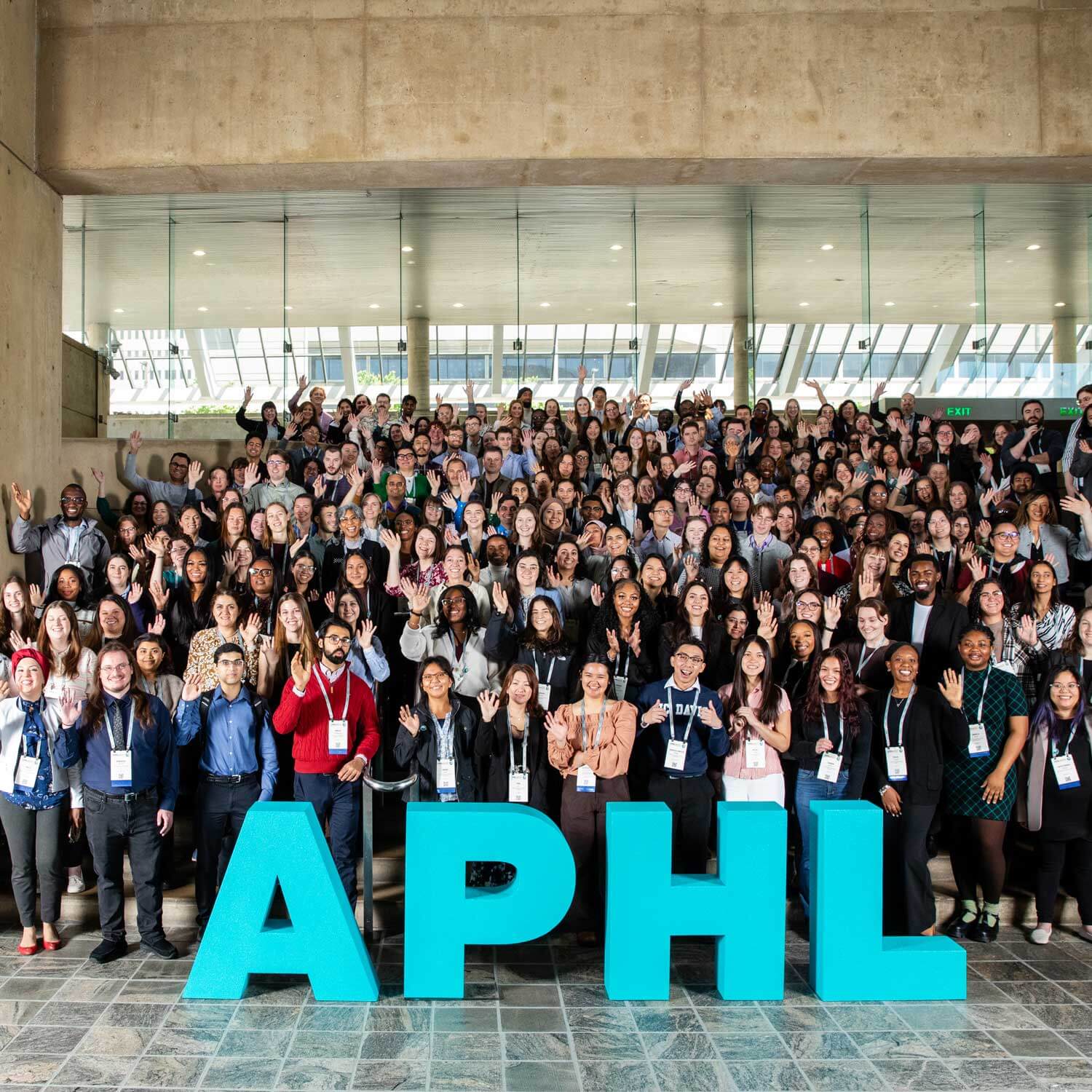
Born from funding from the 2021 American Rescue Plan (ARP), the Career Pathways in Public Health Laboratory Science: An APHL-CDC Initiative aimed to increase the public health laboratory workforce and improve the training and workforce development of scientists working at laboratories. The program also expanded to grow partnerships with academic and private institutions that deal with public health laboratory science.
Career Pathways enters its fifth and final year of ARP funding with its largest number of active fellows (287) and mentors (279) in 83 host laboratories.
The Internship Program currently has 105 participants. Over 200 fellows and seven interns took part in this year’s APHL Annual Conference.
Academic Partnerships has 1,242 participating academic institutions and has recruited 216 Public Health Laboratory Ambassadors.
The Leadership Development Program graduated 19 participants in May from the Emerging Leader Program (ELP) and there are 24 individuals currently in Laboratory Leaders of Today (LLOT).
But those are only numbers. There are accomplishments, challenges, highlights and hundreds of stories behind those numbers. Each program has grown since 2021 and continues to mature.
“The program touches so many people, not only the next generation of participants moving from a fellowship or an internship to a position at a public health laboratory, but also supporting everybody that’s already there,” said Josh Rowland, director of Experiential Learning. APHL Chief Learning Officer Christine Bean, PhD, MBA, MLS(ASCP), oversaw the development of the Career Pathways programs from the beginning. She cites the infusion of the ARP funds as a spark to workforce opportunities.
“The sky was the limit of what we could build, what we could create and what we could expand on, and that was exactly what we did,” said Bean.
The expansion included the fellowship and leadership programs while internships and academic partnerships are two new programs to APHL.

Fellowships and Internships
Learn more about fellowships and internships
“APHL has had fellowship programs for years, but never of this scale. What it needed was systems to be built here at APHL to manage application systems, matching systems, communication with laboratories and the recruiting of mentors,” said Bean. Rowland credits the fellowship and internship staff for making all the moving parts work and meeting the expectations of the member and host laboratories.
“The laboratories saw the value of fellowships,” said Bean. One of the real benefits to the fellowship program was that it’s a one-year fellowship with the possibility to extend to a second year. And the laboratories see a lot of value in that. They’ve got someone for enough time to really train them and work a meaningful project.”
APHL’s internships were created as an introduction into public health laboratory science.
“I saw many of these students come into public health laboratories and say, ‘I never knew this field existed,’” said Bean. She added that exposing students to the wide scope of opportunities available in the public health field has been invaluable.
“One of the things I was excited to see is students coming from a wide scope of degree programs to do internships, which is very valuable,” she said.
Bean guided the internship program from an idea to a proven program. Examples of interns finishing their programs and becoming fellows or employees at their host laboratories are common. Rowland said it is gratifying to know that the participants will come out of their programs with a foundational knowledge about public health laboratories.
“Whether they are going to be a physician or going to work in public health, they have a great body of knowledge,” he said. Rowland also appreciates the positive feedback about their mentor and host laboratory and what they’ve provided.
“When I first started, the program was building. Internships were building. And now they are mature programs,” Rowland said.
Leadership Development Program
Learn more about Leadership Programs
After the COVID-19 pandemic, laboratory leadership was an opportunity to address a lapse in available training. Bean said the US Centers for Disease Control and Prevention (CDC) previously had offered a New Laboratory Director Orientation, adding that she attended the orientation when she became a director in New Hampshire.
“I immediately thought we need more than that. We started the first cohort of [LLOT] in January of 2022,” Bean said. That first cohort had 65 people, and the program continues annually, although with smaller groups of 30 people. They work on a project and create their agenda, with guidance from the Leadership Development Program staff.
The ELP has seen a lot of growth as well. The program now offers two models: the traditional hybrid model where participants join remotely and meet in-person during the year, and a completely virtual model.
“We will be able to host 50 people in ELP next year, which is double what we were previously able to do, which is amazing,” Bean said.
“We’re already seeing LLOT alumni being very active. They want to continue to be part of this, which is amazing and helpful because we have them help create agendas and work with the next cohorts,” Bean said.
Another new feature to the program is their Quarterly Networking Event, which is a virtual networking opportunity for connecting peers in similar roles. The event features a skill-building session followed by discussions for attendees.
Academic Partnerships
Learn more about Academic Partnerships
Another program that was new to APHL was Academic Partnerships. Charged with reaching out to academic institutions and other partners by attending career fairs and conferences, it aims to introduce and connect students to public health laboratory science and the related career opportunities.
“Academic Partnerships has led the way to a lot of our success getting potential candidates in place to become selected (into the program),” Rowland said. Part of the Academic Partnerships Team is the Public Health Ambassadors program, which was developed by ELP Cohort 16.
“They have over 200 ambassadors nationwide now,” said Bean. “ When the Academic Partnership Team goes out to career fairs, it’s not unusual that ambassadors in that area will join them at the event because it’s helpful for students to hear from somebody currently working at a public health laboratory.”
The Challenge Ahead
Challenges can overshadow even the most impressive of accomplishments. And the Career Pathways programs are facing adversity now.
“We’re in a position where we’ve showcased our ability to have these top-notch and successful programs that satisfy the needs in these public health laboratories,” Bean said. She wants to continue that success, but also prepare the laboratories and mentors for changes.
“What we know today is that APHL’s scientific programs will pay for the fellowships,” said Rowland. “What that might mean for our program is we need to have more transparency as to what’s going on with those fellows in terms of their quarterly reports and project status. Our money will be more year-to-year versus the seven-year period we have had. We are thinking about all options to continue the programs.”
Both Rowland and Bean acknowledge that the future of the programs is all about funding. Rowland said that there will be an announcement about the future of the program around October 1.
“We might not have all the answers, but we will announce when the application opens and when the first onboarding will be,” Rowland said.