
From Elimination to Uncertainty: Enhancing Measles Detection Through Wastewater Surveillance
Due to the success of the measles, mumps and rubella (MMR) vaccine and strong public health infrastructure, measles was declared eliminated in the United States in 2000. However, more than two decades later with sustained outbreaks and nearly a year of continuous transmission, the US faces the possibility of losing its elimination status. More frequent outbreaks and increased case counts could be expected, potentially placing additional strain on public health systems. Wastewater surveillance offers a cost-effective, scalable and efficient way to strengthen disease monitoring. By providing an additional layer of data that complements clinical reporting, it can help identify emerging clusters earlier, track ongoing outbreaks and inform resource allocation.

Early Detection Is Key…
One of the key advantages of wastewater surveillance is its ability to detect viral activity even when clinical testing is delayed, limited or incomplete—an important consideration for the previously eradicated measles. Wastewater can fill this gap by providing early, community-level signals of transmission. For a highly infectious disease like measles, even a few days’ advance notice can significantly reduce infections, as early detection enables public health agencies to issue alerts, increase public awareness of symptoms and prevention strategies and notify healthcare providers to prioritize testing and treatment prior to further spread of disease.
Public health laboratories leveraged existing technologies established during the COVID-19 pandemic to test composite influent samples for measles by concentrating the virus using nanoparticles and performing molecular detection using quantitative or digital polymerase chain reaction (PCR) testing. Any positive detections are confirmed using next generation sequencing to identify specific viral strains. Once confirmed, results are shared with local and state health authorities, allowing for timely communication, targeted interventions and healthcare system preparedness.
When this technology was applied to the 2025 measles outbreak in Texas, wastewater surveillance provided a one- to three-week lead over clinical case confirmation, influenced by viral shedding levels, sampling frequency and access to healthcare. In the same year in Hawaii, measles was detected in wastewater before any clinical cases were reported, which prompted immediate coordination among epidemiologists, immunization programs and communications teams. Actions included alerting healthcare providers, conducting syndromic surveillance to identify potential cases, issuing public health advisories and reinforcing vaccination recommendations.
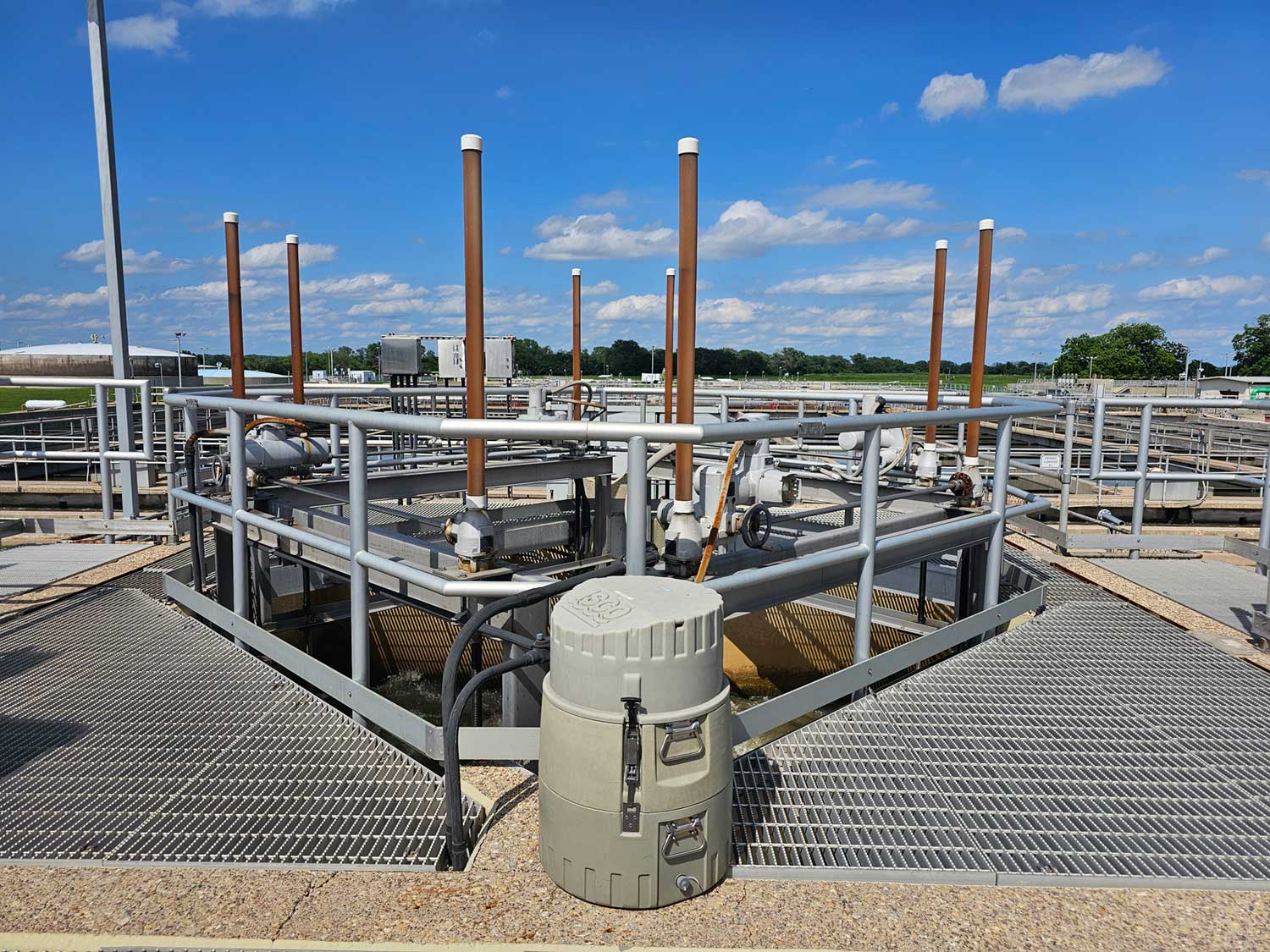
Wastewater is collected from a Texas treatment plant to test for measles.
Photo: Texas Department of State and Health Services.
…and Provides Much-needed Data
Retrospective analysis of wastewater surveillance samples can identify when measles spread first began, prior to clinical detections. In 2025, Oregon analyzed wastewater samples from a 2024 measles outbreak and found evidence indicating community spread of measles 10 weeks before the first case was detected. This study showed the necessity of maintaining infrastructure for measles wastewater surveillance to proactively identify future outbreaks.
Wastewater surveillance can also help determine when outbreaks are concluding. While the absence of viral detection does not guarantee a disease is no longer present, consistent negative results can support evidence of declining transmission when combined with clinical data. During South Carolina’s 2025–2026 measles outbreak, ongoing wastewater monitoring helped public health officials assess disease spread and allocate resources more effectively. This work inspired Republican Sen. Tim Scott of South Carolina to advocate for more funding, earning the Secretary of Health’s approval.
As measles re-emerges as a public health concern, wastewater surveillance is proving to be a valuable complement to traditional methods. APHL’s 2025 Wastewater Surveillance Survey showed 17 jurisdictions testing for measles. Since then, the National Wastewater Surveillance System (NWSS) has added measles to the list of suggested targets for Epidemiology and Laboratory Capacity (ELC) for Prevention and Control of Emerging Infectious Diseases Cooperative Agreement grantee laboratories, increasing this number to 28 laboratories submitting data to NWSS. Between ELC grantee laboratories and the CDC national contract, wastewater surveillance for measles is almost nationwide. By offering early warnings, broader population coverage and actionable insights, it strengthens the ability of public health systems to respond quickly and effectively.