


On November 2, 2026, all links to Lab Matters articles published before 2026 on the Joomag platform will expire! Contact us if you need access to a specific article that will soon be unavailable online.

APHL, in collaboration with the US Centers for Disease Control and Prevention (CDC), supported Thailand through the Global Public Health Data Innovation (GPHDI) initiative to strengthen digital health systems that improve laboratory and clinical data availability for public health decision-making. GPHDI advances global data modernization by automating data exchange, strengthening interoperability, building digital health capacity and improving governance for timely detection and response.
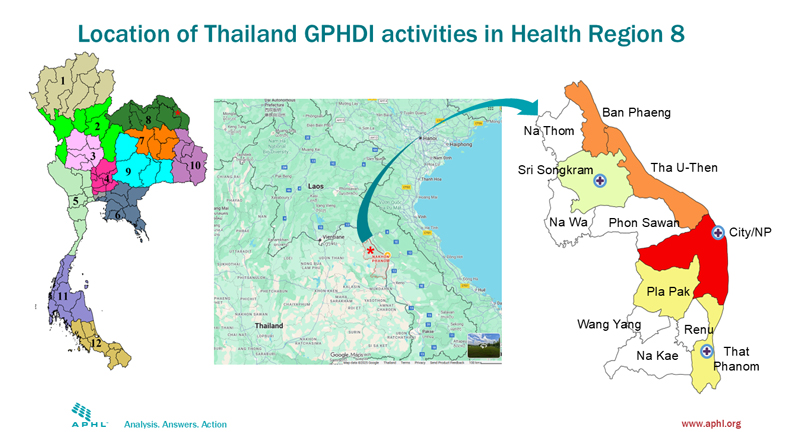
APHL partnered with Nakhon Phanom Hospital and Nakhon Phanom Public Health Office in Northeastern Thailand to implement an interoperable digital platform to improve sepsis detection, monitoring and clinical management. As a leading cause of hospital mortality, sepsis has been a national priority for the Thai Ministry of Public Health since 2018 as early recognition and treatment are essential to reducing deaths.
Despite investments in hospital information systems, sepsis management was hindered by inconsistent clinical definitions, variable reporting, incomplete documentation and continued reliance on paper-based workflows. These challenges affected data quality, delayed clinical decision making and reduced effective surveillance and evaluation of interventions.
To address these challenges, APHL implemented a digital transformation strategy based on four interconnected pillars: People, Processes, Technology and Data.
People. Success depended on strong leadership and multidisciplinary collaboration. Hospital leadership prioritized reducing sepsis mortality, while emergency department clinicians and nurses, infectious disease specialists, laboratory and information technology staff and dedicated project personnel served as champions for implementation, workflow redesign and ongoing system support.
Processes. Clinical workflows were redesigned to improve coordination across the patient journey, including emergency department triage, laboratory testing and pharmacy services. Standardized electronic workflows reduced variability and supported faster recognition and treatment of suspected sepsis cases.
Technology. Rather than introducing a new hospital information system, APHL enhanced existing digital infrastructure by configuring a digital Nursing Assessment Form and an integrated Sepsis Alert Platform within the hospital information system. The platform communicates with laboratory and pharmacy systems, enabling electronic test ordering, rapid laboratory reporting and timely medication dispensing. Additional clinical decision support features, including drug allergy and antimicrobial resistance alerts, were incorporated to improve patient safety.
Recognizing the importance of continuity of care, APHL also developed the NKP Sepsis Sync Program, enabling secure electronic exchange of patient information between 11 community hospitals and Nakhon Phanom Provincial Hospital, improving situational awareness across facilities and supporting coordinated clinical management of severe infections.
Data. Routine analysis of clinical and operational data informed continuous quality improvement, identifying workforce training needs, optimizing emergency department workflows and guiding enhancements to the digital platforms, creating an iterative cycle of system improvement.
Through this strategy, APHL implemented a robust, interconnected digital health platform that improves the availability of standardized, high-quality clinical data for surveillance and patient care. Replacing fragmented, paper-based documentation with centralized electronic data capture supports earlier identification of patients at risk of sepsis. As Dr. Preeda Worahan provincial chief medical officer, noted, “It has been a positive experience to implement this platform as it is a transition from paper to digital and supports the Thai government’s policy to move to a paperless system.”
Although the platform is designed to improve patient outcomes and reduce mortality, continued adoption, workforce training and change management remain essential to maximize system use and generate sufficient data to measure clinical impact. The platform has been recognized during health region inspection visits, with discussions underway to position Nakhon Phanom Hospital as a model for expanding these innovations and best practices to additional provincial hospitals.
What began as a hospital-level intervention is emerging as a regional model for data-driven, paperless health systems, demonstrating that improvement in sepsis surveillance can be achieved through smarter use of existing digital infrastructure. In an era of increasingly strained global health resources, such locally driven, sustainably embedded innovations may offer the clearest path forward.