.png?sfvrsn=a4dc1c5f_6)
How Kenya Built a Wastewater-based Surveillance System: 6 Questions Answered
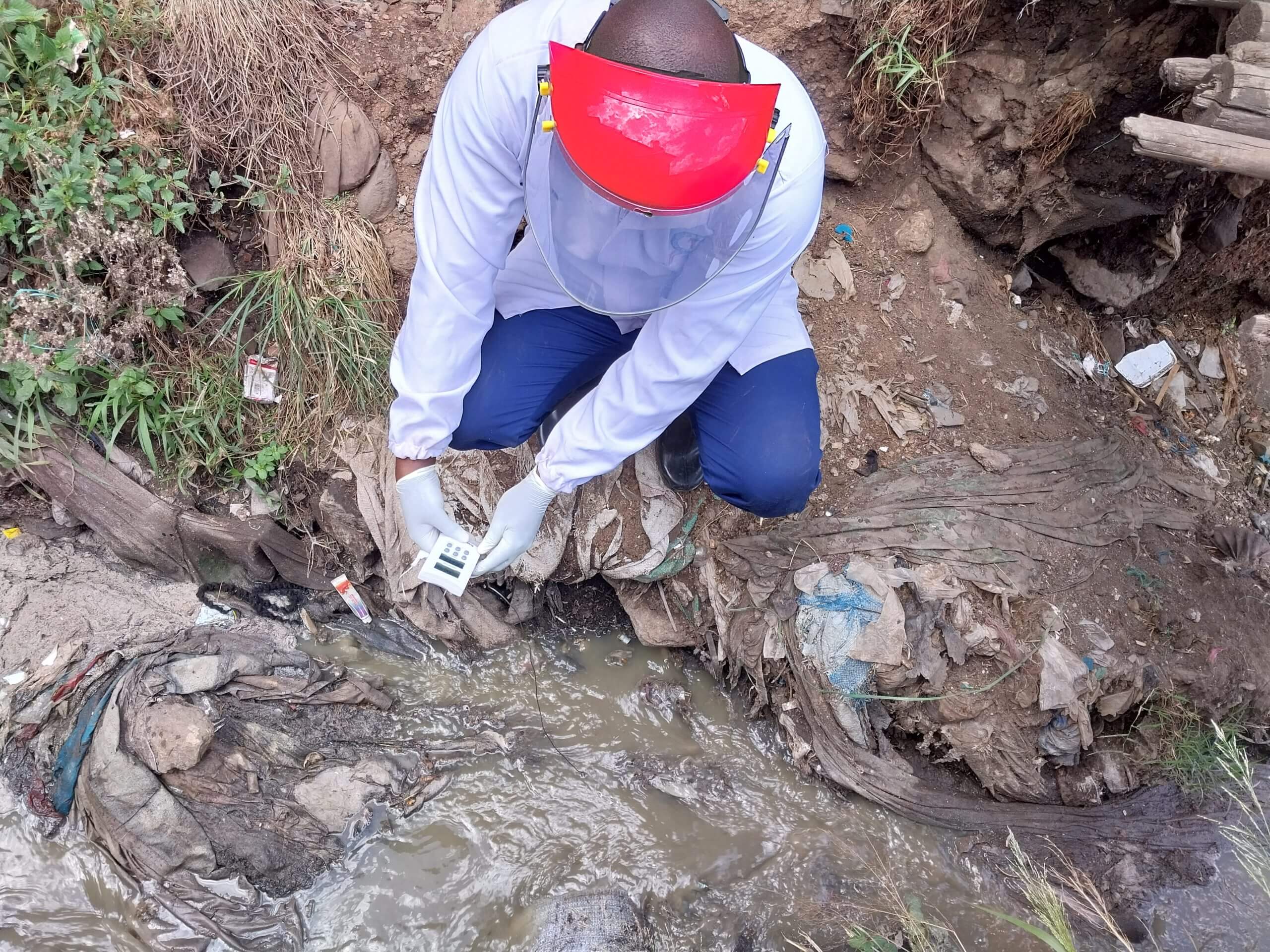
With financing from the Global Fund and technical support from APHL, six countries in Africa have embarked on developing a pilot program that uses wastewater-based surveillance to detect SARS-CoV-2 and its emerging variants.
“Wastewater carries biomarkers, such as feces and urine, from infected individuals into the sewer system, making it an effective medium for monitoring SARS-CoV-2 viral loads,” explained Lewa Pole, now a laboratory specialist with APHL who at the time of the study served as a laboratory technical manager. “Tracking these viral loads over time can signal increased transmission within the population served by a specific watershed. This innovative wastewater surveillance approach, which had yet to be implemented in Kenya, avoids issues like the fear of nasopharyngeal or oropharyngeal swabbing and invasive lower respiratory tract procedures used in COVID-19 diagnosis. By confirming the presence of the virus in human feces, wastewater-based epidemiology provides a low-cost, efficient surveillance alternative capable of identifying asymptomatic carriers within specific communities.”
How was Kenya’s wastewater-based surveillance program conducted? What platforms and protocols were used? Pole answered all that and more to give us an insider’s view.

How was the pilot conducted?
The pilot study was carried out in Nairobi, Kenya, at two environmental sampling sites (Mathare and Kamukunji) to support the Ministry of Health (MoH) in establishing a system for detecting, sequencing and reporting SARS-CoV-2. Wastewater samples were collected from January 2022 to October 2023 using Moore swabs, with sampling conducted three times per week. The Moore swabs were suspended at the collection sites for 24 hours to ensure sufficient contact with the wastewater.
Once retrieved, the swabs were placed in Ziploc bags, triple-packaged and transported to the Genomics and Molecular Surveillance Laboratory (GMSL) within the National Public Health Laboratories (NPHL). Laboratory data were managed using an improved laboratory information management system (LIMS), enhanced with technical support from APHL.
After squeezing the swabs, the solution was concentrated and viral RNA was extracted. Positive samples underwent sequencing to identify SARS-CoV-2 variants. The findings were visualized and reported through a WWBS dashboard supported by APHL.
What were the pros and cons of using next generation sequencing in this pilot?
Some of the pros included a comprehensive analysis. The MiSeq platform used gave us the capability to detect a diverse range of organisms and genetic variants in a single sequencing run. It’s also highly sensitive. It effectively identifies pathogens in low abundance. Lastly, there’s scalability. The MiSeq platform supports the sequencing of multiple samples with moderate depth, offering an optimal balance between throughput and cost.
There are some downsides, though. The platform requires specialized equipment, reagents and bioinformatics expertise. It also produces large datasets that demand significant computational resources for analysis.
What were the findings?
During the study period, a total of 272 wastewater samples were collected from the two sampling sites. Of these, 233 samples (85.7%) tested positive for SARS-CoV-2. Specifically, 118 samples (86.8%) from the Mathare site and 84.6% of samples from the Kamkunji site tested positive.
Did the sampling pick up anything new that you weren’t expecting? New variants of COVID? New viruses altogether?
The study identified Omicron sub-lineages, Variant 5 and other unclassified variants. It is crucial to investigate the significance of Variant 5 and the unclassified variants, as they may play a pivotal role in the emergence of future variants of concern (VOCs).
Many COVID-19 cases picked up by wastewater surveillance are mild or asymptomatic. Why is it important to know about these cases given that they aren’t making people very sick? How does knowing about them protect the public’s health?
All viruses, including SARS-CoV-2, undergo genetic changes over time. Most mutations have little or no effect on the virus’s characteristics, often resulting in either mild disease or asymptomatic infections. However, some mutations can alter the virus’s properties, such as its transmissibility, disease severity or the effectiveness of prevention, treatments, diagnostic tools and other public health measures. For SARS-CoV-2, these genetic changes have led to the emergence of variants with significant clinical implications. Tracking the evolution of SARS-CoV-2 variants is essential for mitigating the emergence of strains with adverse public health impacts.
Do you see wastewater surveillance (and NGS wastewater surveillance) having wider use? Can it be used to pick up other pathogens?
This pilot study showcased the effectiveness and feasibility of wastewater genomic surveillance for monitoring pathogens like SARS-CoV-2 in Kenya. The MoH has already developed a fecal and wastewater surveillance protocol, expanding its scope to include viruses, bacteria and the detection of circulating antimicrobial-resistant genes. Used carefully, wastewater surveillance could evolve into a powerful tool for tracking and predicting the spread of infectious diseases if only a number of considerations can be addressed. Those considerations include improving data collection methods, accounting for environmental factors that influence RNA stability in wastewater and refining mathematical models to enhance their accuracy in estimating the number of infected cases. Furthermore, integrating statistical and machine learning models can significantly improve the precision of these predictions.
More stories from our global health wastewater surveillance series:
- Waste Not: Building a Wastewater Surveillance System in Zambia
- Eyes Below the Surface: Wastewater Surveillance Pilot Program in Uganda Shows Potential for Future Pandemic Monitoring
- Testing the Waters: Ethiopia Pilots a Wastewater Surveillance Program