.png?sfvrsn=a4dc1c5f_6)
How the Decentralization of Mpox Testing Led to Faster Patient Care in Kenya
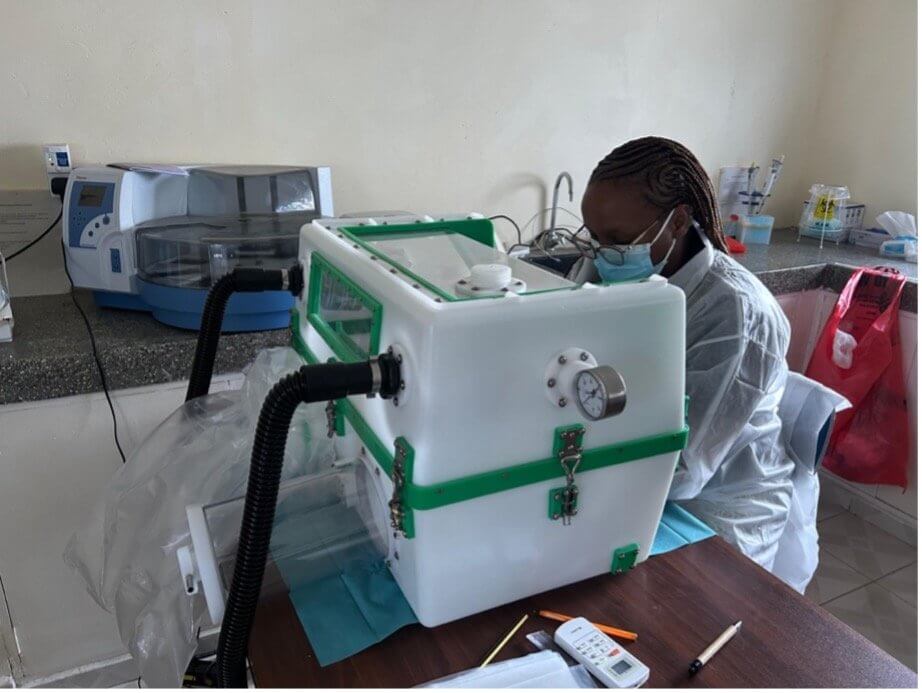
Not long ago, patients in Kenya being tested for mpox had their laboratory samples sent to the country’s National Public Health Laboratory (NPHL).
On average, NPHL is 250 miles from the regional laboratories that collected the samples. That distance, coupled with the chronic staff shortages at NPHL, often delayed test results, delays that caused longer waits for a diagnosis and—consequently—timely treatment.

Building regional capacity
“Based on discussions with US Centers for Disease Control and Prevention and NPHL, it was agreed that there was a need to build/strengthen capacity at some specific regional laboratories to support laboratory investigation, as opposed to submitting samples at the national level,” said Edwin Ochieng, APHL’s country director in Kenya.
NPHL worked with multiple partners, including APHL, to help build that regional capacity with the aim of reducing NPHL’s workload and getting test results to patients and their clinicians more quickly.
“In collaboration with the Kenya Medical Research Institute and the Ministry of Health, APHL supported training of laboratory analysts on molecular testing, mentorship on best practices and procurement of equipment, reagents and consumables,” Ochieng said. APHL was also tasked with strengthening a laboratory electronic information system for the remote log-in of samples (before the specimen arrives at the lab) and the subsequent upload of results to a central repository at NPHL.
Beyond mpox
Today, test results for mpox are processed in eight hours instead of five days. And the quick turnaround, Ochieng noted, has led to more patients being tested, which means earlier diagnosis, earlier treatment and decreased disease transmission.
“They are aware that they will be able to get same-day results, which is a motivating factor for them to come for lab tests,” Ochieng explained.
The successful decentralization of mpox testing in Kenya has had other benefits as well. Regional laboratories in the country are being equipped to take on multiple molecular testing demands, including testing for SARS‑CoV‑2 and varicella-zoster virus (aka, chicken pox).
All this helps the people of Kenya, but it also propels the Trump administration’s America First Global Health Strategy, which, in part, aims to prevent infectious disease outbreaks from reaching American shores.
“Building molecular testing capacity at regional levels ensures laboratory diagnostic tests are within reach and tests are done quickly,” Ochieng said, “leading to early detection of the threat and, subsequently, a rapid response to contain it.”