.png?sfvrsn=a4dc1c5f_6)
Testing the Waters: Ethiopia Pilots a Wastewater Surveillance Program
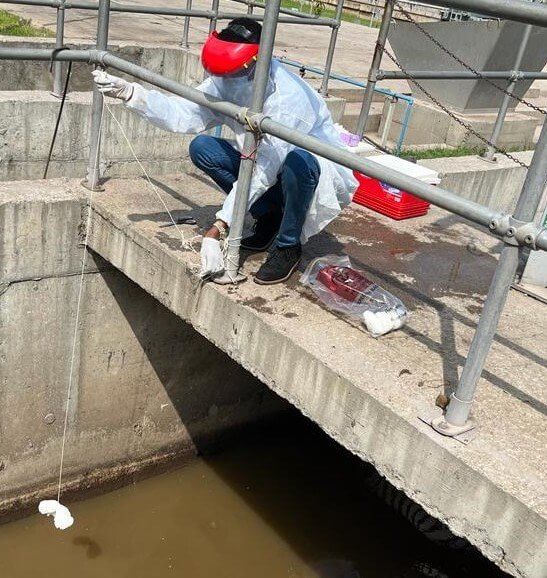
Using wastewater-based surveillance to track new and emerging viruses is gaining traction, especially since COVID-19 burst on the scene several years ago. Because people can shed viruses in their feces before ever displaying symptoms, wastewater surveillance is a quick and cost-effective way for public health officials to monitor what’s circulating in the community and act to prevent further spread.

Wastewater-based surveillance in Ethiopia
The Ethiopian Public Health Institute teamed with APHL to test how well a wastewater-based surveillance system could detect the SARS-CoV-2 virus in particular communities. The pilot survey was conducted from February to October 2023.
Using a Moore swab (a sampling tool consisting of a sterile gauze pad and string submerged in the water), wastewater samples from three treatment plants located in Ethiopia’s Addis Ababa City were collected. After the swabs were submerged in wastewater for 24 hours, they were collected, packaged and sent to the laboratory to detect SARS-CoV-2 RNA using a nucleic acid-based testing method. To determine genetic variants and detect novel mutations for SARS-CoV-2, next-generation sequencing was used and data was analyzed with bioinformatics in Terra.bio.
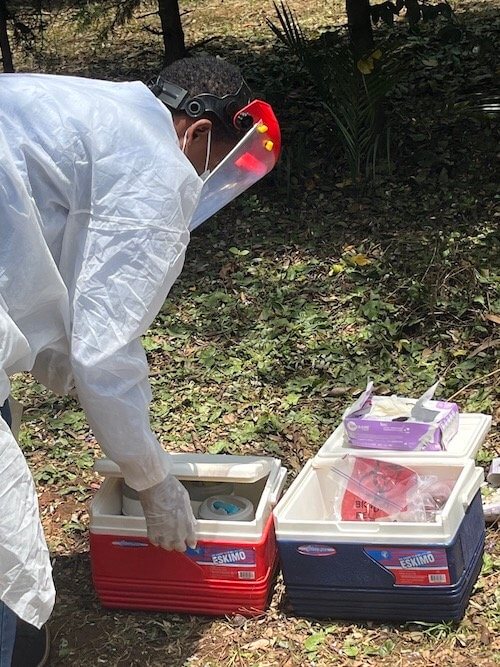
Monitoring wastewater for traces of a pathogen or biomarkers will allow accurate surveillance of specific geographic zones or communities, noted Yohannes Mengistu Eshete, PhD, country director for APHL program in Ethiopia.
“The surveillance will provide a sensitive signal of whether the pathogen is present in the population and whether transmission is increasing or declining,” he added. “The advantage of more timely data aids public health agencies in making informed decisions on resource allocation, provides valuable guidance to the public on infection prevention or the easing of restrictions and builds public confidence in health agencies.”
The findings
Laboratory diagnosis is increasingly less representative of the burden of disease in Ethiopia, explained Eshete, as many people are asymptomatic or have mild cases and don’t seek out medical treatment. At least that’s likely the case in Addis Ababa City, Eshete noted, where SARS-CoV-2 was detected in 94% of the wastewater samples collected, which is consistent with the spread of COVID at “subclinical” levels, he said.
But wastewater surveillance doesn’t just pick up known virus variants. It also detects those that are new or are emerging ones of concern. Case in point: “Out of the sequenced samples, there were SARS-CoV-2 variants and lineages that have not been reported [to Global Initiative on Sharing All Influenza Data (GISAID) or National Center for Biotechnology Information (NCBI)] on the African continent,” Eshete added. “This pilot highlights the need for further analysis and linkage with clinical cases.”
Making wastewater surveillance a priority
The pilot project, said Eshete, proves the potential wastewater surveillance has to monitor disease outbreaks, guide public health interventions and inform decision-making in Ethiopia and beyond.
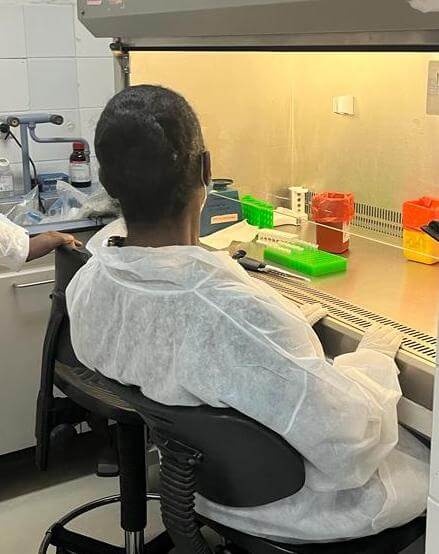
“Leveraging the existing capacity to monitor for other pathogens of public health importance and their genetic elements will further bolster the rich data that can be expanded from this complex matrix that is wastewater,” Eshete commented. “The detection of emerging priority pathogens, including antimicrobial resistance markers in the community wastewater system, will help the national disease surveillance system to identify hotspots and reinforce preparedness for further public health interventions.”
While the pilot may be done, a comprehensive wastewater-based surveillance system in Ethiopia is not. Eshete said the country’s public health laboratories and other government institutions, stakeholders and partners should continue to collaborate on wastewater surveillance and build on local capacity and long-term sustainability.
More stories from our global health wastewater surveillance series:
- Waste Not: Building a Wastewater Surveillance System in Zambia
- Eyes Below the Surface: Wastewater Surveillance Pilot Program in Uganda Shows Potential for Future Pandemic Monitoring