

“A doctor came in and said to me, ‘I promise you that your baby will wake up. But I can’t promise you what state he’ll be in when he does.’ “
.png?sfvrsn=a4dc1c5f_6)
Sep 12, 2024
The Tale of Two Babies—One Screened for Disorders as a Newborn, One Not
Each year, roughly four million babies are born in the US, and nearly all of them are screened shortly after birth for at least 31 congenital diseases and disorders. And each year, about one in 300 of those babies is diagnosed with a condition detected through newborn screening.
That kind of early detection is essential if babies are to have the best shot at a healthy start to life.
Consider what happens to babies born with the metabolic condition phenylketonuria (PKU) the first condition for which widespread newborn screening was implemented in the US in the 1960s. The condition makes it hard for the body to digest or process an amino acid called phenylalanine, which is found in many foods. In these newborns, the buildup of this amino acid can cause severe intellectual and developmental issues by just three months of age. But when babies are placed on a special diet at birth and continue that diet throughout life, they can grow and develop into healthy adults despite their PKU diagnosis.
Newborn screening involves taking just a few drops of blood from a baby’s heel in the first 24-48 hours of life and sending the specimen to a public health laboratory for testing. If results are abnormal, the baby’s parents and healthcare provider are notified, and treatment protocols are outlined and initiated shortly thereafter. That’s what happened in Evan Miller’s case. But not so for Roderich Martinez, who wasn’t born in the US. Here, in celebration of Newborn Screening Awareness Month, are their two stories.
Evan’s story
Evan Miller is a typical 13-year-old. The eighth grader loves web design, computer coding and baseball. “I think his ultimate dream is to be a Major League Baseball (MLB) player, but if that falls through, he’d be happy being a web designer or working with computers. He really has a passion for it,” said Teddi Miller, Evan’s mom.
But back in 2011 when Evan was born, things didn’t look as promising.
Like other babies born in this country, Evan received newborn screening before being discharged from the hospital. When he was just six days old, his family received a call.
Evan had a positive test result for a rare genetic disorder called maple syrup urine disease (MSUD).
It was the shock of a lifetime. Teddi’s pregnancy had been uneventful. The standard prenatal testing she received was normal. No one in the family had MSUD, and as far as she knew, neither she nor her husband were carriers for the disease.
MSUD occurs when the body is unable to break down certain amino acids, which are the building blocks of protein. The toxic buildup of these amino acids can lead to brain damage, neurological problems, developmental delays and even death. The disorder gives urine and ear wax a distinct sweet, maple syrup smell.
Evan—who by now was lethargic and having problems feeding—needed additional testing. “Looking back on it, I should have been more concerned than I was,” Teddi said. “But I was a first-time mom. I knew that babies slept a lot and can be fussy. We had him to the pediatrician and a geneticist and no one was overly concerned. His diaper didn’t smell like syrup. He had gained a little weight because I was supplementing with formula, and his reflexes were good. They started talking about false positives. I was thinking, ‘Ok, something is not 100% right, but we’ll figure this out.’ ”
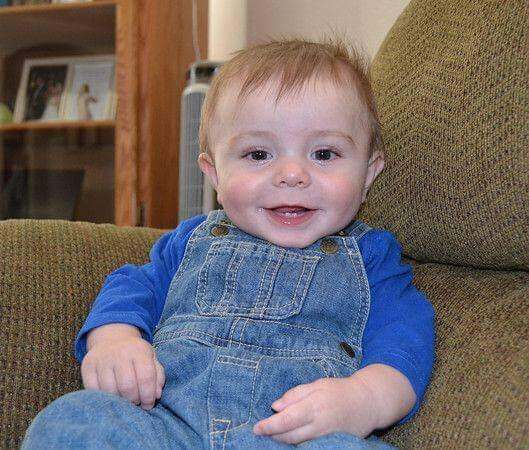
Evan was admitted to the hospital for observation and to begin MSUD treatment (which involved using a special formula), just in case the additional tests came back positive.
And they did.
By this point, Evan was in a coma. “Well, they never actually used that word,” Teddi corrected. “But he wasn’t awake. A doctor came in and said to me, ‘I promise you that your baby will wake up. But I can’t promise you what state he’ll be in when he does.’ I had so much anxiety. So much uncertainty. I had done a lot of research on MSUD by that point, and I was afraid. I knew he could have severe brain damage. I knew he could have seizures. I knew he could die. But then we were referred to a really good geneticist that a friend recommended. And I knew we would figure this all out.”
Evan woke up without any obvious problems, although he had to learn how to suck on a bottle, and Teddi and her husband, who was in the military at the time, set about taking care of their newborn son. For the first year of his life, Evan was fed an MSUD diet, which consisted of special formula devoid of the amino acids his body couldn’t break down. Teddi supplemented with a small amount of breast milk or formula that had to be precisely weighed and measured.
“Those first few months were really difficult,” Teddi remembered. “I felt like a medical caretaker. And that’s a rough role to be in as a new mom and a first-time mom who was away from family.”
But even with the prescribed formula, Evan was having problems. He vomited daily and would refuse feedings. “And with MSUD, that’s really scary,” Teddi said. “Intake has to be measured exactly. If they don’t have enough calories, they can have problems.”
That’s what led the family to seek a liver transplant for Evan. Because a healthy liver produces the enzymes that can break down the amino acids MSUD patients can’t, it can be a cure for the disease (although Evan still has the genetic variants that cause MSUD).
The day before his first birthday, Evan got a new liver. And ever since, he’s been thriving.
“And now to see him flourish and be the person he was meant to be, it’s pretty amazing.”
He eats an unrestricted diet, takes honors classes at school and that dream about becoming an MLB player? “I fully believe he can do it,” Teddi said. “Because he’s done everything else. You know, every mamma wants to brag, but for me, it’s so much deeper because of how things could have been. And now to see him flourish and be the person he was meant to be, it’s pretty amazing.”
Roderich’s story
Roderich Martinez, a 26-year-old associate specialist in legal operations at APHL, was two years old when he was diagnosed with sickle cell disease, a genetic disorder that’s routinely screened for in the US but not in the Dominican Republic (DR), where he was born.
Sickle cell disease is a blood disorder that causes red blood cells to be C-shaped (like a sickle) instead of O-shaped. That sickle shape causes the cells to get stuck when moving through small blood vessels, hindering blood flow. People with sickle cell disease are at higher risk of stroke and infections and often endure what experts call “pain crises,” which occur when the red blood cells clump in the veins producing pain that can last hours to days.
In fact, it was one such pain crisis that gave Roderich his diagnosis.
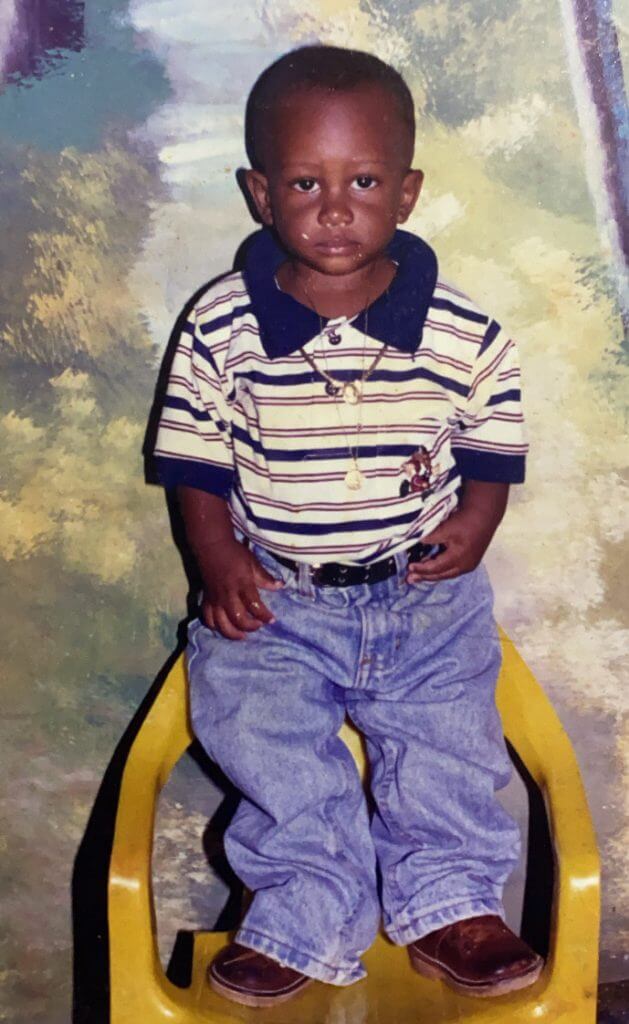
“I was crying and showing signs of discomfort, so my mom took me to the emergency room,” Roderich said. “And that’s when I was diagnosed with sickle cell SS (oftentimes referred to as sickle cell anemia). My mom said I used to smile so beautifully before my first crisis. But after it, my smile changed completely.”
That may have been Roderich’s first pain crisis, but certainly not his last. Growing up in the DR, he said he regularly endured five-to-seven pain crises a year, many of which landed him in the hospital for a week or more where he would get intravenous medication and blood transfusions.
“The pain is really indescribable,” Roderich said. “It feels like someone is hammering your bones. I get a lot of pain in my knees and my hips, and I have to be careful of my activities. I can’t walk a lot, I can’t play sports, I can’t do cardio. I have to be very moderate and do the minimum.”
When he was 12, Roderich came to the US on a travel visa. While there, his mother took him to Montefiore Medical Center in New York City for a consultation with medical specialists.
And that’s when everything changed.
Doctors prescribed a different medication regimen and Roderich started to improve. His pain episodes were less. He needed fewer blood transfusions.
“My mom saw that my life would be better in the States. So, she gave up her job as a lawyer and we emigrated here,” Roderich said. “If I was still in the Dominican Republic, I don’t know what my life would be like now. I have friends there with the disease, and their treatment is entirely different than what I am on here. I’m forever grateful to my mother for what she’s done for me.”
With 2024 drawing to a close, Roderich said he’s experienced just one pain crisis this year. He was admitted to the hospital for five days and given heavy-duty intravenous pain narcotics.
Does Roderich think things would have been different had he received newborn screening and known of his condition early on?
He says no.
“I think the only difference would have been that my parents would have done research before my first pain crisis,” said Roderich, who added that while both his parents are carriers of the gene that causes sickle cell, they didn’t know it at the time of his birth. “Overall, I think my journey would have been similar.”
Still, Roderich says, he sees the immense value of newborn screening, noting that it allows parents to learn about treatment options for their child’s disease at the get-go, thereby limiting—and many times preventing—devastating side effects or problems that can occur when diseases remain undetected.
Despite knowing his children have an increased risk of developing sickle cell disease or being a carrier for it, Roderich says parenthood is still something on his horizon.
“I’m feeling more confident that, thanks to medical advances, a child of mine with sickle cell disease could have a prolonged life with treatment. And that makes me happy. Sickle cell disease is a condition we can learn to treat and live with.”
“I used to be against it,” he said. “Because of what I’ve been through, I’d never want one of my children to have to go through the kind of pain I’ve endured. But as of right now, I’m feeling more confident that, thanks to medical advances, a child of mine with sickle cell disease could have a prolonged life with treatment. And that makes me happy. Sickle cell disease is a condition we can learn to treat and live with.”