.png?sfvrsn=a4dc1c5f_6)
Tuberculosis Cases Are Rising in the US. How Public Health Laboratories Are Stopping the Spread
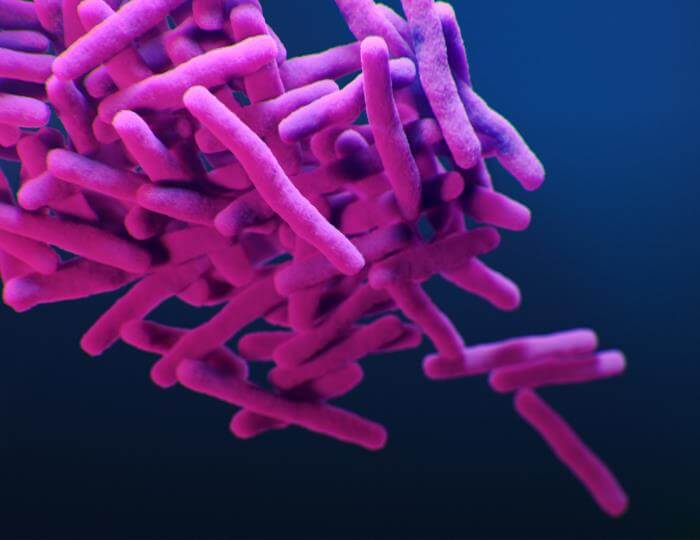
Tuberculosis (TB) has been around for thousands of years, but it’s currently making headlines.
Cases are skyrocketing in Kansas, where, as of last count, there have been 146 confirmed cases of TB and two deaths since January 2024, making it one of the largest TB outbreaks this country has seen in decades. And while the numbers in Kansas are alarming, much of the nation is seeing an uptick in cases after they fell off during the pandemic, when people were congregating less and testing was more focused on COVID-19. Overall, reported cases increased 16% from 2022 to 2023.
“TB just wasn’t being looked for during the pandemic,” said Anne Gaynor, PhD, APHL’s director of infectious diseases. “And when there’s a lack of testing, there’s a lack of cases.”

Tackling TB
TB is a contagious and serious bacterial infection caused by a bacterium called Mycobacterium tuberculosis. It typically targets the lungs and is spread through the air by infected people when they cough, sneeze, sing or speak.
It’s a tough disease to tackle. As cases go undetected, transmission can unwittingly grow.
For starters, the bacterium that causes TB is slow growing and symptoms can take weeks or months to appear after exposure. Sometimes they don’t appear at all (this is called latent TB, which can progress to active TB and be passed on to others if treatment isn’t initiated). That means people may not seek care right away—and as cases go undetected, transmission can unwittingly grow. In fact, the Kansas outbreak has been ongoing for a full year.
TB is also becoming increasingly resistant to the drugs that had previously been effective in treating it.
In 2022, 8.4% of TB cases reported in the US were resistant to isoniazid, one of the most commonly used drugs to fight TB. And some TB can be resistant to multiple drugs. People with drug-resistant TB tend to have more severe disease and are at greater risk of dying.
“TB treatment is lengthy, often taking months, sometimes taking a year or more,” Gaynor said. “And it’s expensive. Drug-resistant cases can cost millions.”
The public health laboratory’s role in managing TB
Fast and accurate detection of TB is crucial to controlling the disease—and that detection often starts in public health laboratories.
Laboratories perform multiple tests for TB starting with a sample of sputum (a type of mucus produced in the lungs) that can be cultured to grow TB. From that TB culture, public health laboratories play a significant role in determining if the specimen is resistant to some of the first- and second-line drugs used to treat the disease.
But the turnaround time for culture—and therefore detection of drug resistance—can be painstakingly slow, and in some cases, repeat tests are needed. This gives the contagious bacterium even more time to take hold in the body and for drug-resistant bacteria to emerge.
Enter molecular testing.
Molecular tests, like polymerase chain reaction or PCR, provide results in hours-to-days instead of days-to-weeks. Using molecular testing, public health laboratories can detect TB as well as some markers known to indicate resistance to those first- and second-line drugs used for treatment. Quicker detection means the correct treatment can be initiated sooner and the disease is more likely to be contained.
If a public health laboratory performs few TB tests (and therefore doesn’t have the capabilities to perform this specialized testing), it’s eligible to send samples to the National Public Health Laboratory Drug Susceptibility Testing Reference Center for Mycobacterium tuberculosis. This reference center, a US Centers for Disease Control and Prevention (CDC)/APHL collaboration, performs drug-susceptibility testing from a culture or using molecular techniques. APHL has supported building and maintaining next-generation sequencing capacity and capability at public health laboratories for TB since 2015.
The reference center and a handful of individual public health laboratories can also perform next-generation sequencing, which looks at the sequence of DNA present in a specimen to provide even more information on potential resistance to TB treatment. NGS results can also be used to look at genetic similarities in bacteria detected in different individuals, allowing detection of outbreaks or clusters in a community.
APHL has supported building and maintaining next-generation sequencing capacity and capability at public health laboratories for TB since 2015.
Why investment in public health matters
TB is one of the world’s leading infectious disease killers. While rates are much lower in this country than in other parts of the world, the numbers are inching up. According to CDC, TB incidence increased in every age group from 2022 to 2023.
To prevent TB transmission and death, cases need to be detected quickly, treatment initiated promptly and the contacts of those infected identified, tested and treated if necessary. And all of that requires a strong and supported public health system, with public health laboratories—and their expert testing capabilities—at its center.
“Private clinical laboratories can do some of the TB testing,” Gaynor acknowledged. “But frankly, it’s not as comprehensive and additional testing is usually needed. Most TB culture and drug susceptibility testing is done in public health laboratories, which are leaders in laboratory testing for the diagnosis and management of TB.”