.png?sfvrsn=a4dc1c5f_6)
Wastewater-Based Surveillance Serves as Early Warning System in Mozambique
Mozambique is a country with exquisite natural beauty. Light blue skies, deep blue ocean. Behind the occasional palm tree, the horizon stretches far.
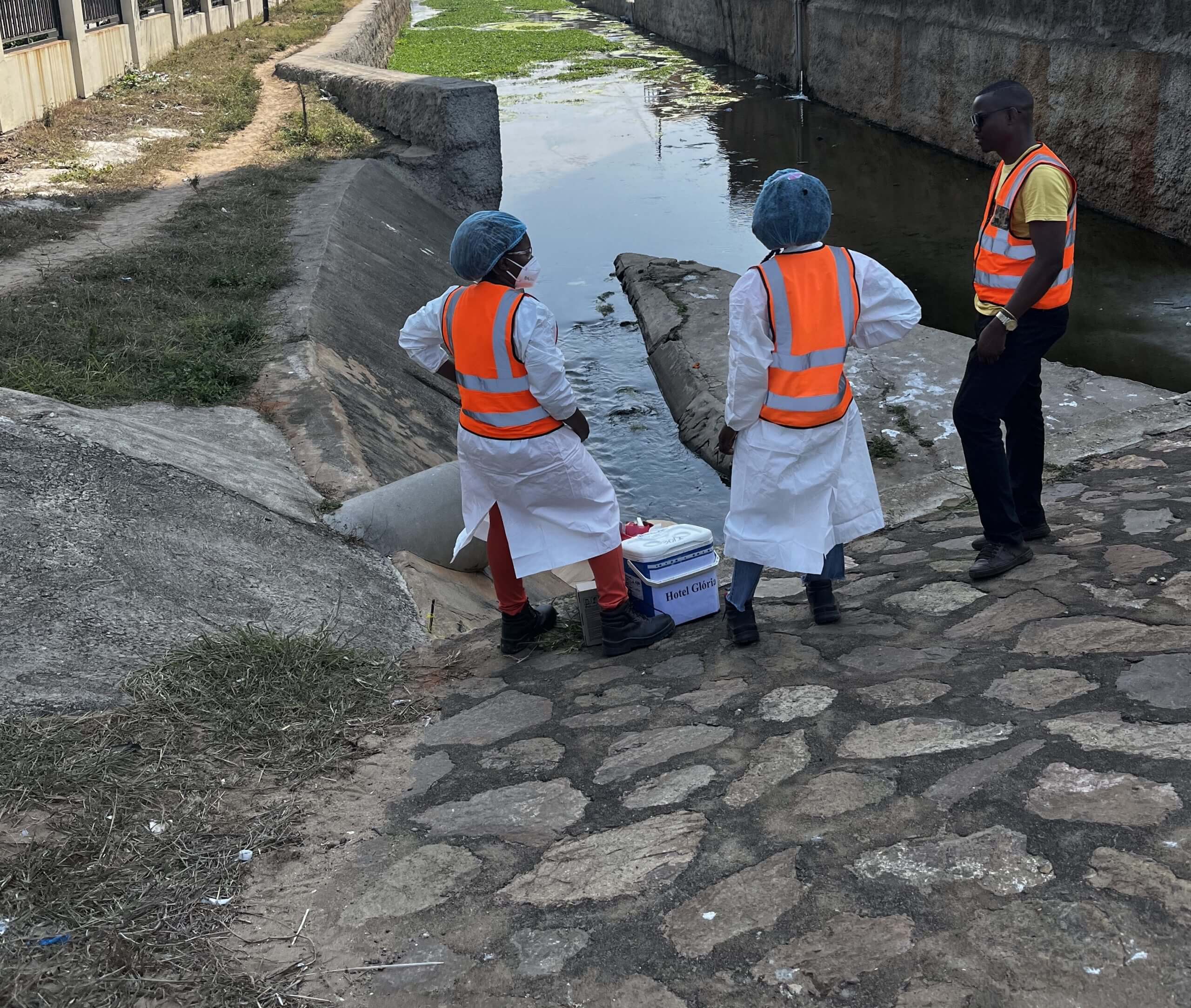
From the view, one could be forgiven for assuming I was here on vacation. However, the sharp smell of sewer runoff belied my true purpose: I was observing wastewater sample collection in the capital city, Maputo. Mozambique is one of six countries selected for a wastewater-based surveillance pilot project by the Global Fund’s Project Stellar. Implemented by APHL in conjunction with the Mozambique National Institute of Health (INS), the pilot aims to explore the feasibility of using wastewater-based surveillance (WWBS) to track disease outbreaks in urban populations.
In Maputo, I watched team members from INS as they deftly fished Moore swabs from the water. The Moore swab is a large wad of gauze that has been suspended in running water and used to collect wastewater samples, which, in this case, would be extracted and processed at the INS reference labs. With practiced precision, the laboratory technicians packaged the swab for safe transportation back to the laboratory and set a new Moore swab in place to allow for continuous collection. This same scene was repeated at two different collection sites in Maputo that day.
I asked APHL Mozambique Country Director, Solon Kidane, to explain the importance of this project.
“Wastewater-based surveillance (WWBS) is important to the public health system as it serves as an early warning of disease detection before an outbreak arises and becomes a public health threat,” he said. “A disease outbreak can be costly to the public, and it has consequences—for example, the loss of human lives and the disruption of public health systems. Ultimately, it can lead to exhausting existing health infrastructures by diverting resources to focus on the outbreak. Through WWBS and early detection of diseases, a country can be successful in mitigating outbreaks.” WWBS is an accurate and cost-effective method of monitoring outbreaks among populations.
In Mozambique, the surveillance program was originally set up to help detect and identify an outbreak of SARS-CoV-2, in addition to building the capacity of the local staff for testing and detection of other disease pathogens across the country. Back at the national laboratory, I watched as laboratory scientists carefully extracted and prepared their samples for testing. A sense of importance was palpable in the bright, clean laboratory rooms.
“Currently, Mozambique has piloted WWBS for SARS-CoV-2 successfully. INS also has an integrated national environmental monitoring of wastewater plan to expand the use of WWBS for an additional four pathogens, including cholera, polio, Salmonella typhi and influenza,” said Kidane.
“The pilot project was integrated within an existing laboratory at the INS in Mozambique, and it has support from high-level leadership at INS,” said Kidane. “INS has integrated WWBS now as part of its environmental health monitoring plan, and wastewater surveillance is part of the integrated genomic surveillance national strategic plan.”
***
Britnae Purdy is an associate specialist on APHL’s Global Health team. Here, she reflects on an in-country visit that changed her perspective on wastewater-based surveillance. This blog post is part of a six-part series highlighting our work in partnership with the Global Fund. More stories from our global health wastewater surveillance series include:
- How Kenya Built a Wastewater-based Surveillance System: 6 Questions Answered
- Waste Not: Building a Wastewater Surveillance System in Zambia
- Eyes Below the Surface: Wastewater Surveillance Pilot Program in Uganda Shows Potential for Future Pandemic Monitoring
- Testing the Waters: Ethiopia Pilots a Wastewater Surveillance Program