
On November 2, 2026, all links to Lab Matters articles published before 2026 on the Joomag platform will expire! Contact us if you need access to a specific article that will soon be unavailable online.

Recently, APHL interviewed three public health laboratory directors—Deb Severson, BSMT, Fairfax County Health Department Laboratory; Victor Waddell, PhD, Arizona Bureau of State Laboratory Services; and Fengxiang Gao, MD, MPH, New Hampshire Public Health Laboratories—who are long-standing members of the Public Health Laboratory System Database (PHLSD) Task Force and who have guided the design and build-out of the system since its inception in 2018.
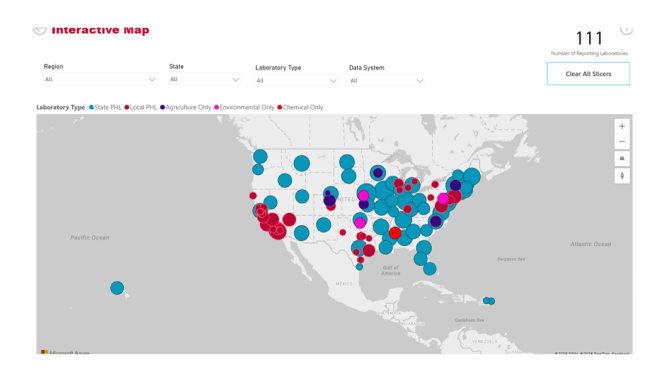
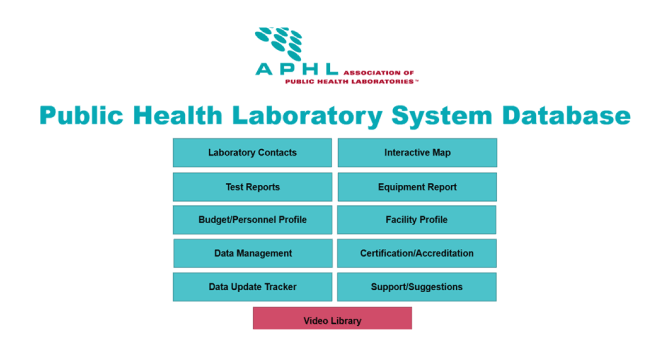
Severson: The database continues to evolve and expand, incorporating additional relevant information for both local and state public health laboratories. It supports a wide range of laboratory disciplines, including clinical, environmental and agricultural testing, and also includes valuable demographic data such as certification status, budgetary details, personnel metrics and facility information—ensuring it remains a comprehensive and current resource.
Gao: The database remains relevant through continued participation by member laboratories, timely updates and widespread use of the system. The PHLSD was developed to better serve APHL member laboratories. We encourage member laboratories to actively participate in the system and to update their information in a timely manner. At the same time, we should continue promoting the system and supporting member laboratories in updating their information with minimal effort.
Waddell: The database continues to grow and incorporate additional data from testing, instruments, and laboratory information management systems (LIMS) used. It is a very quick way to see which other laboratories are performing tests on the test system you are interested in. This way, you know which laboratory to contact to gather more information on this testing.
Gao: The biggest benefit of having the PHLSD as a resource is its support for effective planning. PHLSD resources are valuable for activities such as new method implementation—including method and equipment selection—as well as for planning collaborations or partnerships with other member laboratories. The database provides timely, relevant and trustworthy information that enables member laboratories to plan strategically and make well-informed decisions.
Waddell: It is a very fast way to see what other laboratories are doing, so you know who to connect with to gather more information and help you decide which new tests to bring on and which instruments to purchase.
Severson: The greatest benefit of the PHLSD is the breadth of information it provides and the ability to access that information quickly and efficiently when making laboratory decisions. The PHLSD serves as a centralized platform for laboratory information, allowing member laboratories to share and view detailed data with one another. In addition to providing convenient access to information, the database promotes collaboration among laboratories and supports the sharing of knowledge, resources, and capabilities across the public health laboratory network.
Waddell: We used the PHLSD to review the types of instrumentation other public health laboratories had acquired, in particular RT-PCR instruments, to help us decide which instruments to acquire.
Severson: Most recently, we used the PHLSD to research document control systems, LIMS and laboratory equipment. Specifically, we gathered information on laboratories utilizing the DiaSorin Liaison XL platform for QuantiFERON-TB (QFT) testing.
Gao: Most recently, we have been working on a contract with CliniSys to migrate our LIMS to the Cloud. While migrating LIMS to the Cloud is an increasingly common trend, the increased cost remains a challenge. To support our decision making, I searched the PHLSD and found that 24 public health laboratories currently use CliniSys LIMS. We reached out to those laboratories, and one laboratory that had completed the Cloud migration shared its experience with us.
For more information, contact [email protected].
