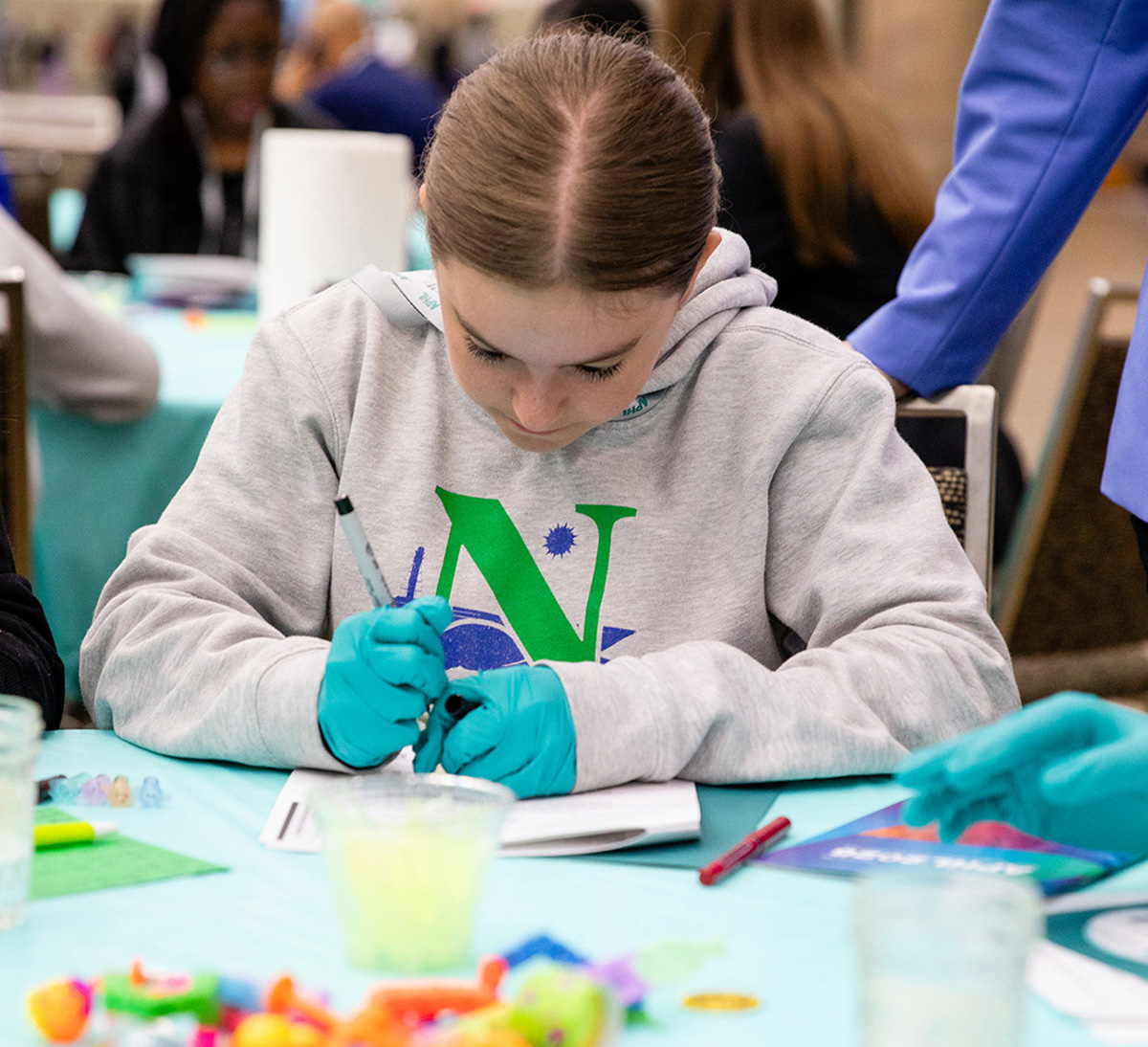
Created for students, educators, counselors, parents and guardians, public health laboratory ambassadors and professionals, the SPARK Lab Toolkit serves as a STEM career exploration hub to ignite interest in public health laboratories and the broader public health system. It features outreach materials, career pathway resources and interactive tools that connect learners to the growing public health laboratory workforce and highlight the meaningful impact that careers have on communities.
Discover Public Health Laboratories and the APHL Community
Learn how public health laboratories protect communities every day and meet the APHL community that supports this work. This section introduces students to the essential role public health laboratories play in disease detection, environmental testing, emergency preparedness, newborn screening surveillance and other public health services. It also explains APHL’s mission, highlights the professionals and partnerships that strengthen the public health laboratory workforce and helps learners understand how they can connect with this field.
About Public Health Laboratories
Learn how public health laboratories protect communities through testing, surveillance and scientific investigation while supporting a wide range of laboratory careers:
About the Association of Public Health Laboratories
APHL works to strengthen laboratory systems in the United States and globally. We support our member laboratories and partners with services, information and advocacy to ensure an effective and robust public health laboratory system that keeps our communities safe.
The largest group of APHL members are US-based local, state and territorial government laboratories focused on protecting the public health. Collectively referred to as public health laboratories, they include institutions performing human, environmental, animal and food testing to monitor and detect health threats.
Academic Partnerships explore collaborations that help prepare students for careers in public health laboratory science through education and workforce development.
Public Health Virtual Laboratory Tours
Take a virtual tour of a public health laboratory and see laboratory careers in action.
Watch this laboratory overview video to explore the diverse services, testing programs and career opportunities that support public health and disease prevention efforts in a state public health laboratory.
Explore the day-to-day work of a public health laboratories and discover the professionals who helped detect and prevent health threats.
Explore What Public Health Laboratories Study
See science in action by learning how laboratories respond to real-world public health issues. Students can discover the science behind emerging infectious diseases, environmental health testing, food safety and foodborne disease outbreaks, chemical spills, emergency preparedness, newborn screening, public health surveillance and other health emergencies.
Infectious Diseases
Public health laboratories are prepared to protect our communities from invisible threats—ranging from seasonal influenza to multidrug resistant organisms and emerging threats like Oropouche virus.
Through continuous monitoring, diagnostic testing and the ability to perform advanced characterization testing, public health laboratories detect and respond to new and re-emerging diseases swiftly, providing data and communicating information to improve our understanding of disease transmission.
Learn more about testing at public health laboratories and the role of APHL: Infectious Diseases.
About Emerging Diseases
Learn how scientists investigate new and reemerging diseases and protect public health:
Emerging Disease Research Areas of Interest
Discover research fields and career pathways focused on infectious disease prevention and response, from the National Institute of Allergy and Infectious Diseases:
Watch an overview of the Arizona State Public Health Laboratory’s virology program highlighting how scientists monitor influenza for emerging strains and conduct rapid rabies testing to protect public health and inform disease prevention efforts:
Commonly considered a disease of the past, tuberculosis (TB) is resurging in new and antibiotic-resistant forms that have the potential to cause debilitating disease. Laboratory testing and surveillance support the detection, treatment and control TB worldwide.
TB Testing
Public Health laboratories and TB | APHL: Public health laboratories play an instrumental role in fighting TB by identifying and isolating Mycobacterium tuberculosis, the causative agent of TB.
TB Laboratories | CDC: Learn about the specialized laboratory services and scientific expertise required to detect and monitor tuberculosis.
TB Treatment
Clinical Overview of TB | CDC: Learn how laboratory testing plays a critical role in diagnosing tuberculosis and supporting public health response efforts.
Treating Active TB Disease | CDC: Explore how laboratory professionals help guide treatment decisions by identifying and monitoring TB infections.
Monitoring environmental hazards by testing air, water, soil and other environmental samples helps identify hazards and protect the health of communities.
Environmental laboratory testing identifies microbes, pollutants and toxins in people and the environment, which provides critical information to reduce harm, improve health and save lives. Specific areas of work include: environmental monitoring, human biomonitoring, emergency response, and drugs and overdose testing.
Learn more about testing at environmental laboratories and the role of APHL:
Newborn screening laboratories identify inherited and genetic conditions shortly after birth, helping ensure early diagnosis, treatments and improving health outcomes for infants.
Learn how public health laboratories use newborn screening to help identify health conditions early and improve outcomes for infants:
Explore a hands-on activity that informally mimics fundamental laboratory techniques used in genetic, molecular biology and public health research.
Food Safety
Public health laboratories help ensure the safety of the food supply through laboratory testing, quality assurance, contamination detection and outbreak investigations.
Learn how laboratory scientists detect foodborne illnesses and support outbreak investigations:
See how laboratories identify and investigate foodborne disease outbreaks.
Learn how laboratory scientists use testing and surveillance to identify foodborne pathogens and help prevent disease outbreaks.
Follow students in Miss Morgan's class as they investigate an outbreak that sickened members of their school community. By tracing the source of contamination and examining food safety practices surrounding a school barbecue, they uncover how a series of mistakes led to the spread of bacteria and learn how proper food handling helps prevent foodborne disease.
Conduct a hands-on experiment that introduces microbiology and laboratory testing methods.
Emergency Preparedness and Response
Laboratories prepare for and respond to public health emergencies, natural disasters and pandemics by strengthening testing capacity, surveillance systems and coordinated response efforts.
Public Health Media Library: Explore educational resources highlighting public health preparedness and response efforts.
Review this emergency response video to learn how public health laboratory professionals prepare for, respond to and support investigations during disease outbreaks, public health emergencies and other critical response events:
Explore how laboratory data and surveillance systems help identify emerging health threats:
Discover how laboratory testing and surveillance support outbreak response and disease containment.
Learn how scientists and laboratory professionals investigate emerging disease threats and support outbreak response efforts:
Explore how laboratory testing helps identify Ebola infections and guide public health interventions during outbreaks:
Examine the key factors that allowed the Ebola outbreak to escalate into a global public health emergency:
Learn how laboratory science contributed to prevention, testing and response efforts during the pandemic.
Learn how public health professionals use infection prevention practices and public health guidance to reduce the spread of disease and protect vulnerable populations:
Explore how public health and laboratory data help inform strategies that prevent disease transmission during outbreaks and pandemics:
Discover how public health professionals promote evidence-based practices that support disease prevention and community health:
Data Analytics and Laboratory Informatics
Discover how laboratories use data, information systems and digital technologies to improve disease surveillance, streamline laboratory operations and support improved public health decision-making.
APHL Informatics Overview: Learn how information systems and technology support modern public health laboratories.
APHL Data Science: Explore tools that use data analysis to improve public health decision-making and laboratory operations.
APHL Informatics Resources: Access tools and educational materials related to laboratory informatics careers and technologies.
See how data science and informatics professionals contribute to public health laboratory success:
Discover Career Pathways
Explore the diverse career opportunities within the public health laboratory workforce. Designed for learners at every stage, this section helps students discover career pathways, educational and training opportunities, and the many ways individuals with different interests, skills and backgrounds can contribute to protecting and improving public health.
Explore a variety of public health careers and learn how different professionals contribute to protecting community health:
Laboratory Assistant/Lab Aide: Laboratory Assistants/Lab Aides are essential members of the laboratory team who help ensure specimens are accurately received, processed, and prepared for testing. They support scientists and technicians by maintaining equipment and supplies, preparing solutions and media, performing routine instrument maintenance, and handling specimen intake. Often the first laboratory staff to interact with specimens, they verify that the correct samples have been submitted, enter patient and specimen information, aliquot samples for testing, and apply barcodes to ensure accurate tracking throughout the laboratory. Their work is critical to maintaining efficient laboratory operations and producing reliable test results. Watch a preview of the job here:
Medical Laboratory Technician: Medical Laboratory Technicians perform laboratory testing that helps detect, diagnose and monitor diseases. They are key members of the healthcare team who analyze patient specimens and provide accurate test results that physicians and public health professionals use to make medical decisions. Watch a video depicting a day in the life of the job here:
Research Scientist: Research scientists help improve public health by studying diseases, investigating treatments and developing evidence-based solutions to health challenges. Their work combines laboratory research, data analysis, clinical studies and community health investigations to better understand how diseases spread and how they can be prevented or treated. Watch a video depicting a day in the life of the job here:
Laboratory Director: Laboratory Directors provide the strategic leadership and oversight necessary to ensure a laboratory operates effectively, efficiently and in compliance with regulatory requirements. They oversee laboratory operations, manage personnel, develop policies, direct budgets and research initiatives, and ensure the delivery of high-quality laboratory services. As administrators, Laboratory Directors recruit and mentor staff, coordinate training and professional development, and allocate resources to meet organizational goals. They establish and enforce laboratory policies, monitor compliance with local, state, and federal regulations, and evaluate testing processes to ensure accurate and reliable results. Laboratory Directors also serve as key representatives of the laboratory, communicating with public health officials, physicians, laboratorians, regulatory agencies and the public. Watch a Laboratory Director speak about her career here:
Careers in Public Health.net: In addition to the careers described above, learn about a wide range of public health careers, including laboratory, environmental health informatics and epidemiology roles.
See Yourself in a Public Health Career: Discover how your skills and interests can translate into meaningful careers that advance public health through science and innovation.
Association of Schools and Programs of Public Health (ASPPH) Academic Program Finder: Search for degree and training programs that can help prepare you for careers in public health, laboratory science and related fields.
APHL Career Pathways in Public Health Laboratory Science: Discover career opportunities, educational requirements and advancement pathways available within the public health laboratory workforce.
Gain Real-World Experience
Discover opportunities that help turn classroom learning into a hands-on experience. This section connects students with internships, fellowships and academic partnerships that provide valuable exposure to public health laboratories and help build professional skills.
APHL-CDC Public Health Laboratory Fellowship Program
Fellowship Overview: Discover fellowship opportunities that offer hands-on experience in public health laboratories, research, informatics and workforce development.
APHA KP Community Health Fellowship: Learn how fellowship experience can help build leadership skills while addressing real-world public health challenges.
See how internships provide students with hands-on laboratory experience and exposure to careers and public health laboratory science:
Other Internship Opportunities
APHA Internships: Explore internship opportunities that help students develop professional skills while contributing to public health initiatives.
Academic Partnerships: Discover how partnerships between public health laboratories and academic institutions help prepare students for careers in public health laboratories.
Learn directly from the people working in public health laboratories today. Through interviews, podcasts, fellowship stories and career spotlights, students gain insight into different career journeys, workplace experiences and the impact laboratory professionals have on public health.
Follow a public health scientist through a typical workday and see how laboratory testing helps improve health outcomes for newborns:
Trace the journey of newborn screening specimens through the laboratory and learn how the professionals are responsible for each step of the testing process:
Watch this Public Health Scientist career spotlight featuring Dr. Austin Echelmeier to learn how scientists use laboratory testing, data analysis and public health expertise to detect and respond to health threats in the community:
Watch this Public Health Scientist career spotlight featuring Sarah McMurdy to explore a career in public health laboratory science and gain insights into the skills, education and daily work involved in protecting population health:
Review Katherine Nordell’s Laboratory Supervisor career spotlight to learn how she oversees bacteriology and mycology testing, mentors laboratory staff and ensures the quality and reliability of public health laboratory services while protecting communities from infectious disease threats:
Mya Davis is an Environmental Health Program Manager who leads health education and community outreach efforts across Arizona. In this Career Spotlight, she shares how she uses data and public health trends to address community health challenges, the importance of communication and teamwork and how adaptability and resilience support her work. Mya also offers advice for students interested in science who are exploring future career paths:
Meet Riley Grapentine, a Laboratory Technician at the Arizona Department of Health Services. In this career spotlight, Riley shares his day-to-day laboratory responsibilities and how laboratory testing and disease surveillance help protect public health. He highlights the importance of communication, literacy and teamwork in his role, while encouraging students to prioritize their health and well-being as they explore careers in laboratory science:
Meet Max Hoffman, an environmental scientist who investigates environmental hazards, analyzes data and applies laboratory science to help protect community health and the environment:
Explore how data scientists use analytics, technology and complex datasets to identify trends, solve problems and support evidence-based decision-making, including in the field of public health:
Listen to the APHL Lab Culture podcast episode featuring Dr. Sharon Massingale and Dr. Scott Shone, where they reflect on how their insights on leadership, collaboration, career growth and advancing public health laboratory practice can help shape your own professional development goals.
Learn how laboratory professionals promote STEM careers and serve as mentors for future public health scientists.
Experience Outreach in Action
See how public health laboratory professionals engage with students and communities across the country. This gallery highlights STEM outreach events, conferences, laboratory tours and ambassador activities to inspire future engagement and showcase successful recruitment efforts.
APHL 2026 Annual Conference: Explore APHL’s annual conference and discover how laboratory professionals connect, collaborate, and advance public health laboratory science.
What is HOSA?: HOSA - Future Health Professionals is a global student-led organization dedicated to developing leadership skills and recognition for students pursuing careers in health professions. Established in 1976, HOSA is recognized by the US Department of Education and has over 260,000 members worldwide across various educational levels, including secondary and postsecondary institutions. HOSA provides unique programs that motivate and prepare students for success in the health science career cluster.
APHL Public Health Laboratory Ambassadors: Learn how public health laboratory professionals inspire students through outreach, mentorship, and STEM career awareness efforts.
Continue Your Journey
Ready to take the next step? Whether you're looking for additional resources, planning an outreach event or exploring educational opportunities, this section provides quick access to downloadable materials, partner organizations and tools that support continued learning and engagement.
STEM Resources at CDC: Access a collection of STEM learning tools, activities and career resources that support continued exploration of public health and laboratory science
We Value Your Privacy
We use cookies to enhance your browsing experience. By clicking "Accept", you consent to our use of cookies. Read our privacy policy for more.