
75 Years of Innovation

In 2000, APHL developed a white paper entitled Core Functions and Capabilities of State Public Health Laboratories. In the years since its publication, the Core Functions document has been revised to describe the core functions of all public health laboratories irrespective of their identity as state, regional, county, city or local. Public health laboratories, and the systems in which they operate, face continuing challenges and uncertainties. Yet the 10 essential public health services and the 11 core functions of public health laboratories remain unchanged. APHL continues to support the work of public health laboratories in eight key areas:

Environmental Health

Environmental health laboratories are often the first to identify hazardous contaminants in people and the environment. APHL works to strengthen their ability to detect and respond to environmental threats and inform public health practice and policy. APHL supports environmental health laboratories through technical assistance, training, guidance and integration with public health partners.
Learn More About Environmental Health
Food Safety

APHL advances food safety by increasing the competence of scientists, improving the capabilities of member laboratories and strengthening the credibility of results generated by food testing laboratories for public health action. We promote the role of state and local public health laboratories and agricultural laboratories in the detection and characterization of foodborne hazards and work with member laboratories to ensure robust surveillance and outbreak detection and prevention activities. APHL also increases the competence of laboratory staff, improving the capabilities of member laboratories and strengthening the defensibility of results.
Global Health
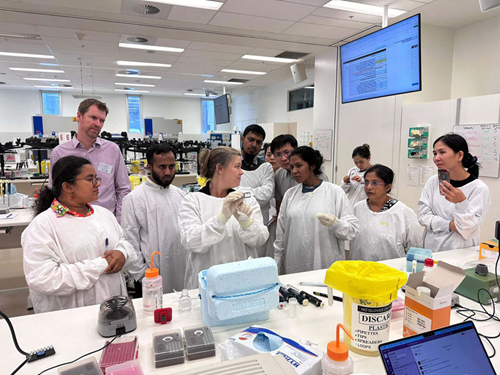
At the start of the 21st century, APHL’s Global Health Program had one staff member. Now in 2026, the program has a robust domestic and international presence across the globe that facilitates activities such as public health laboratory twinning partnerships, leadership and technical training, quality standards/systems training and program implementation, among others. These activities result in a strengthening of public health laboratory surveillance systems in numerous countries and the development of several guides and materials to be used by other countries in the future.
Learn More about Global Health
Infectious Diseases

Since their creation in the late 1800s, public health laboratories have always been prepared and equipped to protect communities from known and emerging diseases. From diagnosis and reporting of venereal disease testing during World War II to testing for the HIV virus and other emerging pathogens, APHL ensures that member laboratories remain on the cutting edge of technology and testing innovations. As laboratories adapt new technologies such as metagenomics and bioinformatics, APHL regularly uses its convening power and its elevated voice to advocate and facilitate policies and procedures.
Learn More About Infectious Diseases
Informatics
In 2008, APHL launched the APHL Informatics Messaging Services (AIMS) Platform in partnership with CDC to monitor and respond rapidly to health threats, strengthen laboratories with shared resources and expedite delivery of time-sensitive health information to consumers. Originally developed as a mechanism for states to report influenza data, AIMS has since expanded to serve as the nation’s public health data exchange platform. AIMS provides the critical infrastructure for public health laboratories, federal partners, healthcare organizations, private sector laboratories and other public health entities to safely and quickly share disease and other health data so outbreaks can be identified and contained as they are happening.
Newborn Screening and Genetics

For over six decades, public health laboratories have sustained a life-saving program while managing rapid growth in test menus, follow-up expectations, data needs and access considerations. APHL’s convening power has supported shared practice, rapid dissemination of lessons learned, and alignment across laboratories, clinicians and federal partners as newborn screening (NBS) evolved. It is leading the discussions about transitioning to whole genome sequencing and expansion of NBS services and staff, improving the capabilities of member laboratories and strengthening the defensibility of results.
Learn more about Newborn Screening and Genetics
Public Health Preparedness and Response
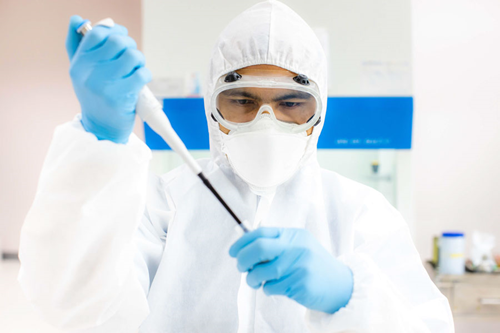
In 1999, APHL turned its focus to bioterrorism and preparing for threats. With the establishment of the Laboratory Response Network in partnership with CDC and the FBI, and after the white powder incidents of 2001, public health laboratories found their preparedness efforts entering a new phase. APHL strengthens public health laboratories’ ability to respond to such threats by supporting partnerships and outreach activities, developing trainings and tools, and providing crisis management assistance. APHL also assists in coordinating laboratory responses during public health emergencies.
Learn More about Public Health Preparedness and Response
Quality Systems and Analytics

Public health laboratories use data and quality practices to inform decisions, guide continuous improvement activities to strengthen laboratory services and systems, and foster partnerships, collaborations and knowledge sharing. APHL supports the work of public health laboratories by collecting and translating data into actionable information for our members and partners. We produce survey reports, guidance documents, toolkits, dashboards and more, which public health laboratories can use to inform decisions, guide continuous improvement activities to strengthen laboratory services and systems, and enhance efficiency to advance public health.