.png?sfvrsn=a4dc1c5f_6)
Thailand Reports Its First Clade I Mpox Cluster: How Public Health Partnerships Worked to Identify the Cases
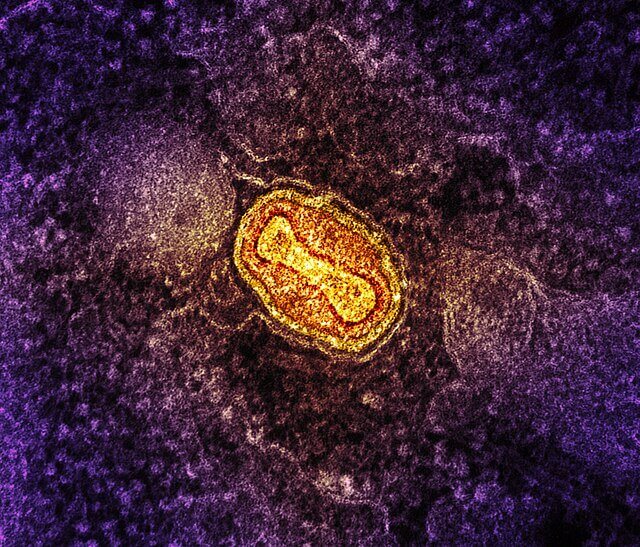
In August 2024, Thailand reported its first-ever case of clade 1b mpox, a serious and potentially deadly form of mpox that’s been skyrocketing in parts of Africa and making its way to other corners of the world, including the US.
By January 2025, three more people in Thailand were diagnosed with the infection, representing the country’s first identified clade 1b mpox cluster.

First there was one
APHL Thailand collaborates closely with the US CDC office there, known as the Thailand Ministry of Public Health – US CDC Collaboration (TUC).
In January, Thailand’s Bamrasnaradura Infectious Diseases Institute (BIDI), a specialized hospital for patients infected with highly contagious diseases, reached out to TUC for help analyzing a potential imported case of clade Ib mpox.
After a clade-specific PCR test showed a preliminary positive finding for clade Ib mpox, BIDI used Illumina and Oxford Nanopore sequencers to generate more data. Sequencing acts like “fingerprinting” the virus, explained Peera Hemarajata, MD, PhD, APHL’s Southeast Asia laboratory technical advisor. “It reveals genetic relationships between cases that help epidemiologists link infections across different regions and track transmission chains.”
But the laboratory professionals at BIDI needed support analyzing the sequencing information.
The APHL Thailand office stepped in to conduct a hybrid genome assembly (in this case, the assembly of a genome using datasets from both sequencers), confirming the first imported case of clade Ib in Thailand linked to the Middle East (the first case detected in August stemmed from travel to Africa).
“Given the global movement of people, we were not entirely surprised to detect this clade in Thailand,” Hemarajata said. “But it was significant because it indicated possible ongoing transmission in the region where the case originated.”
From case to cluster
Less than two weeks later, BIDI identified two additional potential cases of clade 1b mpox.
“These cases had a strong epidemiological link to the first patient and also similar travel history, raising concerns about possible exposure from a common source,” Hemarajata said.
BIDI reached out again to TUC for sequencing support.
Sequencing samples were processed with a replicated OnION instrument, which had been built by APHL’s Thailand office as part of US CDC’s strategic investment in sequencing capacity for Thailand. Within 24 hours, Thai officials were able to generate enough sequencing data to confirm that both new cases were clade Ib and closely related to the original January case.
“It’s crucial to track potential introductions of this sublineage of the virus into the country so we can stop the spread of something that we know little about,” he said. “Reporting these clade Ib cases to WHO and contributing genomic surveillance data to scientists all over the world allows for a coordinated watch on the virus’s evolution, as any new mutation or variant of concern in any part of the world can be quickly identified and investigated.”
Three cases, multiple public health partners
After the third case was identified, Thailand had its first cluster of clade 1b mpox.
The case, Hemarajata said, underscores the importance of genomic surveillance for mpox, as rapid sequencing and analysis are essential to linking cases and identifying a possible transmission chain.
“Our ability to help the Thai Ministry of Public Health detect this quickly was a direct result of investments in local sequencing capacity and training, reinforcing the need for continued surveillance efforts,” Hemarajata noted. “This case highlights how public health partnerships, rapid responses and sequencing capacity play a key role in monitoring and controlling the spread of infectious diseases like mpox—and many others.”