
On November 2, 2026, all links to Lab Matters articles published before 2026 on the Joomag platform will expire! Contact us if you need access to a specific article that will soon be unavailable online.


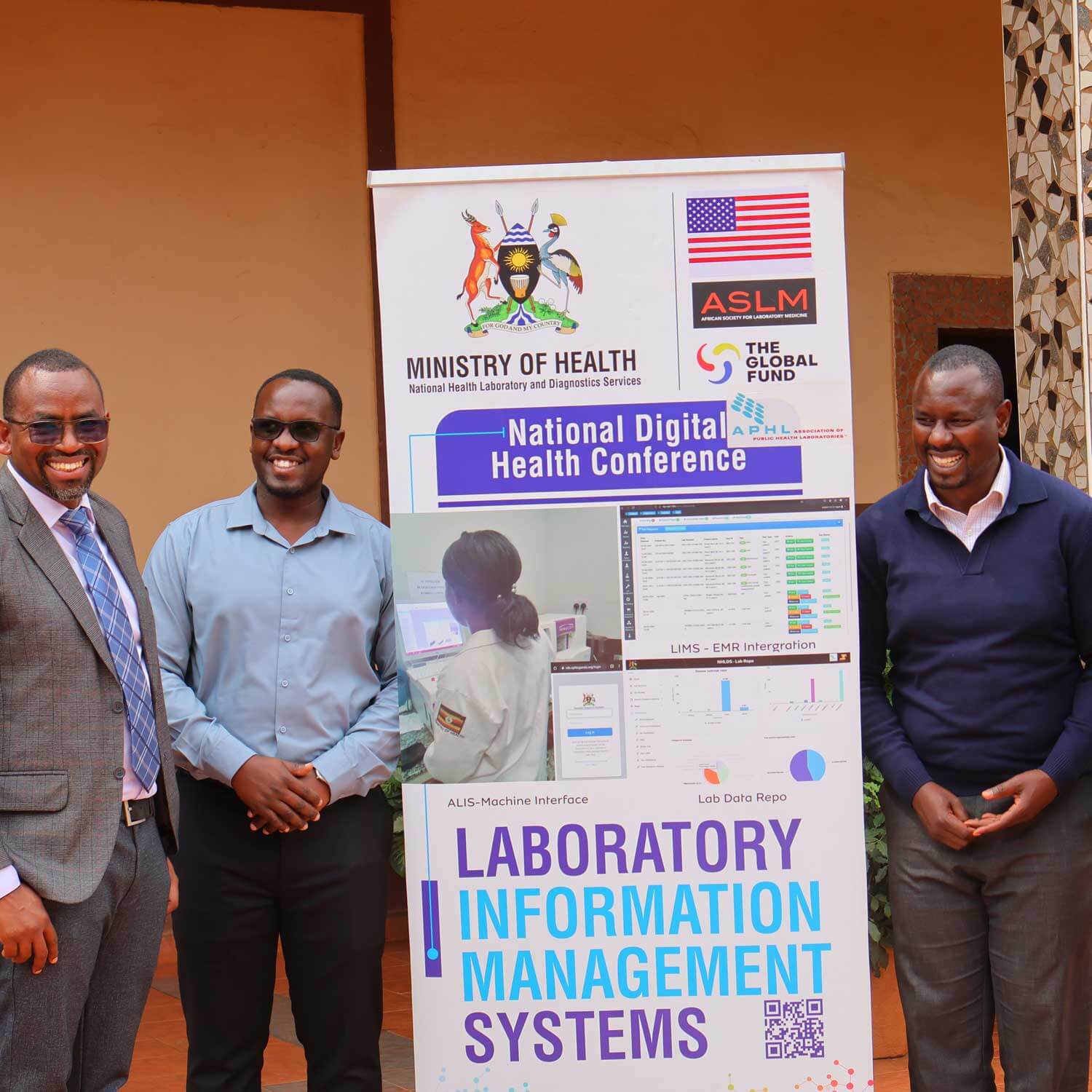
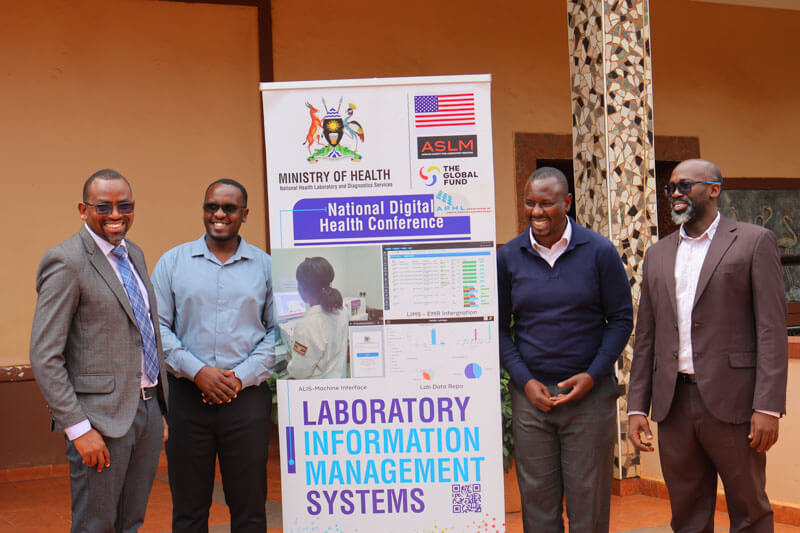
Dr. Charles Olaro, director health services, Commissioners Susan Nabadda and Paul Mbaka and other participants attended the launch of the National Laboratory Data Repository in Kampala Uganda.
The Uganda Ministry of Health has officially launched the National Laboratory Data Repository (LDR), marking a major digital milestone in Uganda’s healthcare system. The platform serves as a one-stop national hub for laboratory information systems and feeds directly into the Ministry’s National Health Data Warehouse.
The LDR was developed with technical and financial support from APHL through funding from the US Centers for Disease Control and Prevention (US-CDC), and technical support from CDC Uganda.
By consolidating laboratory data into a single governed system, the LDR provides faster access to trusted information, strengthens laboratory–clinical linkages, and establishes a reliable foundation for evidence-based decision making at facility district, and national levels.
Dr. Charles Olaro, director general of Health Services described the LDR as a strategic pillar of Uganda’s National Digital Health Strategy.
“Digitization is only meaningful when data is actively used. The National Health Data Warehouse strengthens laboratory–clinical linkages, informs national health decisions, and enables analytics that support a resilient and data-driven health system,” Olaro said.
Dr. Susan Nabadda, commissioner, National Health Laboratory and Diagnostic Services (NHLDS) noted that Uganda’s laboratory sector has historically faced fragmented information systems, limiting the ability to generate a consolidated national picture. The LDR addresses this challenge by providing a centralized platform that integrates laboratory databases and enables real-time access to information through a single national window.
“The LDR enables timely use of data and faster clinical and public health decision-making. This is not just a technical upgrade it is a strategic investment in evidence-based diagnostics and health system management,” she explained.
Through the repository, the Ministry of Health can now monitor and analyze:
The platform enhances transparency and accountability by reducing duplication, improving reporting and ensuring secure access to well-governed national laboratory data.
Paul Mbaka, assistant commissioner, Division of Health Information, welcomed the innovation and underscored the importance of post-deployment monitoring to ensure optimal system performance.
“We have had many scattered dashboards in the past, so this unified product is highly commendable. Congratulations to NHLDS on achieving this important milestone,” he said.
The LDR functions as a central digital exchange and analytics layer within Uganda’s laboratory ecosystem. Health facilities securely transmit standardized data in real time, which is validated, harmonized, and stored in the repository. The system is fully interoperable with Uganda’s broader health information architecture, supporting clinical care, disease surveillance, program monitoring and national planning.
A core component of the LDR’s deployment was a structured validation process undertaken in collaboration with the Central Public Health Laboratories (CPHL), APHL and partners under the Global Public Health Data Innovation (GPHDI) initiative. Validation focused on harmonizing nomenclature, confirming data accuracy and completeness, and ensuring interoperability across systems such as IRRDS, ALIS and the National Data Warehouse.
Pilot testing at selected facilities verified turnaround time metrics, disease surveillance indicators, and dashboard visualization requirements. These exercises embedded quality checks, data flow monitoring, and standards-based integrations, ensuring that national-level analytics are built on trusted, reliable, and well-governed laboratory data.
