.png?sfvrsn=a4dc1c5f_6)
Wildfire Season Is Off to an Early and Deadly Start. How State and Local Agencies Analyze the Dangerous Pollutants in Wildfire Smoke
Earth Day Is April 22
Wildfire season typically runs from spring to fall, but this year it’s coming in hot.
In the first few months of 2025 alone, nearly 17,400 wildfires have scorched roughly 823,000 acres across the US.
One of the hardest hit states has been California, and in particular, Los Angeles County (LA County).
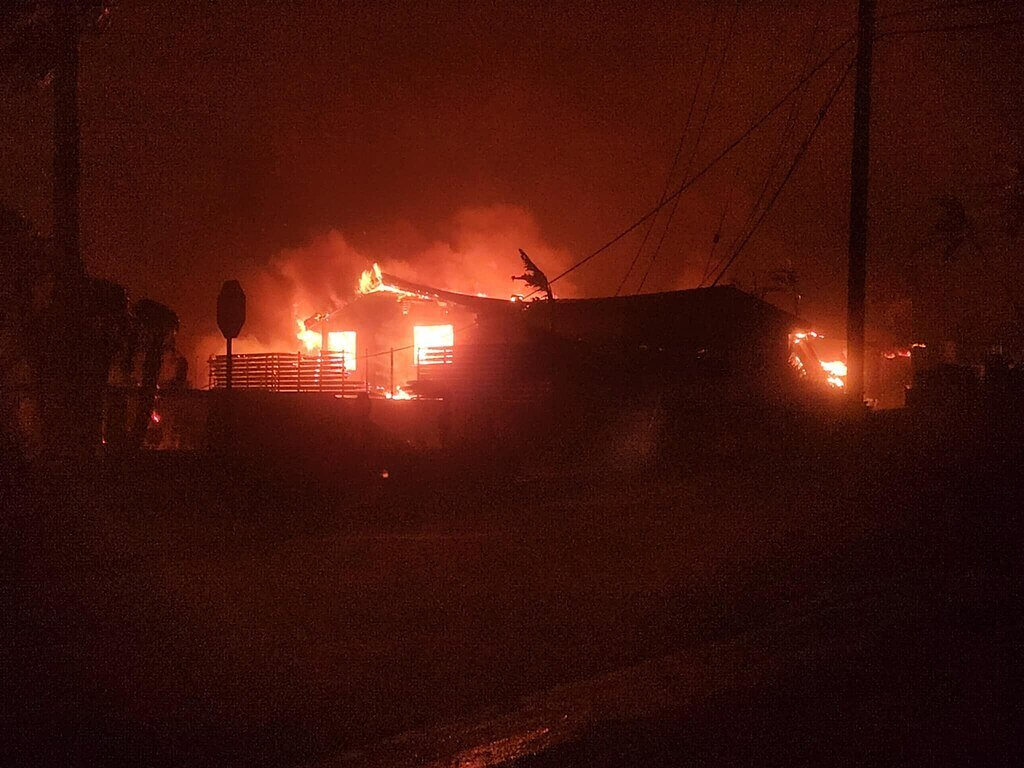
The LA County wildfires that raged during January caused 29 deaths and damaged over 50,000 acres. Their impact on air quality was particularly concerning because unlike conventional wildfires that mostly burn grasslands and forestry, wildfires in more densely populated areas like LA County burn buildings and the toxic things inside them—paint, electronics, pipes, plastics, automobiles and more—making breathing difficult and impacting health in several serious ways, including exacerbating conditions like asthma and increasing one’s risk of heart attack and stroke.

Assessing air quality: Continuous air monitoring vs. air sampling and analysis
According to the US Environmental Protection Agency (EPA), there are two main ways air quality is assessed.
The first is through continuous air monitoring, which uses electronic devices such as EPA-approved instruments and air quality sensors to measure contaminants in the air continuously (e.g., every few minutes or every hour) and upload, in real or near-real time, the information to a database or website.
One type of monitor measures levels of fine and coarse particulate matter (PM). These particles, which can be smaller in diameter than a hair on your head, can include organic compounds, metals and combustion particles that can lodge deep into the lungs, causing irritation to the airways, breathing difficulty, aggravated asthma symptoms and more.
Agencies take some of the information these monitors provide to create a color-coded air quality index (AQI) for communities. The AQI considers not just particulate matter, but ozone and other gases as well. When overall levels range between 0-50, air quality is considered satisfactory (and color-coded green). When the AQI measures 101 to 200, the air quality is considered unhealthy for sensitive groups, such as the elderly or those with underlying health conditions as well as some members of the general public. When the AQI is above 200, the air is unhealthy for everyone, and when it reaches 301, the air is considered hazardous (color-coded maroon).
The second way air quality is assessed is via air sampling and subsequent laboratory analysis.
Air sampling instruments (samplers) collect air particles on a filter over a set amount of time (usually 24 hours). The filter is then gathered and sent to an environmental laboratory, where compounds are identified and quantified. Metals, benzene and other volatile organic compounds (VOCs) as well as air pollutants emitted from paints, building materials, pesticides and combustion byproducts, can cause cancer and other serious health problems. These compounds may be present during a wildfire, especially when the area burned includes man-made structures, consumer products, cars, etc.
Public health agencies use the laboratory results to make public safety recommendations, like when it’s safe to go outside or when you should wear a mask. Some states also do indoor air testing, an important consideration as wildfire smoke can reach indoors, especially when people use swamp—or evaporative—coolers, which pull air from the outside indoors.
LA County fires and air quality
In LA County, the South Coast Air Quality Management District (South Coast AQMD) has conducted mobile monitoring surveys in the Eaton and Palisades areas (where fires were particularly devastating) to continuously measure VOCs and air toxic metals. South Coast AQMD also deployed five fixed temporary air monitoring stations to measure particulate matter continuously and collect time-integrated filter samples (which draw air through a filter over a 24-hour period) to test for metals and asbestos in the air.
“Air samples collected for metals analysis use a size-selective air inlet, only allowing PM10 [particulate matter measuring 10 micrometers] to be deposited on the filter substrate,” explained South Coast AQMD’s Nahal Mogharabi, assistant deputy, communications. “The filter is completely digested in concentrated acid, centrifuged and filtered prior to analysis to determine the concentration of air toxic metals and other elements in the collected sample.”
Does air quality return to normal after a fire is extinguished?
Typically, yes. But how long it takes will vary.
In LA County, air samples showed that levels of toxic metals such as arsenic and lead were highly elevated between January 7-11 (wildfires started in the Pacific Palisades region on January 7). According to Mogharabi, levels decreased to pre-fire levels by January 12, although levels of dust and ash have been “resuspended” due to cleanup work.
“Overall, air toxic metals have been within typical background levels at all locations, although concentrations of various metals above regional background have been measured on more than one occasion,” she said. “Asbestos has not been detected in the majority of the samples. Two samples collected in the Eaton fire area and one in the Palisades area did show the presence of asbestos (on March 5 and March 11, respectively), but it has not been detected in subsequent samples.”
Taking precautions
Wildfire smoke can travel hundreds of miles from the center of the fire, impacting air quality near and far. If you live in an area where there’s wildfire smoke, there are steps you can take to limit health hazards.
First and foremost, evacuate to a safe place if ordered to do so.
If you are not ordered to evacuate and you choose to stay at your location, keep in mind the following:
- Keep windows and doors shut.
- Close the fresh-air intake of your air conditioner (if it has one) and run your HVAC system (with a clean filter). You can also use a portable air cleaner or filter on your furnace to create a clean air space.
- Limit the use of swamp coolers.
- Stay in a clean air space as much as possible. Wear a close-fitting N95 mask if you must go outside.
- Don’t exercise vigorously. Breathing rates while exercising can be two to four times higher than the resting rate.
- Leave the clean-up to the professionals. If you must clean up debris, wear an N95 mask, goggles, gloves, a long-sleeved shirt, socks and pants.