.png?sfvrsn=a4dc1c5f_6)
Digital Transformation of Uganda’s Ebola Outbreak Response Through IRRDS and ResTrack Systems
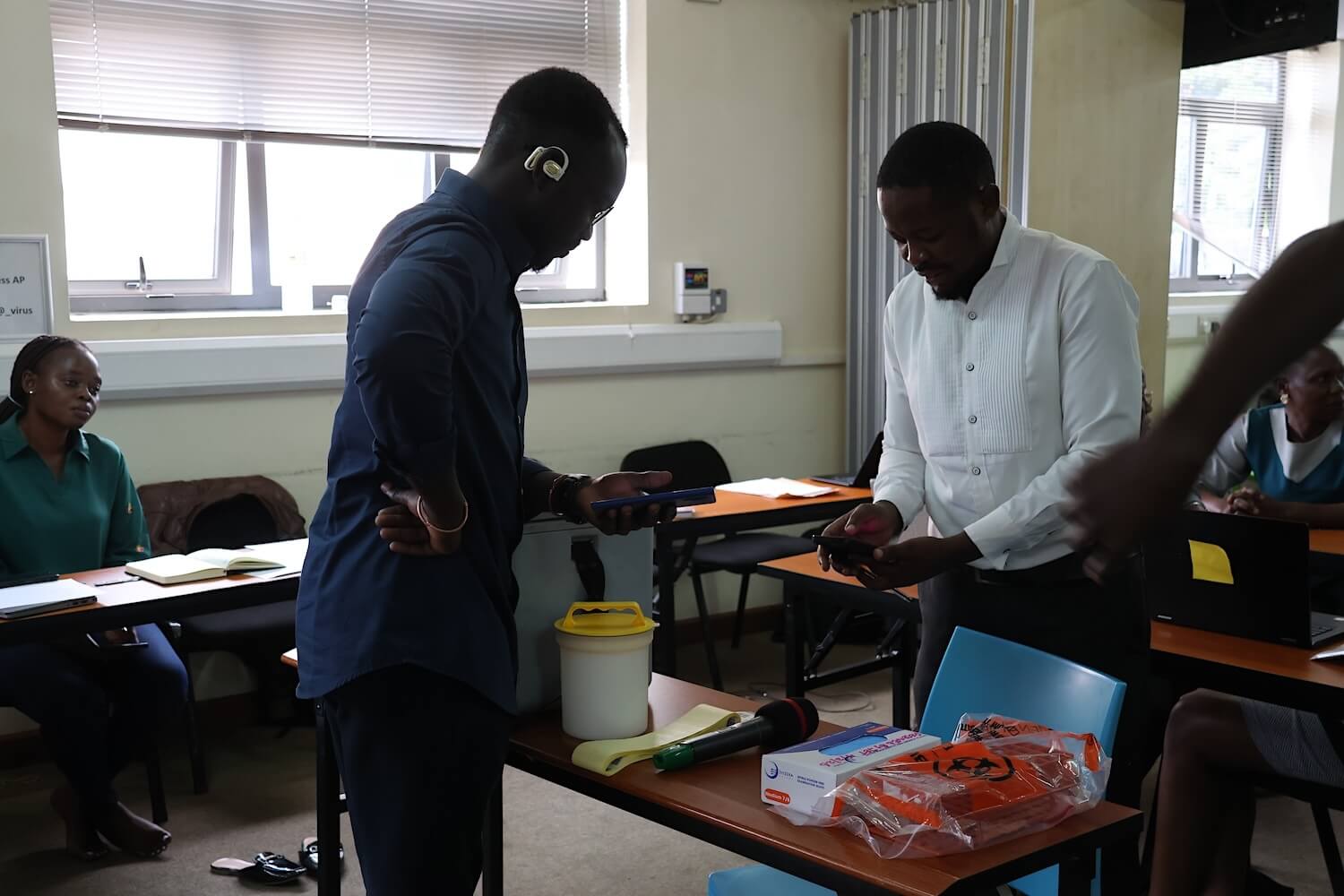

An Ebola outbreak in Uganda
On May 15, 2026, the government of Uganda declared an outbreak of Ebola Bundibugyo virus disease linked to transmission from the Democratic Republic of Congo. The US Centers for Disease Control and Prevention (CDC), in assisting the Ministry of Health’s response to the outbreak, requested assistance from the Association of Public Health Laboratories (APHL) to leverage digital health platforms previously established for laboratory strengthening.
Traditionally, outbreak response workflows relied heavily on paper-based test request forms and manual coordination, an often-fragmented system that introduced delays in sample handling and result reporting. To address this challenge, the Uganda National Health Laboratory and Diagnostic Services (UNHLDS) had previously collaborated with APHL through CDC’s Global Public Health Data Innovation program to develop a national laboratory data repository and a specimen tracking mobile application. The end result was two major systems central to any outbreak response effort: the Integrated Results and Request Dispatch System (IRRDS) and the ResTrack mobile application. These systems have helped establish a fully digital and interoperable ecosystem to support outbreak response operations.
IRRDS
The UNHLDS-APHL partnership recognized the need for an information system that would replace paper forms and automate manual processes. Through the development of a web-based data platform, the IRRDS, a central repository was established for electronic test requests and results across Uganda's national laboratory network of over 2,000 laboratories. The IRRDS enables over 1,000 health facilities to generate digital test requests, which are stored, tracked and matched to results uploaded by testing laboratories. To protect sensitive information, the system gave each user access only to the data needed for their role. For example, health facility staff, laboratory staff, national supervisors and system administrators each had different levels of access.
Recognizing that the volume of samples can change at any time, IRRDS was designed as a multi-tier application, which results in components being separated and running independently, thus lending itself to greater security.
ResTrack
ResTrack, an application to streamline the sample collection process, was developed by the UNHLDS and APHL to pick up where IRRDS leaves off. Like runners in a relay race, after the test request is received, IRRDS hands the baton to ResTrack, which then coordinates rider dispatch, sample pickup and transportation logistics to designated testing laboratories. It also triggers status updates to the appropriate parties when a sample is on the move. Think of it like Uber for a diagnostic sample, where the laboratories can track the location of each sample and its estimated time of arrival.
“The app lets the team track where the sample is coming from and where it’s going,” said Rufus Nyaga, APHL’s deputy country director, Kenya, Global Health Program. “It allows UNHLDS to monitor transport and turnaround times and ensure that results are returned to the right facility quickly. Originally launched to facilitate basic sample tracking, the app has undergone significant upgrades based on user feedback and advancements in technology. Samples get to testing laboratories in a timely fashion while ensuring that there is a tracked chain of custody."
Passing the digital baton to win the race against time
An Ebola response is a high-stakes relay race, and the UNHLDS-APHL partnership has ensured that both IRRDS and ResTrack work in coordination. At the health facility level, health care workers electronically submit Ebola surveillance and diagnostic laboratory test requests directly into IRRDS, which then passes the baton to the ResTrack app. The app then identifies a driver and coordinates sample transport from the health facility to the testing laboratory, all the while keeping stakeholders updated on sample progress. For samples from patients suspected of being infected with Ebola, this tight chain of custody is critical to containing an outbreak. When the sample is received at the testing laboratory, ResTrack hands the baton back to IRRDS. Laboratory personnel scan or enter the sample barcode into their respective LIMS platforms and can retrieve patient demographics, sample details and test request information directly from IRRDS using application programming interfaces (APIs). Once the laboratory completes testing, the results are returned to IRRDS through the same APIs, making them immediately accessible to the originating health facility or requester for downloading, printing and patient management.
The following diagram illustrates how IRRDS, ResTrack and the Laboratory Information Management Systems (LIMS) at the testing laboratory interact to support the Ebola response.

Synchronization of systems strengthens Uganda Ebola response
This outbreak highlights the urgent need for rapid, coordinated and digitized systems capable of supporting outbreak surveillance, laboratory testing, sample transportation and result dissemination across the country. The need to digitize workflows to support the Ebola response resulted in several enhancements that can be used to support future outbreaks/public health emergencies:
- Smarter request forms: General laboratory paperwork was replaced with a streamlined form explicitly tailored for Ebola Virus Disease (EVD) testing, ensuring all information required by the Ministry of Health is captured.
- Secure digital bridges (APIs): These allow the lab system to securely and automatically share data with other national databases.
- Live tracking dashboards: We designed custom digital dashboards that allow health workers to easily monitor testing workloads, track patient samples and make quick, data-driven decisions.
- Smoothed out the process: We updated the software to match the real-world journey of a test sample—from the moment it is collected, to its travel to the lab, to sending out the final result.