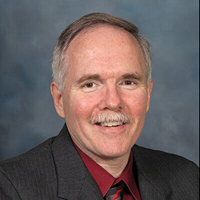
It is impossible to convey Ralph’s lifetime contributions to public health laboratories with a single descriptor. He is a technical expert, manager, educator, and leader in global and domestic laboratory network development. His career spans decades of technical and social changes in which he has been at the forefront of developing policies and practices for the public laboratory community in infectious diseases, public health informatics, emergency response. Throughout his career he has been a tireless promotor of excellence in global public health laboratories.
Ralph received his Master in Public Health from Boston University and educational certificates from the Harvard Kennedy School and MIT. After returning from military service in the United States Army Infantry as a Commissioned Officer, in which he was awarded a Bronze Star, he joined the Massachusetts State Laboratory Institute in smallpox vaccine production. Ralph was promoted to a technical lead position in Virology and then a series of managerial positions with increasing responsibilities until he was finally appointed Assistant Commissioner.
Ralph not only witnessed phenomenal changes in public health laboratory practice, but he was an instrumental leader in the development of these programs. He was an advisor to CDC during the creation and launch of the Laboratory Response Network and the Health Alert Network. He represented APHL to the World Health Organization in an advisory group that developed the web-based GLaDNET to assist in global outbreak detection and response. Ralph served on the initial PulseNet Steering committee, developing a network that envisioned and launched this award-winning system of foodborne disease outbreak detection and response. Under his leadership, the Massachusetts State Laboratory Institute was one of the founding members of PulseNet.
Ralph was also in leadership roles in the health information revolution. He served on the Health Information Board of Counselors. He liaised with the Council of State and Territorial Epidemiologists workgroup and participated in a CDC workgroup to develop standards for electronic laboratory reporting to surveillance systems. He also advised the National Center for Health Statistics on Public Health Data Standards.
In their organizing stage, the African Society for Laboratory Medicine tapped into Ralph’s visionary expertise. He served on the ASLM Board of Directors from 2010 until 2022. He also advised CDC in 2000 in international health strategic planning. Ralph advised CDC on the early design of the Global AIDS Program, now known as PEPFAR. Under Ralph’s advice, laboratory capacities and capabilities to support HIV treatment were implemented and are a major contributor to the success of this program.
Ralph has demonstrated extraordinary commitment to improvements in global public health practice through directly advising public health leaders in Africa and Asia, training and educating laboratorians, and leading strategic and network planning efforts. He served as chair of APHL Infectious Diseases, Informatics and Global Health Committees during his time as a laboratory director.
While directing a laboratory and volunteering on many APHL and federal committees, Ralph contributed to the education of many students of public health through his teaching courses on epidemiology, global HIV/AIDS and biostatistics and advising at Harvard School of Public Health, Boston University and Tufts University. Scores of public health professionals understand the role and contributions of public health laboratories because Ralph shared his experiences and provided a model for interprofessional collaboration. He also worked with the team that developed the George Washington University Laboratory Leadership program. Many alumni of this program served in leadership roles in ministries of health around the world. Finally, he was a generous mentor to employees at the Massachusetts State Laboratory and at APHL, providing career advice and encouragement to young laboratorians and global health program staffers.