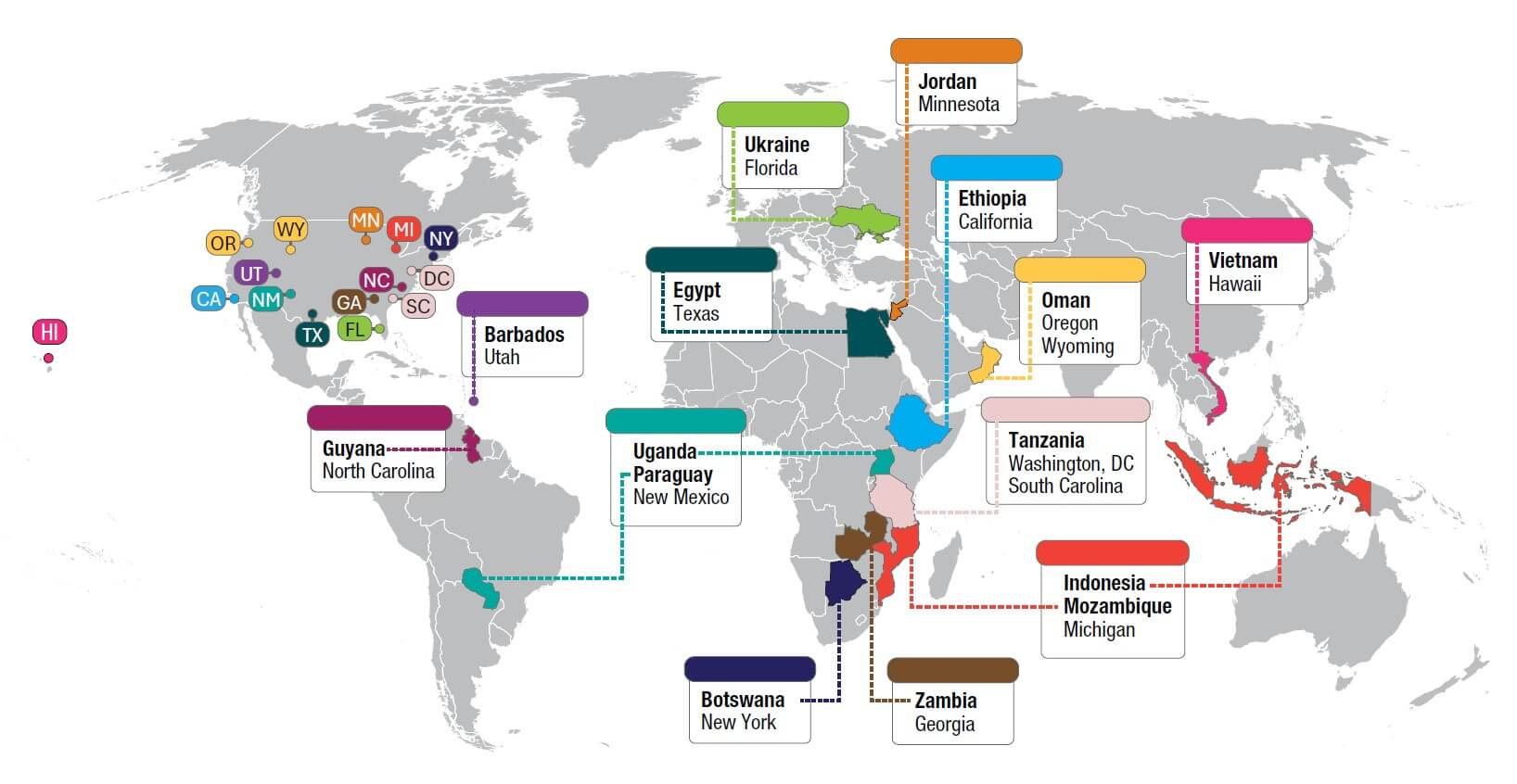
- Barbados and Utah
- Botswana and New York
- Egypt and Texas
- Ethiopia and California
- Guyana and North Carolina
- Indonesia and Michigan
- Jordan and Minnesota
- Mozambique and Michigan
- Oman and Oregon; and Wyoming
- Paraguay and New Mexico
- Tanzania and Washington, DC; and South Carolina
- Uganda and New Mexico
- Ukraine and Florida
- Vietnam and Hawaii
- Zambia and Georgia
Laboratory Twinning Program
The Laboratory Twinning Program strengthens national public health laboratory systems and the global laboratory network by establishing innovative mentoring partnerships between laboratories in different countries and providing sustained opportunities for professional development, technical assistance and continuing education.
About Twinning
The Laboratory Twinning program facilitates long-term partnerships between an American public health laboratory (usually a state laboratory) and a laboratory in a low- or middle-income country (usually the national public health reference laboratory).
The Twinning program was created as a way to strengthen public health laboratories both domestically and around the world in a sustainable, cost-effective and dynamic manner. Building on APHL’s existing relationships with state public health laboratories through our domestic membership base, and with global partner laboratories through our global health work, we are able to establish innovative mentoring partnerships between laboratories and provide sustained opportunities for professional development, technical assistance and continuing education.
Typically, twinning activities involve the ongoing exchange of expertise/best practices and information using a variety of formats, including email communications, web-based meetings and exchange visits.
Twinning Partnerships
APHL has established a number of successful twinning relationships: